

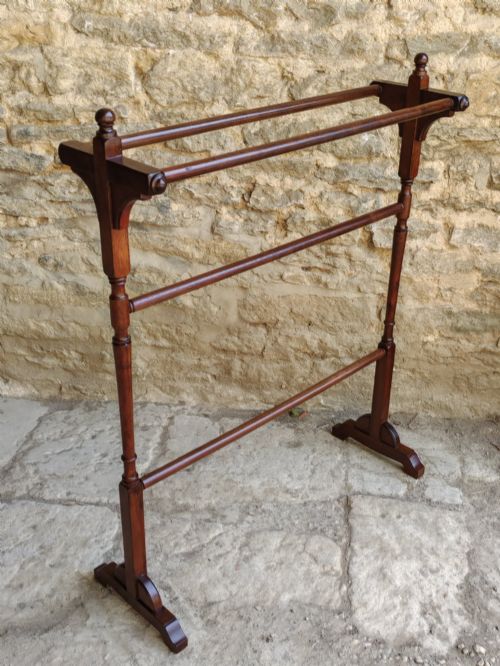
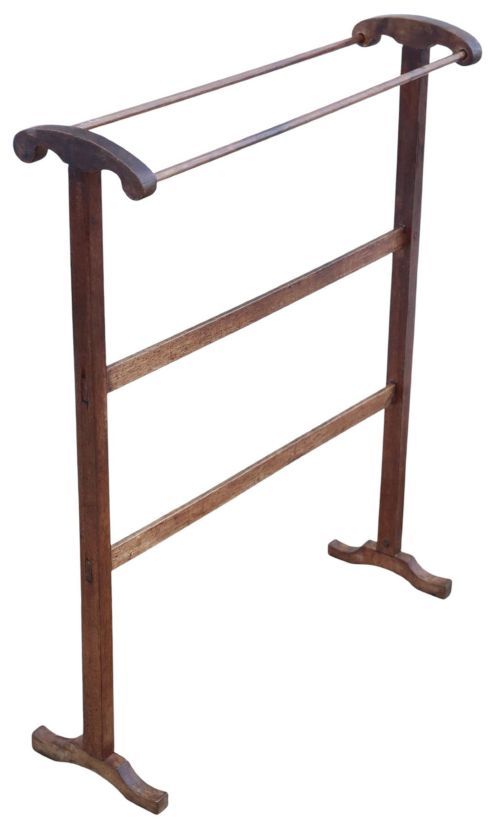
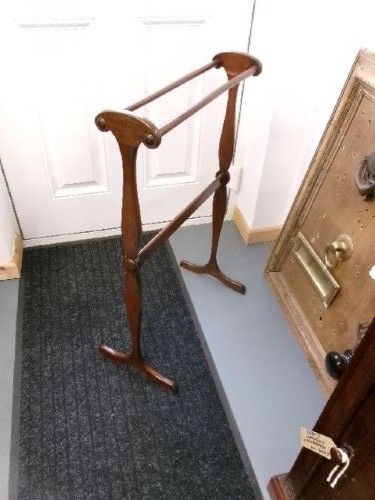
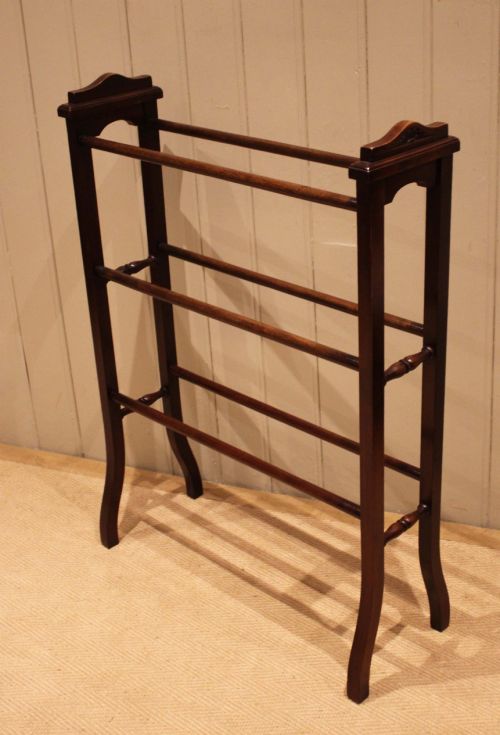


Mahogany Towel Stand
A mahogany towel stand brings warmth and functional elegance to a room, offering practical design rooted in past centuries.
Mahogany Towel Stand
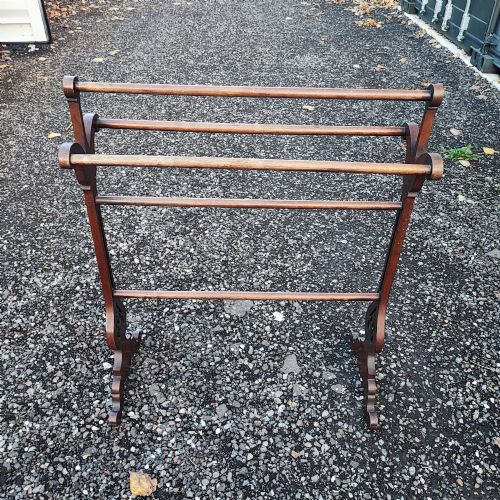
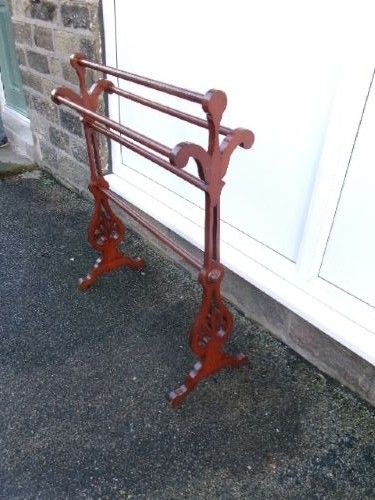
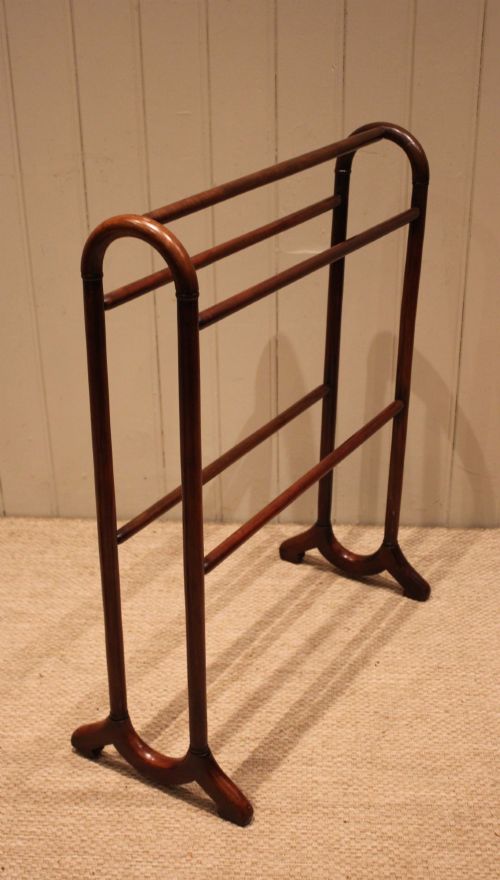
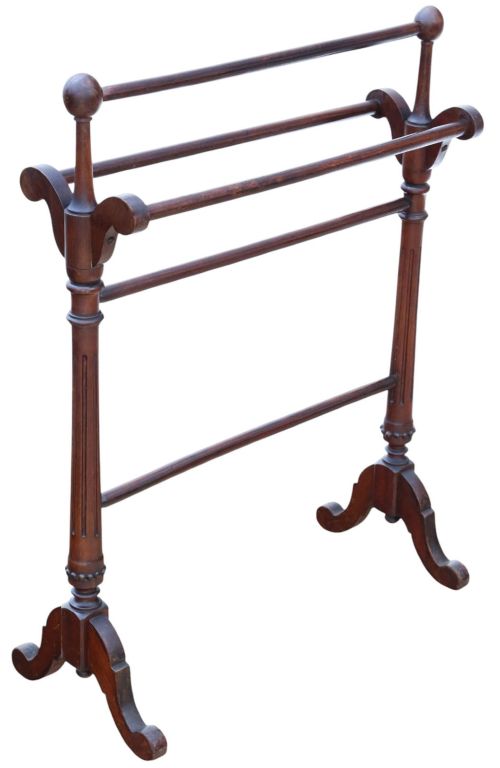
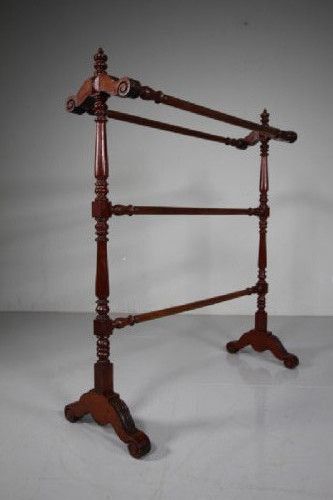
A mahogany towel stand is a practical piece of freestanding furniture designed for hanging and airing linens, appearing in forms ranging from simple rails to multi-bar frames. When you search for a mahogany towel stand, you encounter pieces that span the Regency, Victorian, and Edwardian periods, reflecting the shifting domestic habits of those eras.
The most common examples on this page date from the Edwardian period and the nineteenth century, often constructed as standing frames with multiple horizontal bars or folding sections. These utilitarian items served bedrooms and dressing rooms, evolving from robust William IV and Regency proportions into lighter Edwardian designs.
The materials typically combine solid mahogany with secondary woods like oak, whilst decorative touches such as satinwood inlay, boxwood stringing, and brass fittings appear across various periods. Whether handling a large oversized clothes rail or a smaller five-bar stand, these pieces demonstrate how everyday utility met considered cabinet-making.
How they were made
Cabinet-makers relied primarily on mahogany as the principal timber, sometimes supplemented by oak, walnut, or mixed hardwoods for structural stability. This dense grain allowed makers to turn slender support columns and shape sturdy floor-standing feet without sacrificing durability.
Surface decoration frequently involved contrasting stringing and inlay work, incorporating boxwood and satinwood to outline panels or frame rails. Metal elements like brass fixings provided both functional joints and subtle visual accents on folding or multi-fold frames.
Mahogany Towel Stand Retail Price Guide 2026
Typical asking prices for mahogany towel stand among the pieces listed under this phrase on Sellingantiques today, from the lower quarter to the upper quarter. They describe what is for sale here now, not the wider market.
Listings span multiple eras from Regency to the Edwardian period, uniting solid mahogany, oak, brass, and boxwood inlay in practical towel rail forms.
What varies in quality
The distinction between standard utility items and finer pieces lies in the choice of timber selection and the precision of the joinery. Superior examples display carefully matched mahogany grains and solid construction that resists the wobble common in heavily used laundry furniture.
Decorative refinement elevates certain stands above plain workshop production, particularly those featuring crisp satinwood inlay, boxwood stringing, or integrated Art Nouveau styling. The presence of multiple functional bars and well-executed folding mechanisms also marks the upper tier of design.
Gillows
The Mahogany Towel Stand Glossary
- Mahogany
- A durable tropical hardwood prized for its rich reddish-brown colour and fine grain. It served as the primary material for high-quality domestic furniture throughout the nineteenth and early twentieth centuries.
- Satinwood inlay
- A decorative technique involving contrasting pale yellow timber inserted into recessed channels within the darker mahogany surface. This ornamentation defines the aesthetic of many Edwardian pieces.
- Boxwood stringing
- Thin lines of pale boxwood inlaid into the primary wood to create geometric borders and linear patterns. It provides a subtle crispness to the edges of uprights and rails.
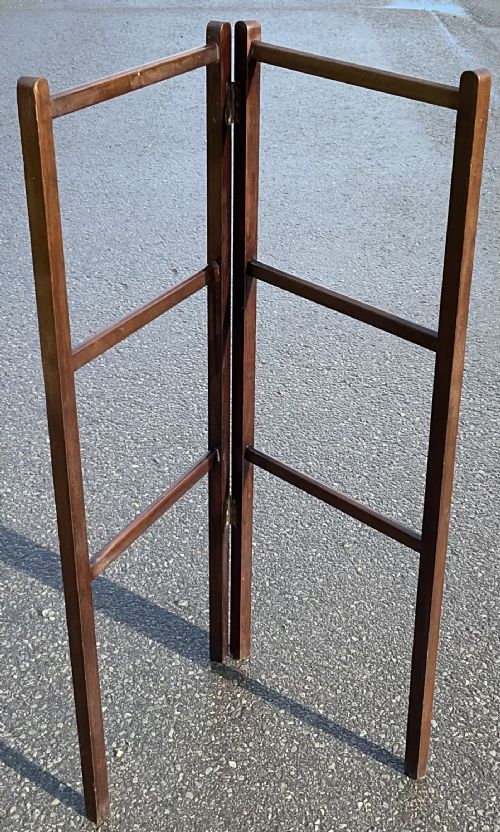
- Three-fold
- A hinged configuration allowing the stand to adjust its footprint or fold flat when not in use. This clever joinery maximises space in smaller dressing rooms.
Mahogany Towel Stand: Frequently Asked Questions
How were mahogany towel stands used?
These stands functioned primarily in bedrooms and dressing rooms for airing and hanging household linens or garments. Their freestanding nature allowed placement near washing basins or firesides.
Over time, changing domestic routines shifted them from daily necessities into decorative accessories for bathrooms and guest rooms.
How do I date a towel stand?
Dating relies on observing stylistic markers, such as the heavy proportions typical of Regency and William IV pieces versus the lighter, inlaid frames characteristic of the Edwardian era. Material combinations like walnut or boxwood stringing also point towards specific decades around nineteen hundred.
Examining the construction methods and joint types helps confirm whether a piece belongs to the mid-nineteenth century or later periods.
Are these stands suitable for modern bathrooms?
Their original construction in solid timber makes them well-suited for holding textiles, provided they are placed in reasonably ventilated spaces. Many collectors utilise them today for displaying quilts or towels in period homes.
Care should be taken to protect antique wood surfaces from excessive direct moisture and steam.
What is the difference between a rail and a stand?
A towel rail often denotes a simpler fixed structure, whereas a stand typically implies a more substantial floor-standing frame with multiple horizontal bars or folding sections. Some larger examples served a dual purpose as clothes racks.
Both forms share the same fundamental purpose of keeping fabrics organised and aired.