


Antique Wooden Towel Rail
An antique wooden towel rail brings functional charm and traditional warmth to a room, holding textiles with steady, time-tested utility.
Antique Wooden Towel Rail
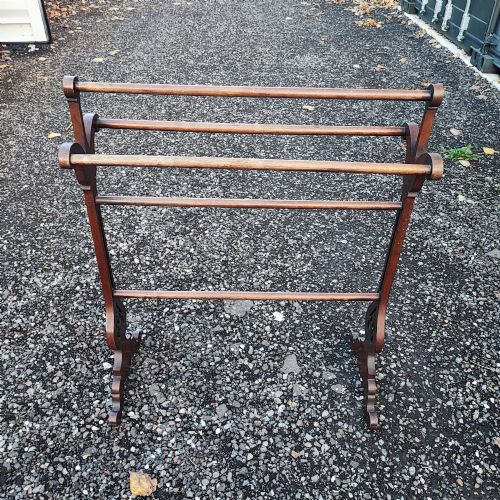
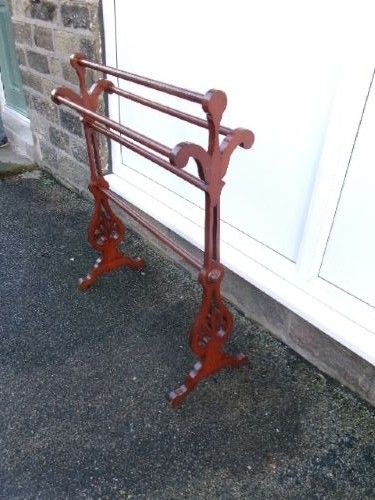
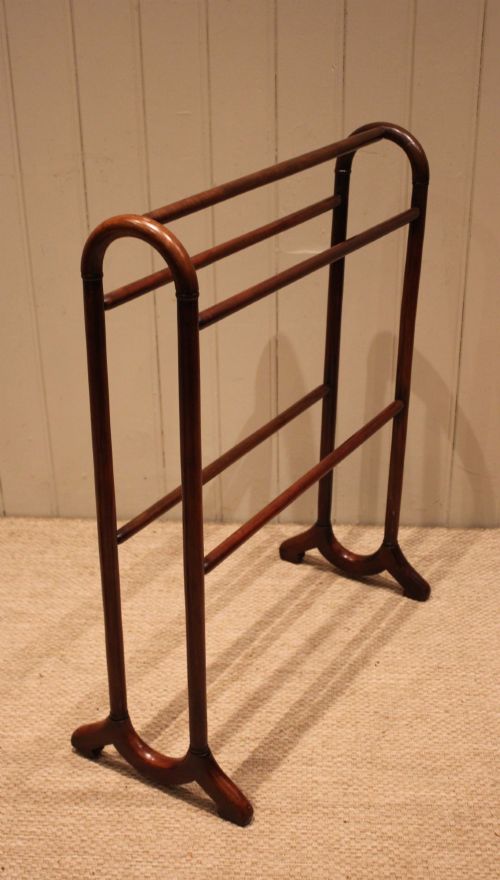
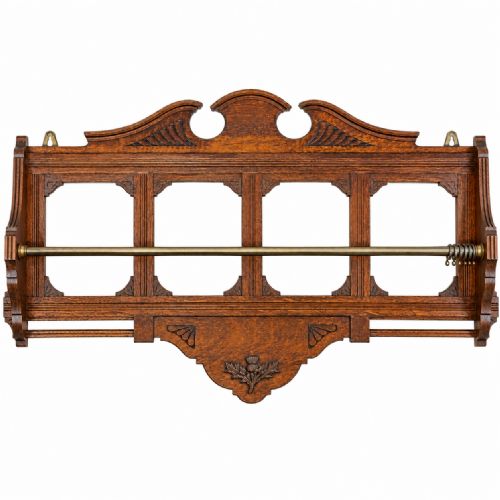
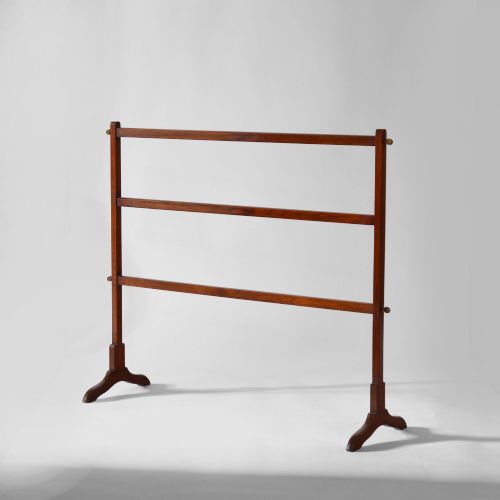
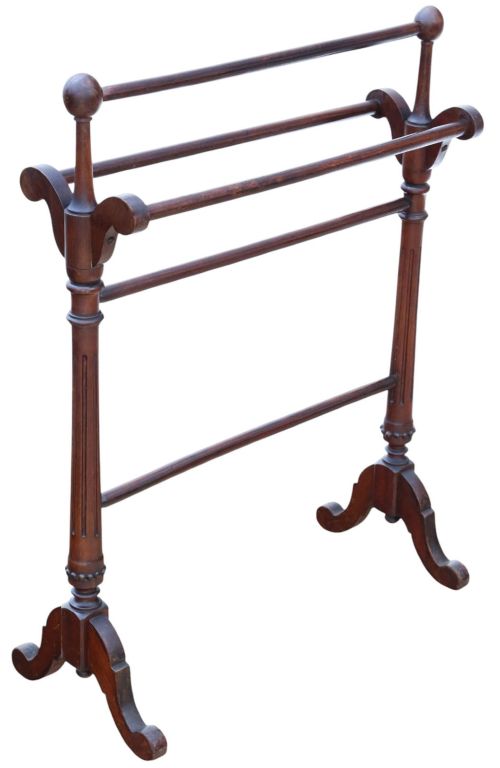
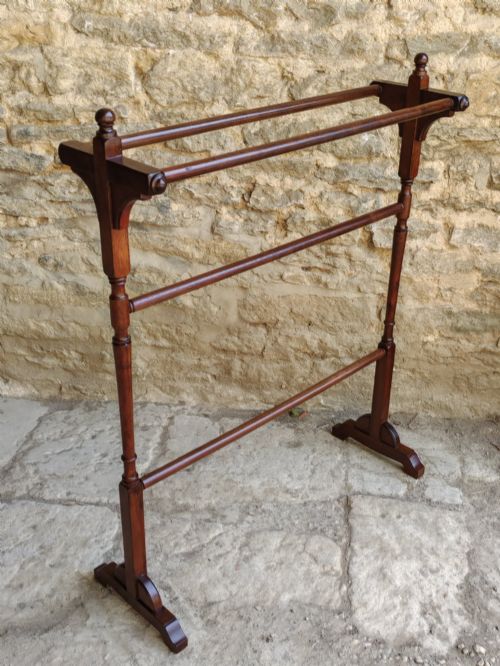
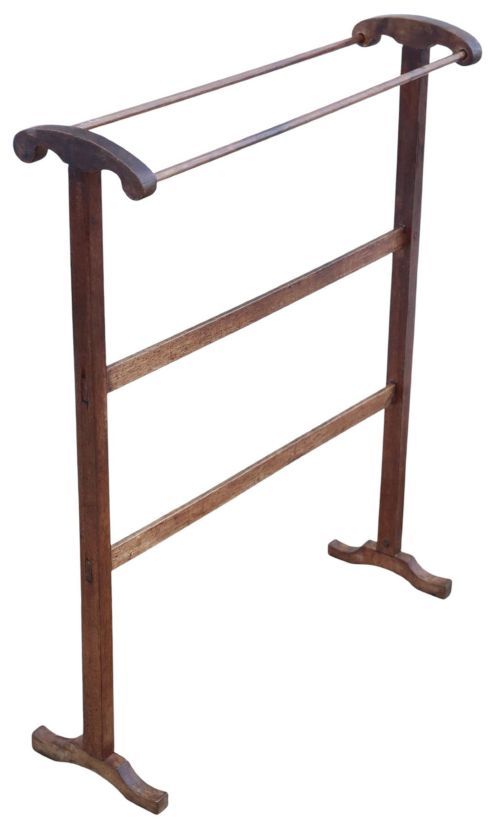
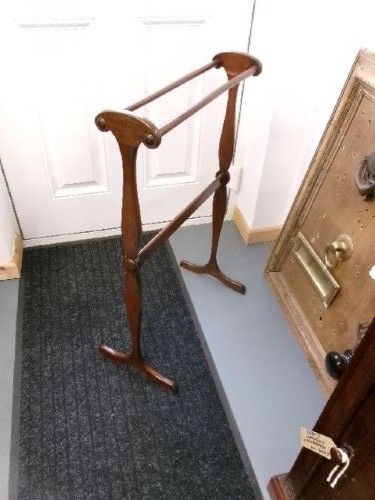
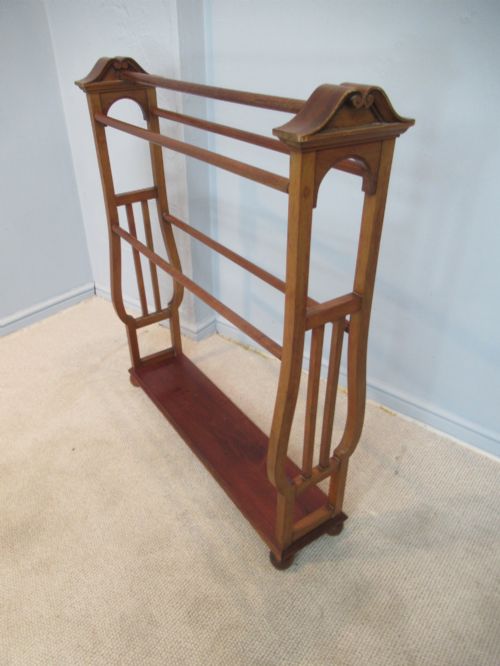
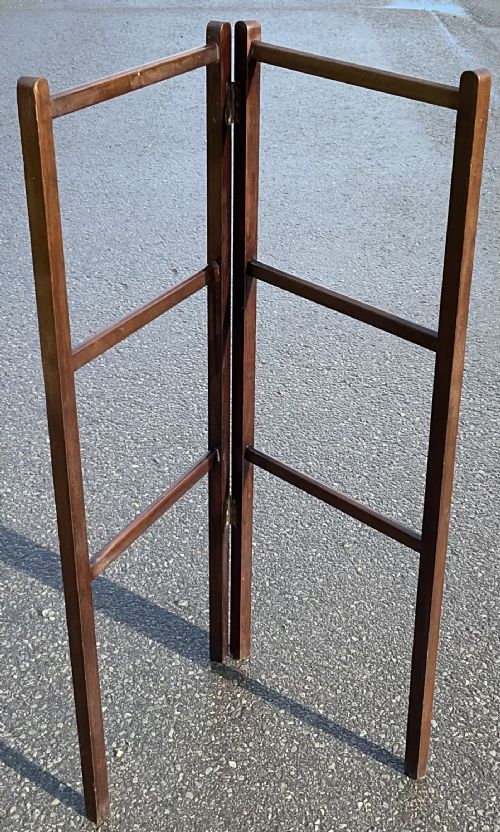
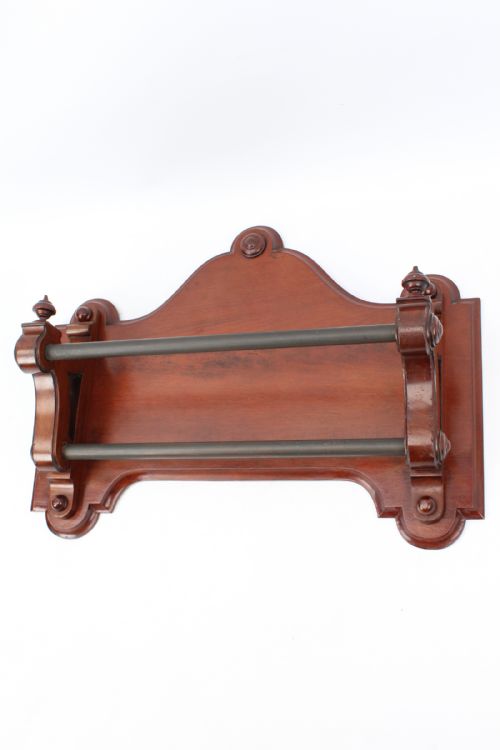
An antique wooden towel rail is a practical piece of household furniture designed for drying or displaying household textiles, appearing across this selection in standing, folding, and hanging formats. The pieces on this page span several decades and centuries, ranging from compact domestic bathroom accessories to large floor-standing clothes horses and multi-bar stands.
Mahogany forms the backbone of these listings, accompanied by oak, pine, walnut, elm, and lacquered wood fashioned into varied forms like the cheval rail, the drying rack, and the robe stand. Buyers encounter standard domestic items alongside maritime variations, shipboard versions, and pieces displaying regional character from the Regency, Victorian, and Edwardian eras.
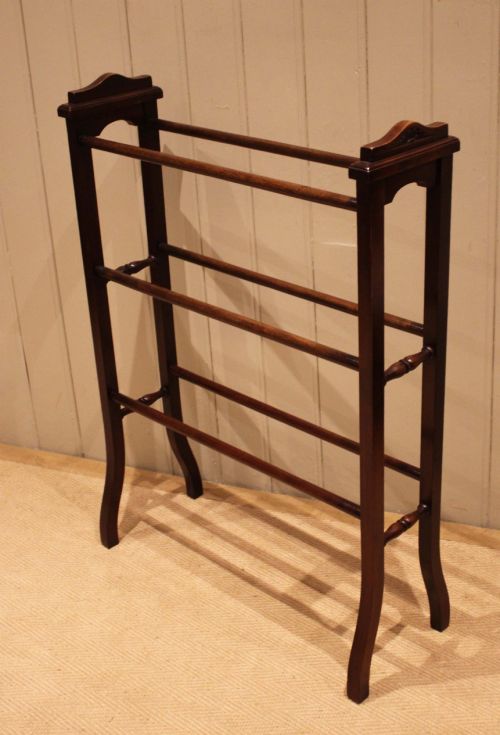
The styles recorded here stretch from simple functional pine frames to more ornate inlaid mahogany versions and carved Chinese pieces. Whether searching for a tall five-bar stand or a low folding rail, collectors find items that served everyday domestic routines in past eras.
What varies in quality
The grade of timber selected by the maker dictates much of the physical presence, with dense, finely figured mahogany or quarter-sawn oak sitting at the upper end of the scale. Substantial framing timbers and generous proportions separate impressive country house or oversized pieces from modest utility items.
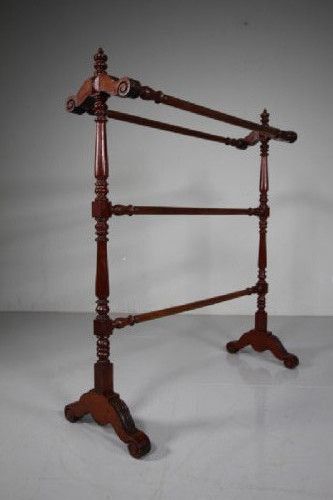
Refinement of detail distinguishes finer examples, visible in crisp woodturning, delicate inlay work, and robust folding mechanisms that operate smoothly. Simpler pine and hardwood utility rails offer sturdy charm, while master-carved or meticulously polished specimens demonstrate higher workshop ambition.
Antique Wooden Towel Rail Retail Price Guide 2026
Typical asking prices for wooden towel rail among the pieces listed under this phrase on Sellingantiques today, from the lower quarter to the upper quarter. They describe what is for sale here now, not the wider market.
Listings feature woods including mahogany, oak, pine, walnut, elm, and lacquered wood across periods spanning from the Regency era through to the Edwardian period.
Gillows
The Antique Wooden Towel Rail Glossary
- Cheval rail
- A standing towel rail designed with a pivoting frame, allowing the rails to tilt between upright supports. This form mirrors the mechanics of a cheval glass mirror.
- Robe stand
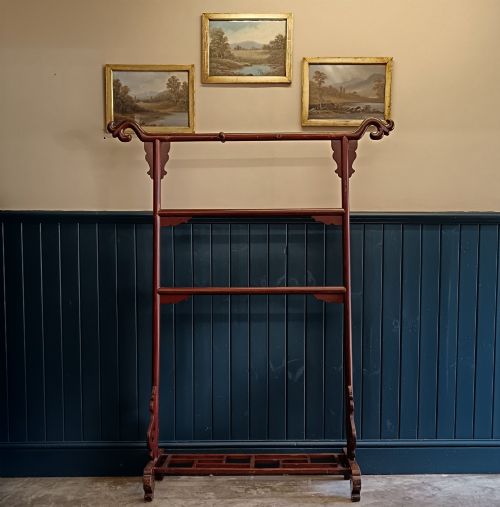
- A tall freestanding wooden rack utilised for hanging garments or large textiles, frequently seen in Chinese export and traditional domestic contexts. These pieces offer greater height and scale than standard bathroom rails.
- Ebonised
- Wood treated with a chemical stain or finish to imitate the dense, dark appearance of ebony. This treatment was popular on nineteenth-century furniture to create sharp visual contrast.
- Silhouette
- A term applied to specific turned or shaped side panels on a towel rail that form a solid profile. These shaped supports define the aesthetic silhouette of Regency and Victorian examples.
- Hanging double
- A wall-mounted or suspended rail configuration featuring two parallel bars for increased drying capacity. Such items saved floor space in compact Victorian and Edwardian settings.
Antique Wooden Towel Rail: Frequently Asked Questions
How were antique towel rails used?
These rails were positioned near fireplaces, in bedrooms, or on ships to dry household linens and garments before the advent of central heating. They served as movable drying racks that could be folded away or shifted around the home as needed.
In larger houses, grander versions stood in dressing rooms and hallways to hold heavy textiles and robes. Their practical nature meant they were worked hard in daily domestic service.
How do I date an antique towel rail?
Dating relies on identifying the primary wood species, construction techniques, and stylistic markers associated with specific periods like the Regency, Victorian, or Edwardian eras. Finer mahogany and satinwood inlay often point towards the Edwardian period, while heavier proportions suggest earlier nineteenth-century making.
Secondary woods, fixings, and surface patination further assist in narrowing down the decade of manufacture. Comparing the turning style with documented furniture from the same era provides a reliable baseline.
Where should I place a wooden rail at home?
A wooden towel rail fits naturally in a bathroom or bedroom to hold hand towels, blankets, or everyday garments. Freestanding folding versions work well against empty walls where their side profiles can be appreciated.
Larger standing or multi-bar models serve effectively as decorative partitions or clothes displays in dressing spaces. Keeping them away from direct, harsh heat sources protects the antique wood and joints.
What is the difference between a rail and a clothes rack?
Towel rails generally feature lower, horizontal bars spaced for hanging damp cloths or towels, while clothes racks and robe stands often incorporate greater height for full-length garments. Taller racks accommodate heavier robes and garments without trailing on the floor.
Both forms share similar timber construction methods, but their intended textile loads influenced their overall height and proportions. Regional variations, such as Chinese robe stands, introduced distinct carving and lacquer work not typically found on utilitarian bathroom rails.