


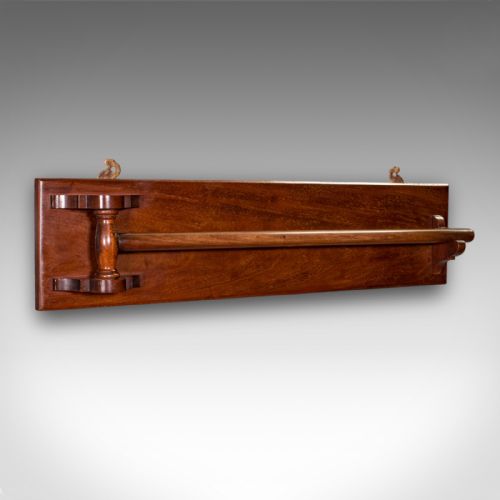


Vintage Bathroom Towel Rail
These vintage bathroom towel rail pieces bring period timber and metalwork into daily use, offering robust utility and character.
Vintage Bathroom Towel Rail
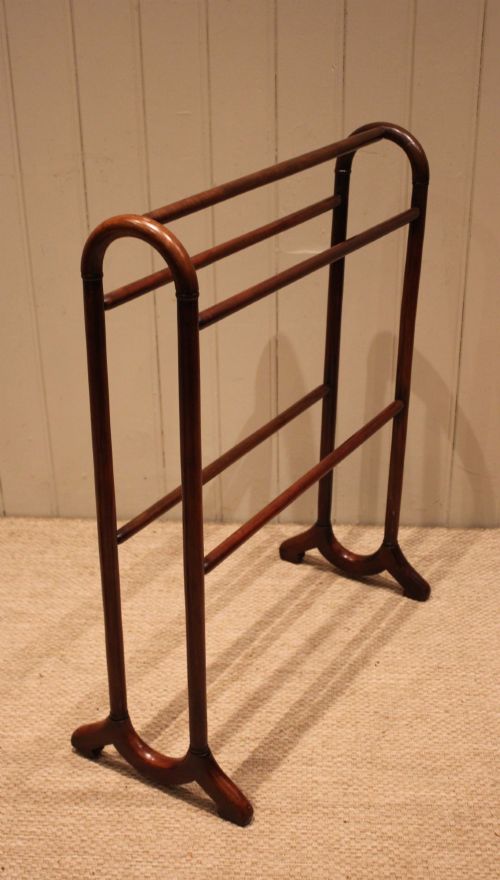
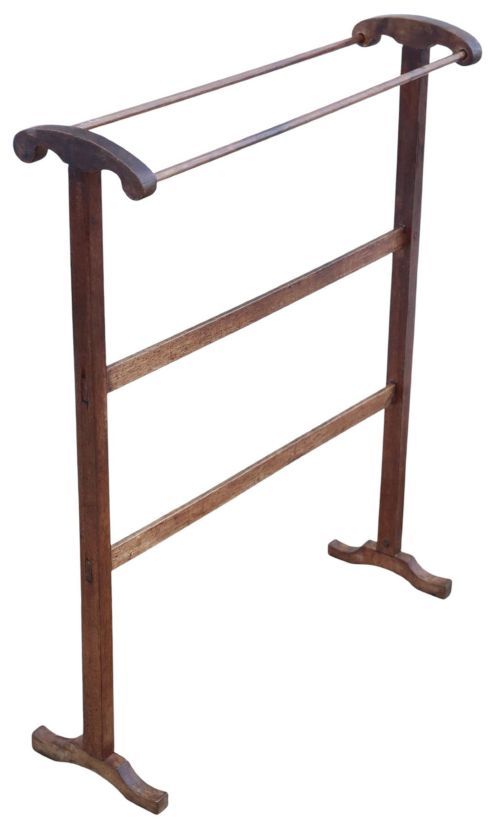
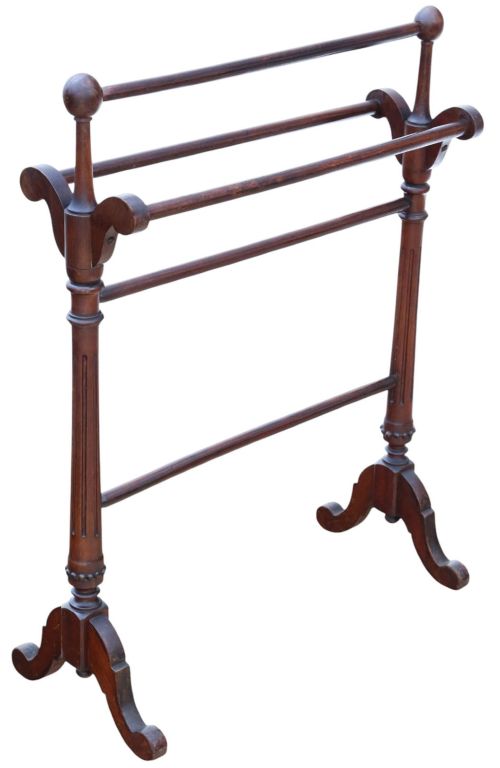
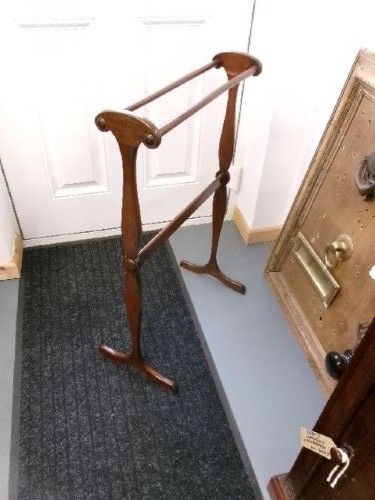
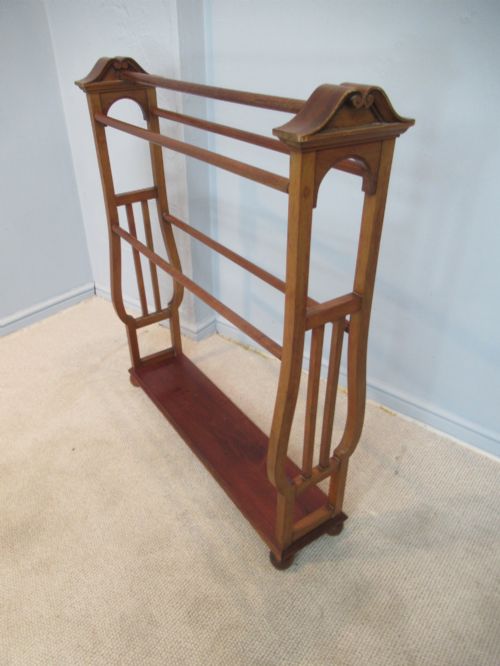
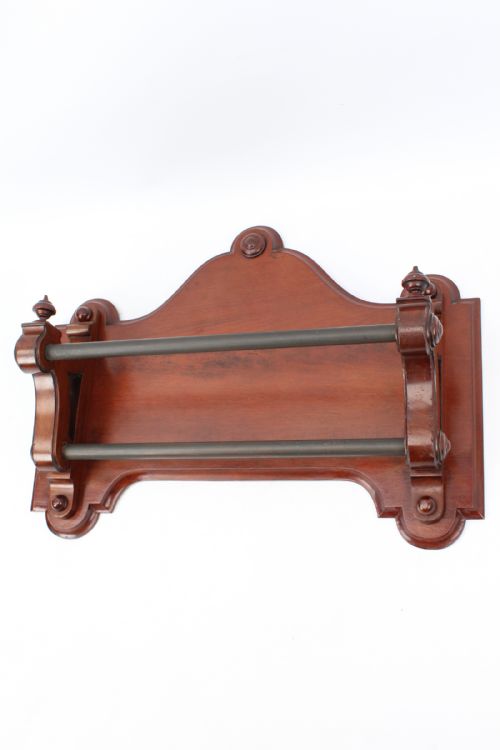
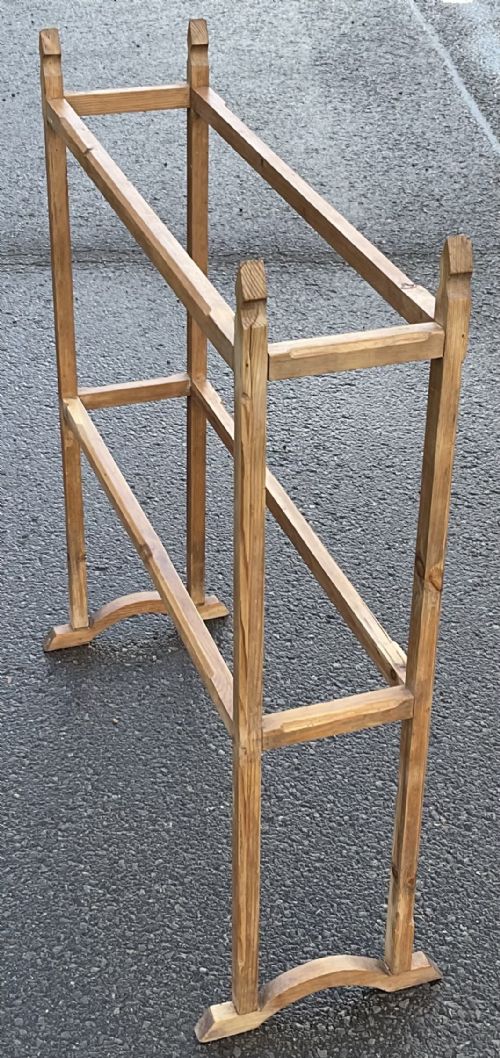
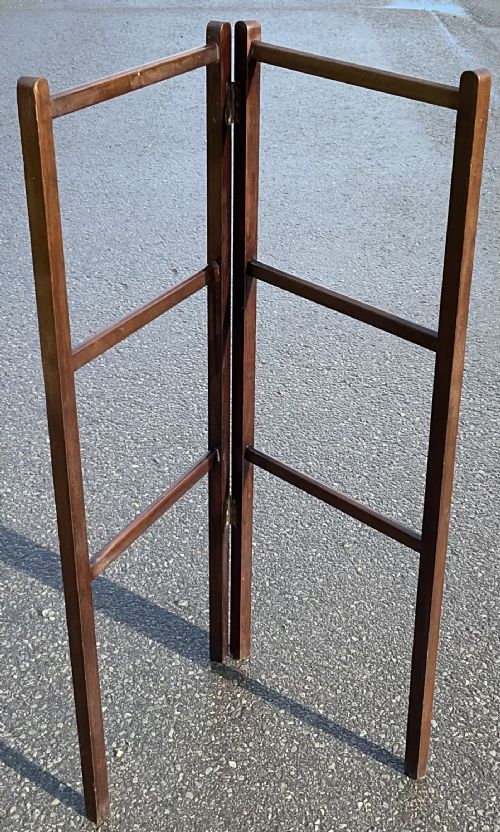
A vintage bathroom towel rail is a functional furnishing designed for drying and holding linen, spanning eras from the Regency period through the Victorian and Edwardian epochs into the early twentieth century. Buyers seeking a vintage bathroom towel rail will discover standing floor rails, folding multiple-bar stands, and wall-mounted glass designs with metal mountings.
Stylistic influences range across early Victorian, Victorian Gothic Revival, Arts and Crafts, and Art Deco aesthetics. This variety allows collectors to match a functional accessory to specific period interiors without compromising on historical integrity.
How they were made
Cabinetmakers constructed these pieces primarily from solid hardwoods such as mahogany, walnut, and oak, alongside utilitarian softwoods like pine. Joinery techniques varied from sturdy pegged frames to folding multi-fold hinges designed for practicality in domestic spaces.
Metal components introduce contrasting textures through polished brass, chromed mountings, and specialised fittings seen on glass rails and maritime pieces. Surface treatments range from black ebonisation and satinwood inlay to polished timber finishes that highlight natural grain patterns.
Vintage Bathroom Towel Rail Retail Price Guide 2026
Typical asking prices for vintage bathroom towel rail among the pieces listed under this phrase on Sellingantiques today, from the lower quarter to the upper quarter. They describe what is for sale here now, not the wider market.
One listed piece originates from a ship at sea, bringing a maritime drying rack straight from the waves into the bathroom.
What varies in quality
Quality in these items rests upon the selection of timber and the sophistication of the construction, distinguishing standard utility pieces from fine country house furnishings. Superior examples exhibit dense mahogany or walnut grains, precise joinery, and decorative elements such as satinwood inlay or ebonised surfaces.
The integration of hardware also dictates the standard of the piece, where heavy brass or chromed mountings and intact glass components reflect superior manufacturing. Structural stability in folding frames and multi-bar stands ensures the piece remains fit for daily use while retaining its period character.
The Vintage Bathroom Towel Rail Glossary
- Edwardian
- A period spanning the reign of King Edward VII, characterised by lighter furniture forms and refined decorative details.
- Victorian Gothic Revival
- A nineteenth-century style drawing inspiration from medieval architectural motifs, featuring robust timber construction and pointed arches.
- Arts and Crafts
- A design movement emphasising handcraftsmanship, simple forms, and honest expression of natural materials.
- Ebonisation
- A finishing process where timber is treated to resemble ebony, creating a deep black surface often utilised on nineteenth-century stands.
- Maritime drying rack
- A specialised nautical furnishing engineered to withstand shipboard conditions while efficiently drying textiles.
Vintage Bathroom Towel Rail: Frequently Asked Questions
How do I choose the right size towel rail?
Consider the available floor space and the volume of linen required in your room. Standing multi-bar stands and folding designs require adequate clearance.
Wall-mounted glass and chrome formats suit compact areas where floor space remains limited.
Can these vintage rails be used daily?
Most standing and wall-mounted pieces were built for robust daily utility using durable hardwoods and metals. Proper placement away from direct excessive moisture preserves the timber and joints.
Routine care ensures these functional antiques withstand contemporary bathroom environments.
How do I identify a Victorian rail?
Victorian pieces often utilise dense timbers like mahogany and walnut, frequently displaying darker finishes or Gothic Revival influences. Construction methods prioritize solid joinery and heavier proportions than later Edwardian iterations.
Examining the turning of the wood and the type of fixings helps date the piece accurately.
What maintenance do wooden rails need?
Wood surfaces benefit from occasional application of appropriate wax or polish to maintain the finish and protect against humidity. Avoiding prolonged direct contact with soaking wet textiles prevents water marks on the timber.
Inspecting joints and metal mountings periodically ensures the structure remains stable.