



Vintage Towel Rack
A vintage towel rack brings practical utility and period timber charm to a bathroom or dressing room.
Vintage Towel Rack
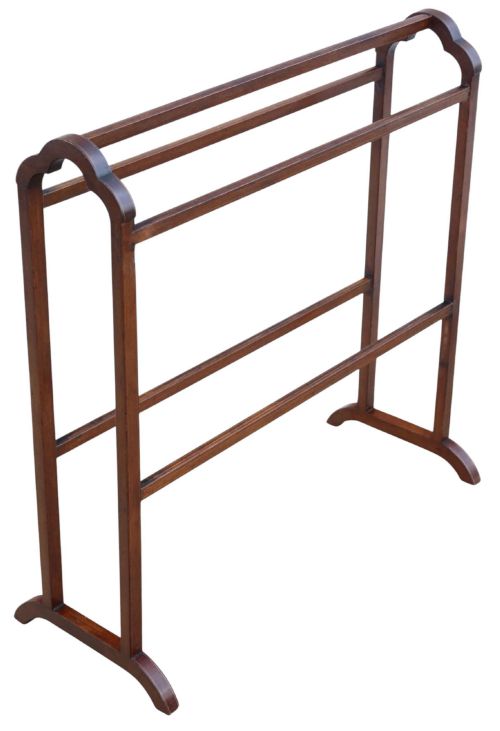
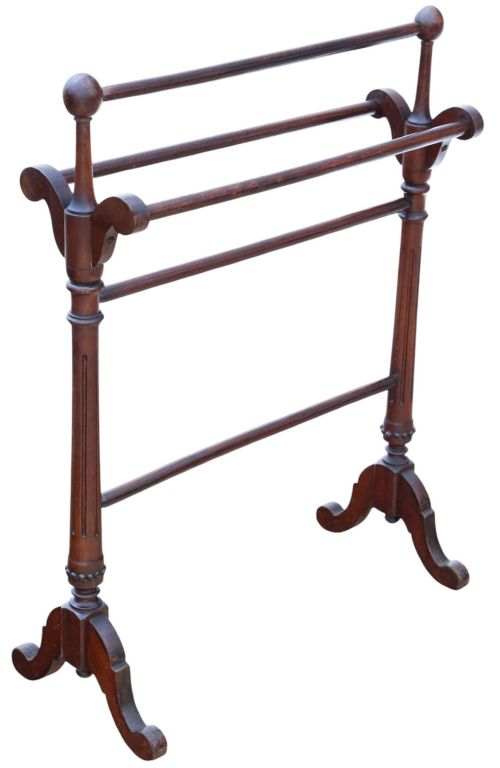
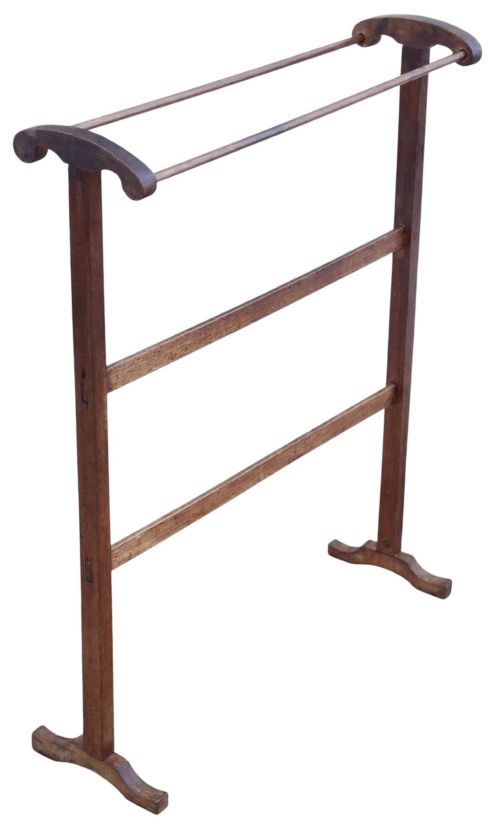
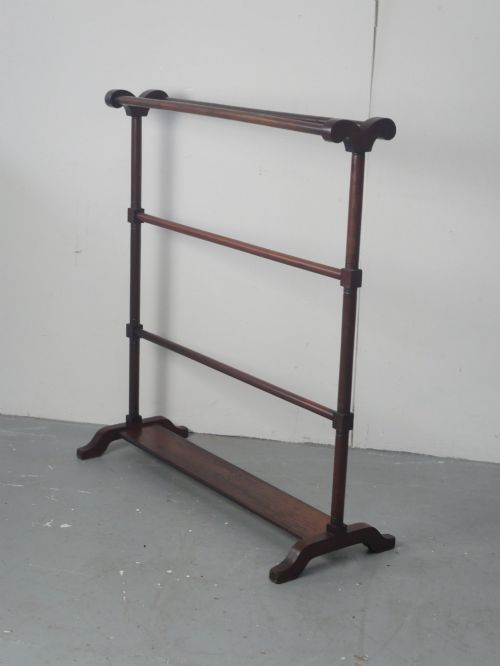
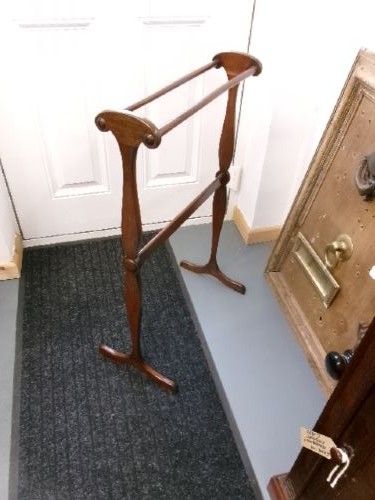
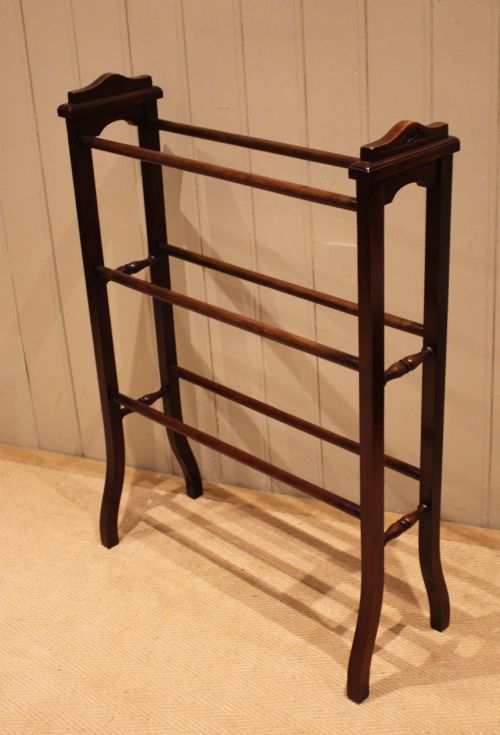
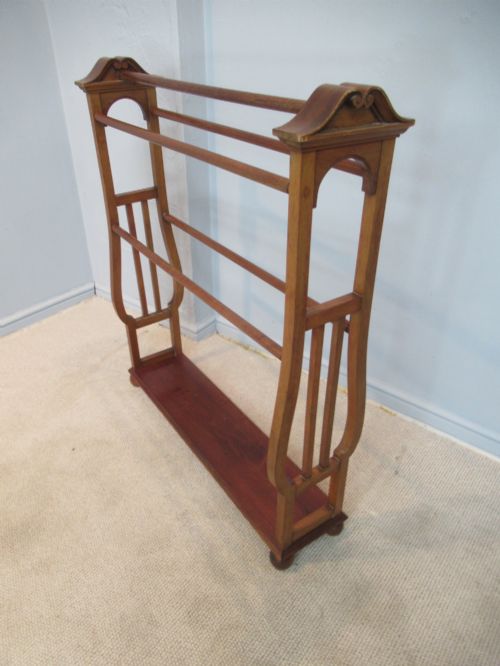
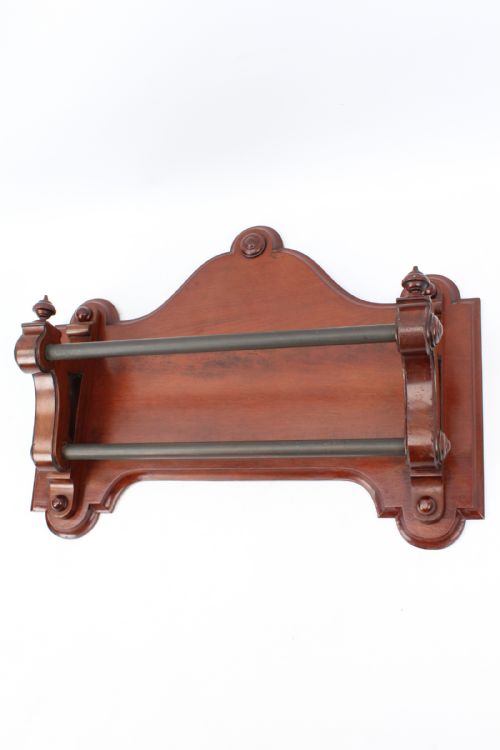
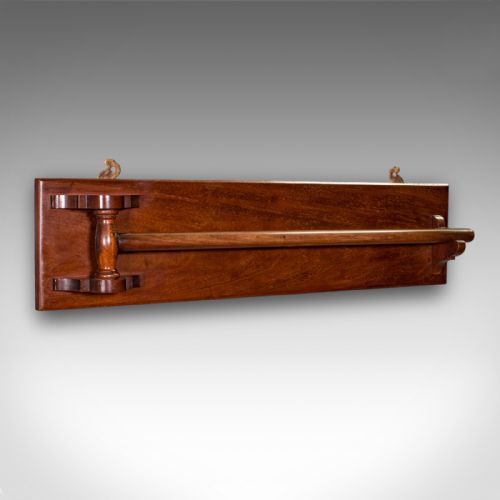
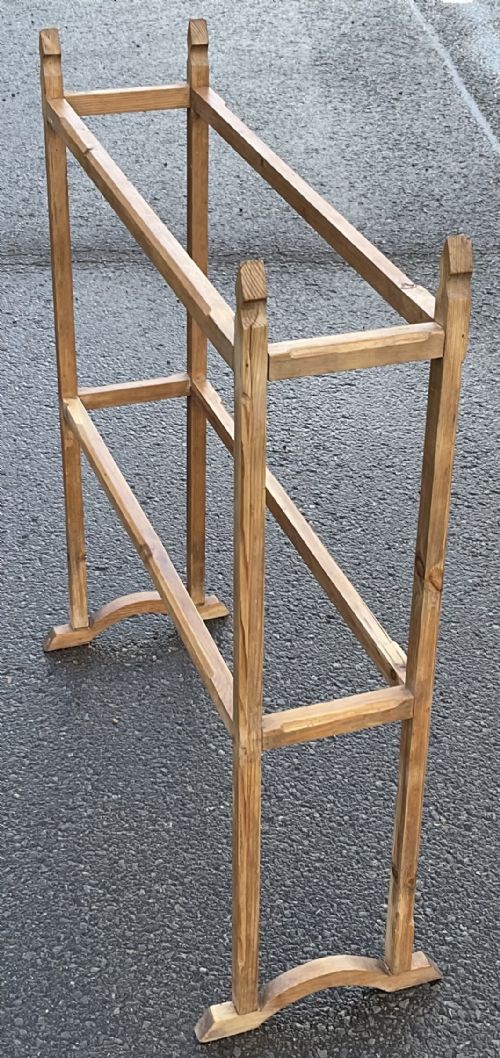
A vintage towel rack is a functional furnishing designed for drying and holding textiles, appearing most frequently as a freestanding wooden stand from the Victorian and Edwardian eras. These pieces span simple pine domestic items to larger mahogany frames with multiple rails, alongside wall-mounted glass and chrome bathroom fittings.
The selection ranges widely in form, from folding cheval rails and five-bar stands to maritime drying racks and large clothes horses. Alongside standard domestic designs, related items such as hall stands, wall mirrors, and brass hooks occasionally appear within the inventory.
Origins stretch across the nineteenth century through the early twentieth century, taking in Edwardian, Victorian, Regency, and Arts and Crafts styles. Occasional pieces draw on Chinese Qing Dynasty carving and French Provincial traditions, offering diverse aesthetic choices for period interiors.
Materials and Construction
Wood forms the primary substance of these pieces, with solid and inlaid mahogany appearing most frequently alongside oak, walnut, pine, hardwood, and black ebonised timber. Cabinetmakers constructed these frames to withstand daily domestic use while displaying the natural grain and colour of the wood.
Later twentieth-century examples incorporate industrial materials, pairing chrome mountings with glass rails for a cleaner, reflective appearance. Brass and porcelain details also emerge on associated bathroom hooks and fittings from the nineteenth century.
The inventory records pieces spanning the 1800s to the 1920s, constructed predominantly in mahogany, pine, and oak alongside chrome and glass bathroom fittings.
Distinctions in Quality
The standard of a vintage towel rack rests largely on the choice of timber and the sophistication of its joinery. Superior examples utilise dense, well-figured mahogany or quarter-sawn oak with tight joints, whereas simpler utilitarian items rely on plain pine or basic softwood.
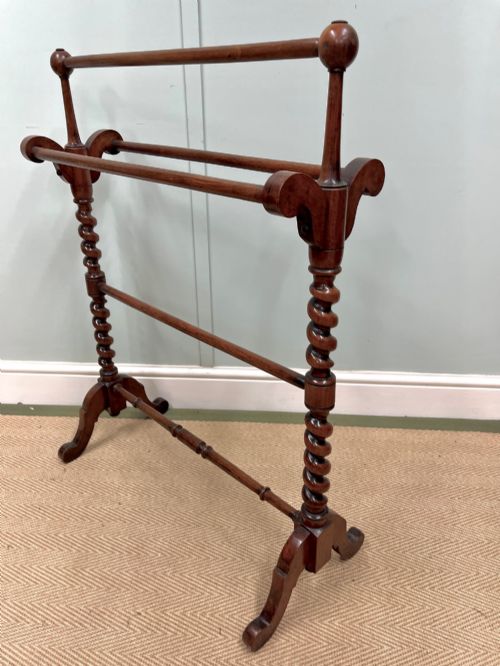
Decorative elements elevate certain pieces above standard utility, such as delicate wood inlays, turned uprights, carved details, or multi-bar folding configurations. The integrity of the original finish and the sturdiness of the standing frame further distinguish high-grade items.
The Vintage Towel Rack Glossary
- Cheval rail
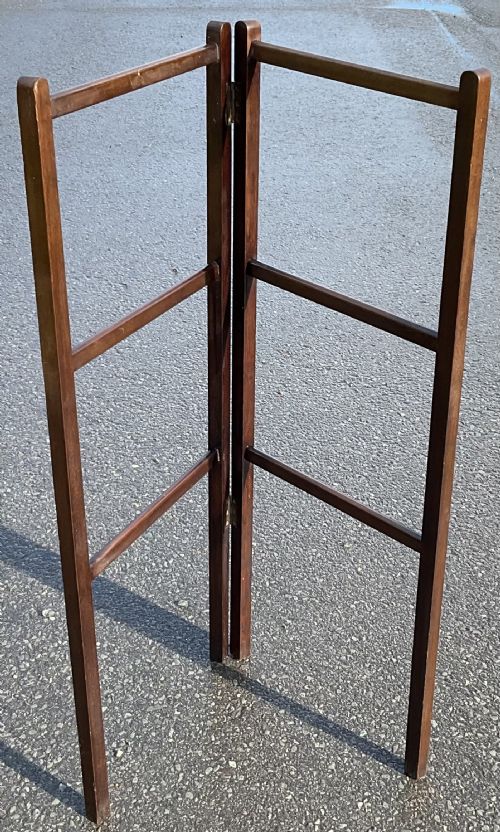
- A freestanding double-sided frame designed to swing on pivots or fold outward for extra drying space. This configuration allows towels to hang with adequate air circulation.
- Ebonised
- Timber treated with a dark stain or finish to imitate expensive ebony wood. This technique was popular in the late nineteenth century for achieving a sharp, formal appearance.
- Inlaid
- Wood decorated by embedding contrasting strips or shapes of lighter timber into the primary surface. Edwardian makers often applied this technique to mahogany rails.
- Gothic Revival
- An architectural and decorative style drawing on medieval forms, featuring pointed arches and heavy proportions. Walnut and oak pieces from the Victorian era frequently display these characteristics.
- Arts and Crafts
- A design movement prioritising honest construction and visible craftsmanship over mass production. Pieces from this tradition emphasise the natural grain of the oak.
Vintage Towel Rack: Frequently Asked Questions
What is a folding towel rail?
A folding towel rail consists of multiple hinged wooden frames that open outward to provide several parallel bars for hanging textiles. This clever design maximises drying capacity while remaining compact when folded flat against a wall.
Most surviving examples date from the Victorian and Edwardian periods, constructed in mahogany or pine for domestic laundry use. They offer a practical and decorative solution for modern bathrooms seeking period authenticity.
How do I date a wooden towel stand?
Dating a wooden towel stand involves examining the timber species, construction methods, and prevailing decorative styles of the era. Victorian pieces often use heavy mahogany or walnut with turned supports, while Edwardian versions frequently feature lighter frames with inlaid details.
Tool marks, screw types, and the method of joining the rails to the uprights also provide clear clues to the decade of manufacture. Consulting the specific period styles recorded in the listing details helps confirm the age.
Are these racks suitable for modern bathrooms?
These racks function well in contemporary settings provided they receive sensible care regarding moisture and humidity. Freestanding wooden stands move easily around a room and require no permanent wall fixings.
Wall-mounted glass and chrome versions from the early twentieth century integrate seamlessly into modern shower rooms. They bring genuine period character alongside everyday utility.
What is the difference between a rail and a clothes horse?
A towel rail generally refers to a lower, lighter frame designed specifically for bathroom textiles and smaller linens. A clothes horse or robe stand is typically a larger, taller piece built to accommodate garments and heavy household linens.
While both share hinged or standing wooden constructions, clothes horses often display more impressive scale and substantial framing. Both types served essential household drying purposes before the invention of electric tumble dryers.