


Traditional Towel Horse
A traditional towel horse brings practical timber construction and upright rails to the bedroom or bathroom.
Traditional Towel Horse
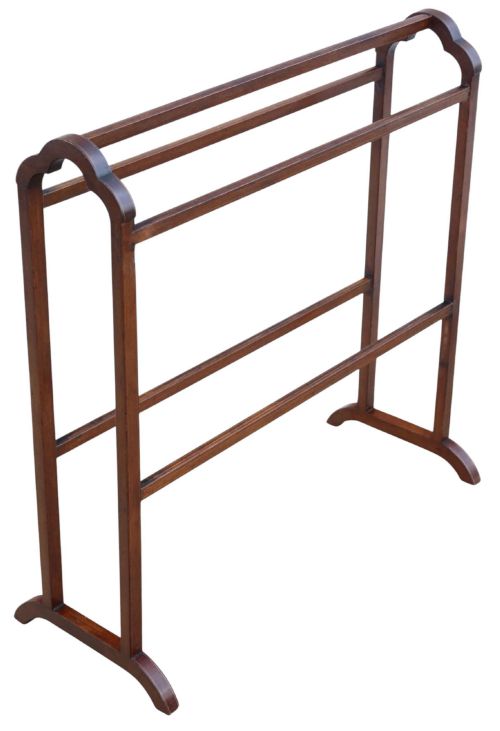
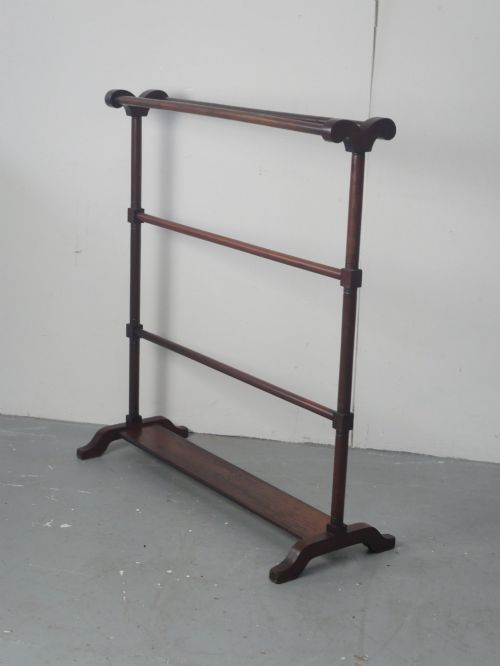
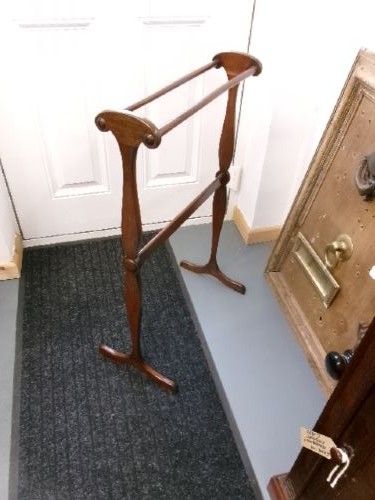
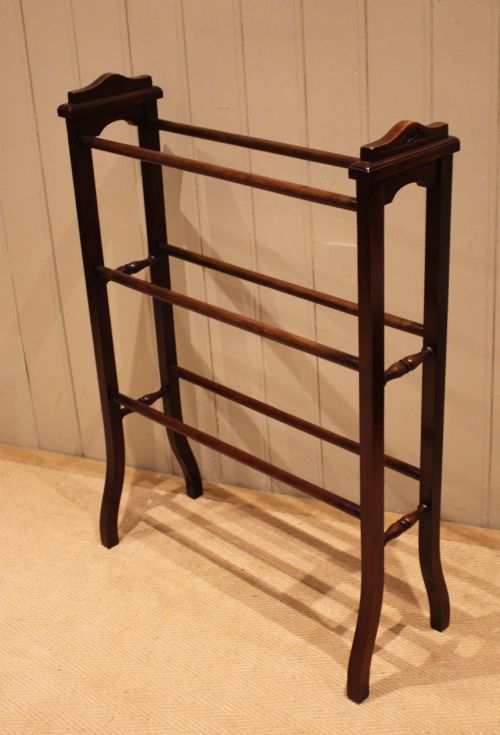
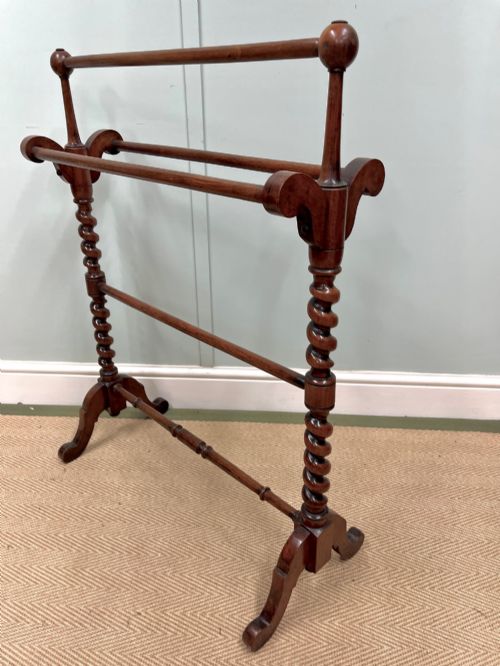
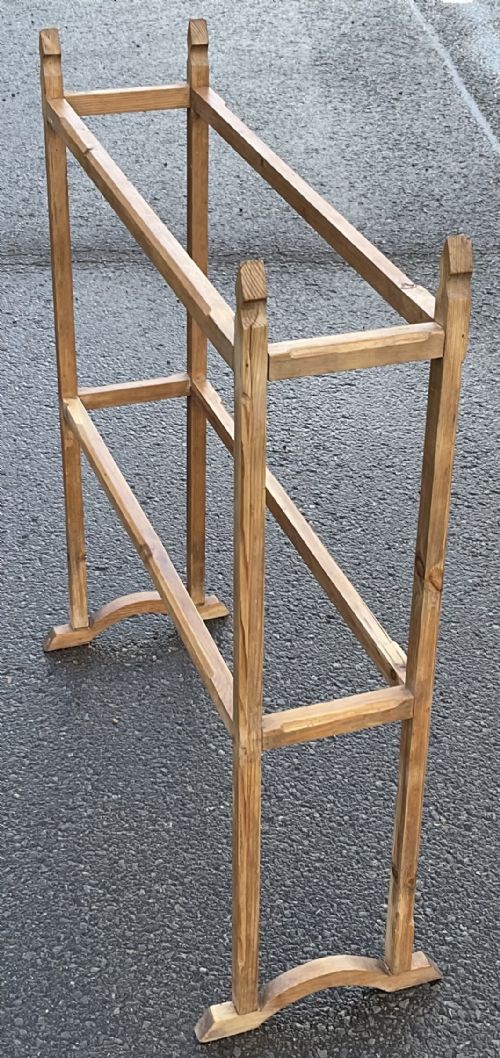
A traditional towel horse is a freestanding frame designed for drying and airing linens, appearing here in forms such as towel rails, towel rails and airers, and clothes racks. When you search for a traditional towel horse, you are looking at domestic furniture intended to hold textiles across multiple horizontal bars.
The pieces on this page span several distinct periods, including the Regency era, Victorian period, and Edwardian period, alongside items from the nineteenth century and the early twentieth century. Most examples you will encounter are mahogany or pine constructions originating from English workshops or traditional makers, supplemented by occasional variations like ebonised wood or lacquered items.
How they were made
Makers built these pieces primarily from solid timbers like mahogany, pine, elm, and hardwood, often shaping the uprights and rails to withstand daily domestic use. Joinery techniques varied from simple pegged joints in pine utility pieces to finer mortise and tenon connections in mahogany frames.
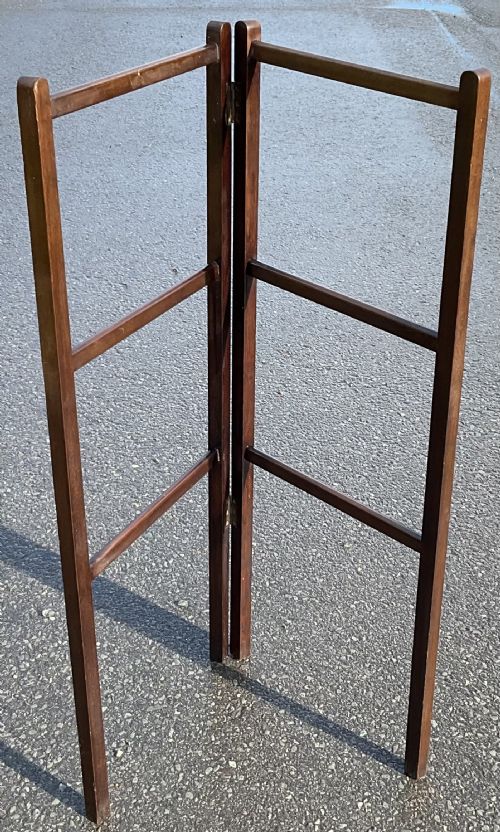
Surface finish played an important role in construction, with workshops applying clear polish, black ebonising, or intricate satinwood inlay to elevate the appearance of the timber. Some iterations incorporate brass fittings or hinges that allow the multi-bar frames to fold flat when not in use.
Mahogany and pine dominate the timber selection across these listings, spanning the Regency, Victorian, and Edwardian periods.
What varies in quality
The standard of a piece often rests on the choice of timber and the crispness of any decorative elements such as satinwood inlay or turned uprights. Heavier, denser woods like mahogany provide greater rigidity than lighter softwoods, influencing how solidly the frame stands during daily loading.
Construction details also distinguish standard utilitarian items from finer examples, particularly the precision of the joints connecting the rails to the side supports. The presence of secondary materials like brass hardware or specialised surface treatments such as ebonising marks a higher grade of manufacture.
The Traditional Towel Horse Glossary
- Towel horse
- A freestanding wooden frame with multiple horizontal rails used for airing and hanging laundry or towels. These objects range from simple folding bedroom stands to large stationary clothes racks.
- Ebonised wood
- Timber treated with a dark stain or finish to imitate ebony. This technique gained popularity in nineteenth-century cabinetmaking for a sleek, dark appearance.
- Satinwood inlay
- Decorative woodwork where contrasting pieces of light satinwood are inserted into recesses in a primary wood base. It appears on finer Edwardian and Victorian mahogany pieces.
- Clothes rack
- A tall freestanding framework designed for hanging garments or linens. Larger versions provide generous proportions for robes and heavier textiles.
Traditional Towel Horse: Frequently Asked Questions
How do I use a traditional towel horse?
Position the frame in a bathroom, bedroom, or dressing area where linens or garments need airing between uses. Simply drape towels or clothing across the horizontal rails to allow air circulation.
Folding versions can be adjusted in width and stored against a wall when floor space is needed. Keep the timber away from direct, prolonged sources of intense heat to protect the finish.
What is the difference between Edwardian and Victorian models?
Victorian towel horses, dating from the mid to late nineteenth century, tend to feature heavier proportions and solid mahogany or decorated pine construction. They often display robust, utilitarian designs built for daily household service.
Edwardian examples, from around 1900, frequently incorporate lighter mahogany frames with decorative touches like satinwood inlay and multiple bars. These later pieces reflect changing domestic interiors that favored slightly more refined bedroom furnishings.
Are these towel rails stable on carpets?
Standing towel rails rely on their base footprint and weight to remain upright during normal use. Mahogany and hardwood versions generally offer a solid stance, while lighter pine stands benefit from placement on firm flooring.
Distributing the weight evenly across the available rails prevents the frame from leaning. Multi-bar designs spread the load across the width of the structure.
Can I fold these towel horses away?
Many Edwardian and Victorian designs use hinged sections that allow the frame to fold flat when not in use. This mechanism makes storage straightforward in smaller rooms or closets.
Stationary models with fixed rails remain assembled and provide a permanent fixture for holding textiles. Check the construction of the specific piece to confirm whether the side panels are hinged.