



Edwardian Blanket Rack
An edwardian blanket rack is a practical wooden frame used for airing textiles, offering sturdy utility and warm period charm to any room.
Edwardian Blanket Rack
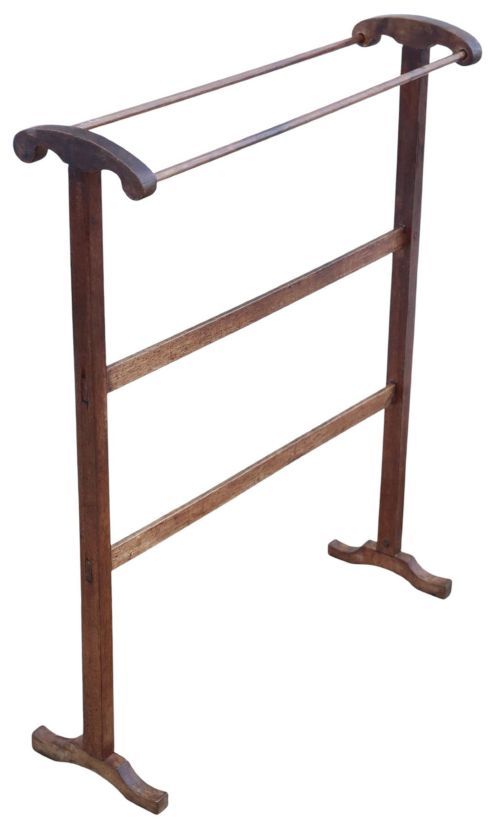
When you search for an edwardian blanket rack, you are looking at functional standing frames designed to hold and air linens, often listed as towel rail stands. These pieces belong predominantly to the Edwardian period, alongside examples originating from the Victorian era and the late nineteenth century.
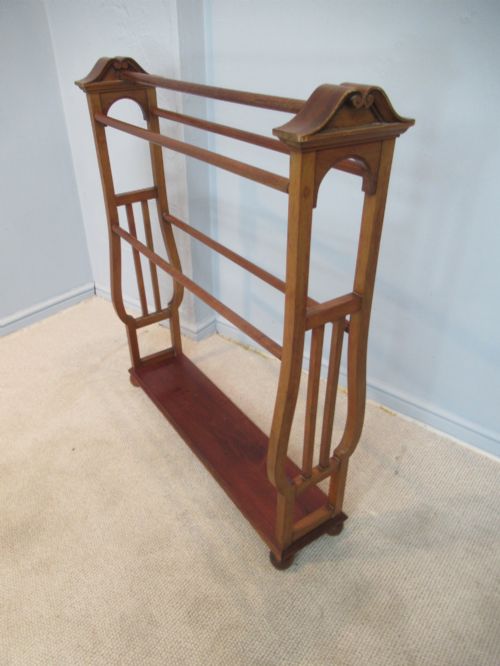
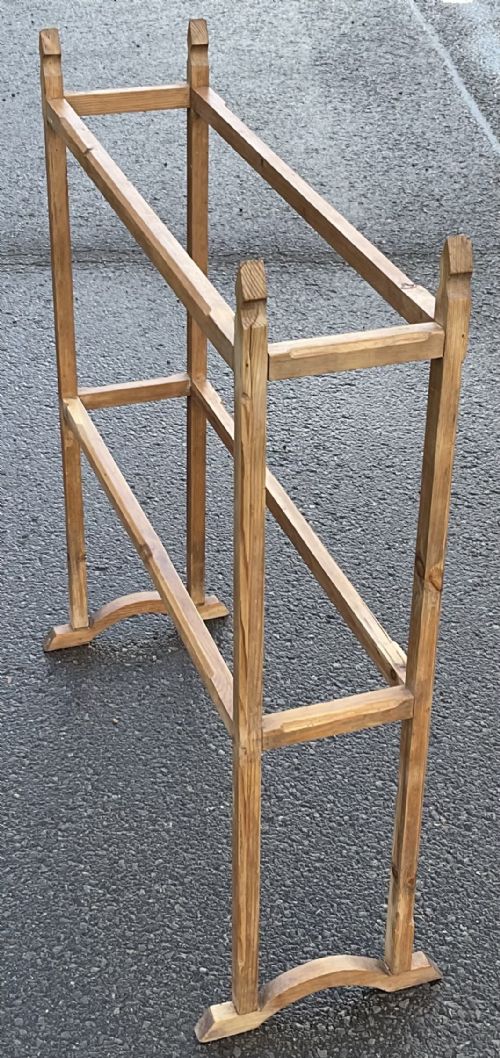
The versions you are most likely to meet on this page are constructed as standing wooden frames with multiple rails. They range from simple pine and oak frameworks to more refined mahogany models featuring five individual bars.
Makers of the period produced these stands in various woods, sometimes incorporating subtle decorative elements such as boxwood and satinwood inlay or striking ebonised finishes. Their primary function remains straightforward, serving to keep household linens orderly and dry.
How they were made
Makers built these standing frames using solid timbers such as mahogany, oak, walnut, and pine. Hardwoods provided the structural rigidity needed for daily domestic use.
Craftsmen enhanced the visual appeal of select mahogany pieces by integrating satinwood and boxwood inlay work. Other variations relied on ebonised wood surfaces to achieve a darker, uniform aesthetic.
Edwardian Blanket Rack Retail Price Guide 2026
Typical asking prices for edwardian blanket rack among the pieces listed under this phrase on Sellingantiques today, from the lower quarter to the upper quarter. They describe what is for sale here now, not the wider market.
The inventory records both simple utilitarian pine frames and decorative models enhanced with boxwood and satinwood inlay.
What varies in quality
The choice of primary timber sets the baseline for quality, with rich mahogany and figured walnut sitting above utilitarian pine. Selection of secondary woods and the presence of contrasting stringing indicate the maker's attention to detail.
Construction robustness distinguishes everyday utility pieces from finer examples. The complexity of the frame, such as accommodating five rails rather than a simple single bar, dictates the overall architectural presence.
The Edwardian Blanket Rack Glossary
- Edwardian
- Pertaining to the reign of King Edward VII, spanning the early years of the twentieth century. Furniture from this era often lighter in build than heavy Victorian predecessors.
- Inlay
- A technique where contrasting materials are inserted into depressions in the wood base to form a decorative pattern. Satinwood and boxwood were frequent choices for this detail.
- Ebonised
- Wood treated with a finish to imitate ebony. This dark, polished surface treatment was popular for achieving a formal appearance.
- Standing towel rail
- A freestanding wooden furniture item fitted with horizontal bars. Designed to hold towels or blankets upright off the floor.
Edwardian Blanket Rack: Frequently Asked Questions
What is an edwardian blanket rack used for?
These freestanding wooden frames were originally designed to hold and air household textiles, towels, and blankets in bedrooms or dressing rooms.
Today, they serve the exact same practical function while adding traditional warmth and period character to modern interior spaces.
How do I tell Edwardian pieces from Victorian ones?
Edwardian pieces generally lean towards lighter proportions and refined decorative accents, whereas Victorian examples tend to use heavier timber construction.
Examining the primary wood and any inlay work helps determine the prevailing stylistic shift from the late nineteenth century into the early twentieth.
Are these stands sturdy enough for daily use?
Constructed from hardwoods like oak, walnut, and mahogany, these frames were built to withstand heavy daily domestic duty.
Their solid joinery and freestanding bases ensure they remain robust and functional for holding textiles in active modern homes.
What woods were commonly used?
Makers utilised a variety of timbers depending on the intended finish and quality tier of the piece. Common selections include mahogany, oak, walnut, and pine.
Finer models frequently incorporated contrasting elements in satinwood, boxwood, or ebonised wood to elevate their visual appearance.