
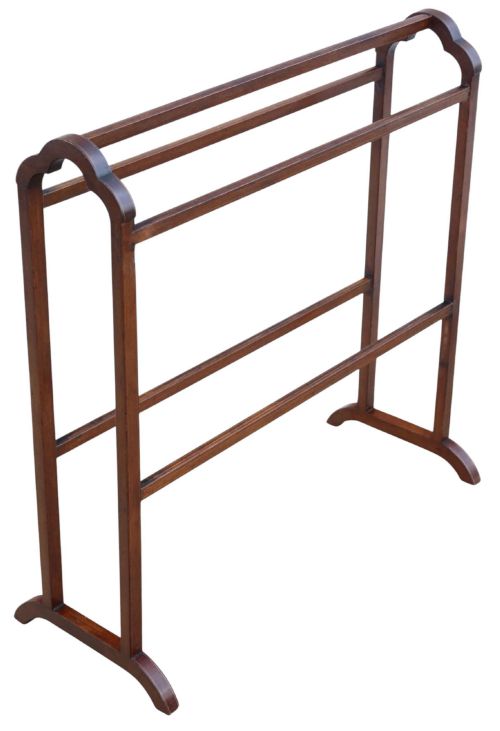
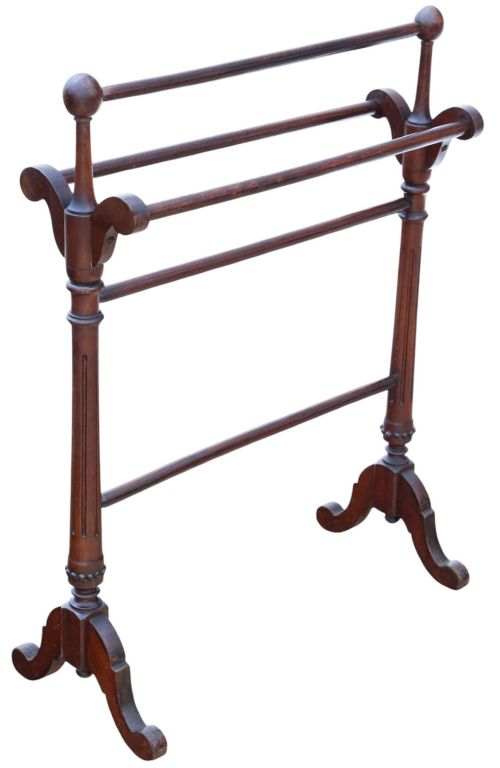
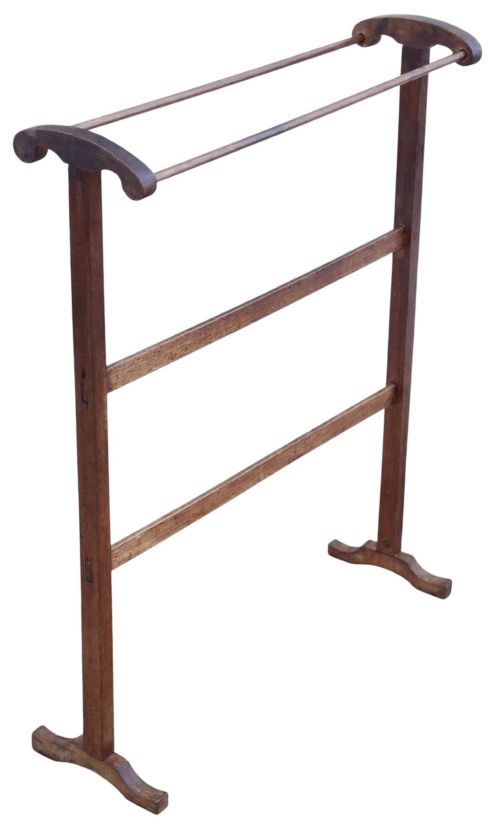
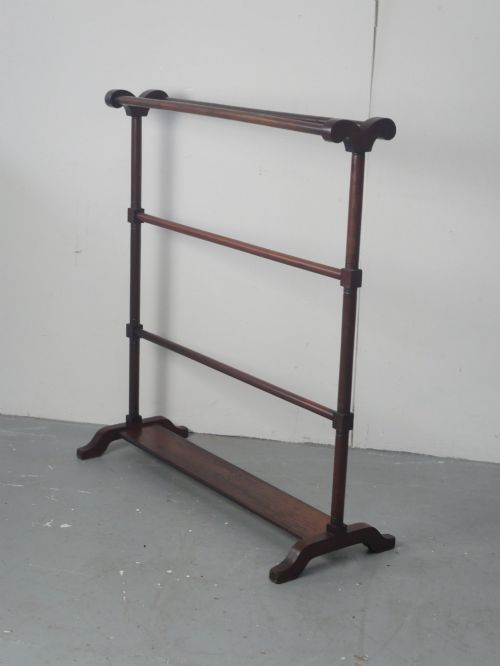
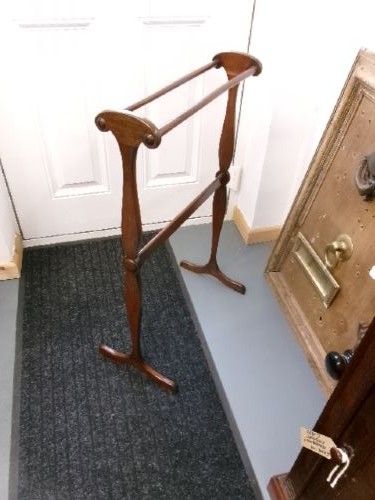
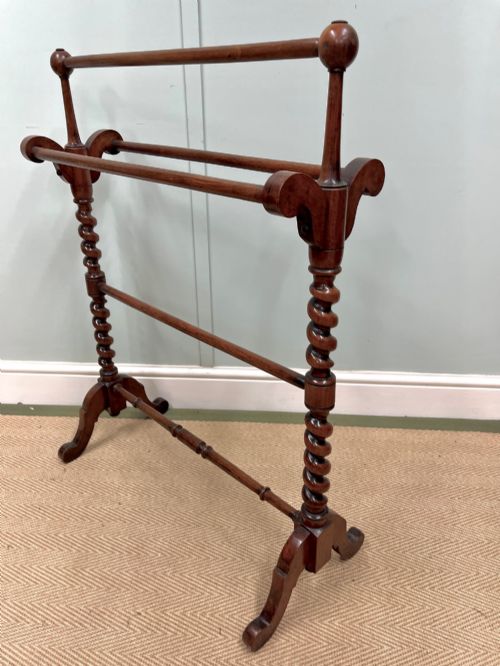


Brown Mahogany Towel Rack
These brown mahogany towel rack examples bring period warmth and practical utility to a bedroom or bathroom.
Brown Mahogany Towel Rack
A brown mahogany towel rack is a practical freestanding piece designed for domestic utility, typically featuring multiple rails for hanging household linens. You will encounter various forms across this selection, from small standing rails to larger folding cheval designs.
Most pieces date from the nineteenth century through the Edwardian era, spanning the Victorian and Regency periods. The inventory ranges from simple three-fold frames to substantial five-bar stands.
Makers utilised rich hardwoods during these eras, occasionally combining mahogany with oak. You will find both plain polished surfaces and decorated frames featuring delicate inlay work.
How they were made
Cabinetmakers constructed these frames primarily from solid mahogany and mixed hardwoods, occasionally incorporating oak for structural strength. The wood was carefully polished to highlight the natural grain and deep brown colour.
More decorative examples feature contrasting details such as satinwood and boxwood inlay work along the rails or uprights. Brass fittings frequently secured the pivoting sections of folding cheval designs.
The listings span from the Regency period through Victorian times to Edwardian examples dated around nineteen hundred.
What varies in quality
The standard of timber selection and the complexity of the frame determine the distinction between basic utility pieces and finer examples. Heavier five-bar stands and folding cheval mechanisms require more intricate carpentry than simpler three-fold rails.
The presence of fine decorative details such as satinwood and boxwood inlay elevates the character of an Edwardian or Victorian stand. Construction methods utilising solid mahogany throughout rather than secondary hardwoods separate the higher tier of pieces.
The Brown Mahogany Towel Rack Glossary
- Cheval towel rail
- A freestanding pivoting frame that swings on hinges or upright supports. This design allows the rails to adjust angles for drying multiple items.
- Satinwood inlay
- A contrasting light wood marquetry technique used to ornament dark mahogany surfaces. Cabinetmakers flush-fitted these pale decorative elements into the wood.
- Five bar towel rail
- A larger standing frame featuring five horizontal wooden rails for hanging linens. These provide substantial hanging capacity compared to smaller domestic rails.
- Regency
- A British design period spanning the early nineteenth century defined by classical restraint. Pieces from this era often display clean architectural lines and refined proportions.
Brown Mahogany Towel Rack: Frequently Asked Questions
How do I date a brown mahogany towel rack?
Dating relies on stylistic clues and construction methods typical of the nineteenth and early twentieth centuries. Victorian and Edwardian examples often feature distinct proportions and decorative inlays.
Simpler forms can persist across multiple decades, making timber selection and joinery style the most reliable indicators of age.
What is a folding cheval towel rail?
A folding cheval rail uses hinged sections that allow the frame to angle outward or fold flat when not in use. This mechanism was particularly popular in larger Victorian households.
The pivoting design required sturdy brass hinges to support the weight of multiple damp linens.
Where should I place a standing towel rail?
These freestanding pieces suit bedrooms, dressing rooms, and period bathrooms where floor space allows for a decorative utility item. Their open frames keep towels accessible while airing them naturally.
Ensure placement avoids direct heat sources that could dry out the historic mahogany timber.
How do I care for mahogany towel rails?
Maintenance involves dusting with a soft cloth and occasionally applying a suitable wax to nourish the polished hardwood. Avoid soaking the wood or placing excessively wet items directly on antique surfaces.
Gentle cleaning preserves the natural patina developed over the Victorian and Edwardian periods.