
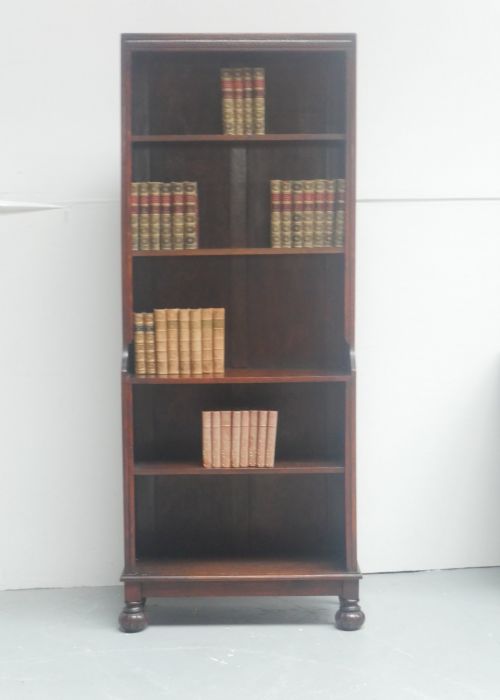
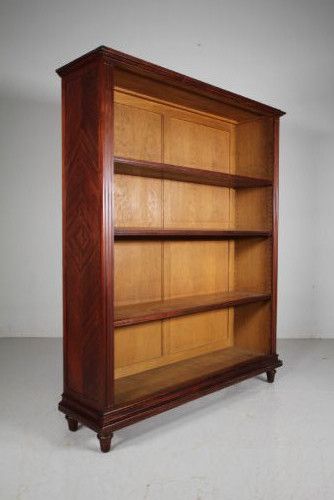
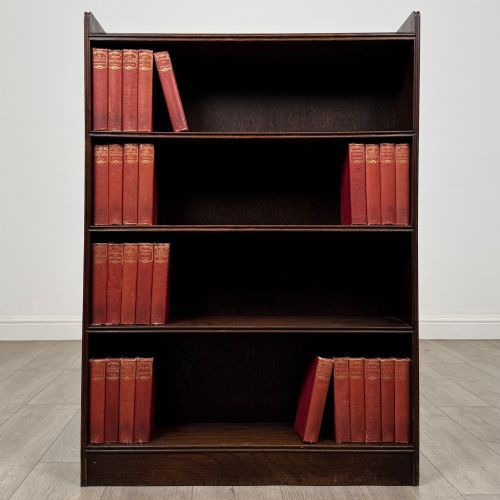
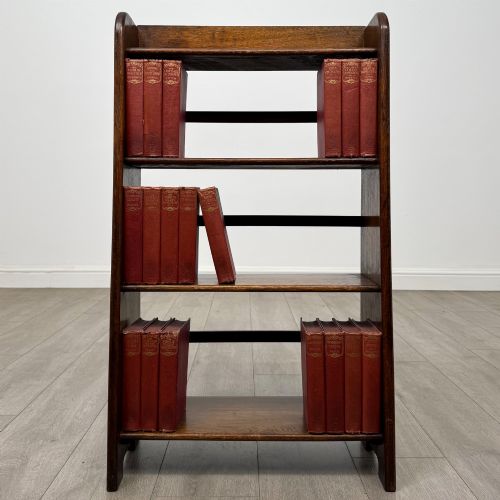


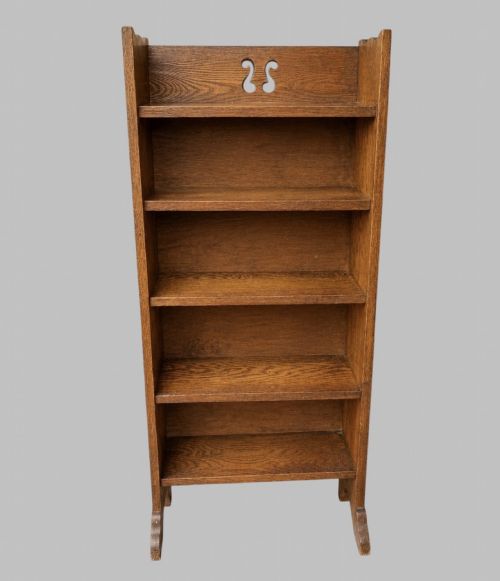

Freestanding Oak Bookshelf
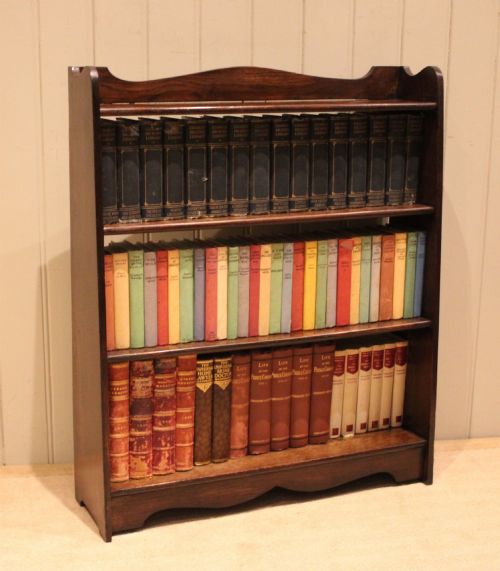
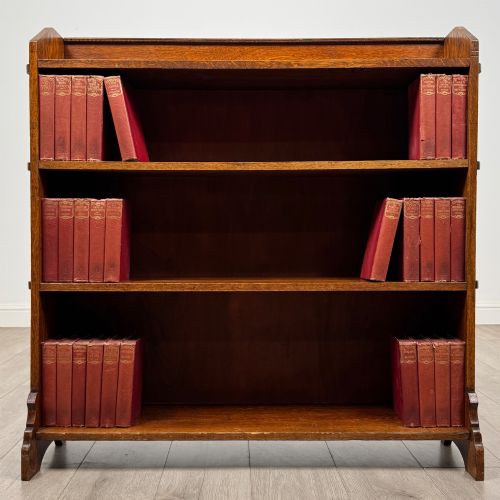
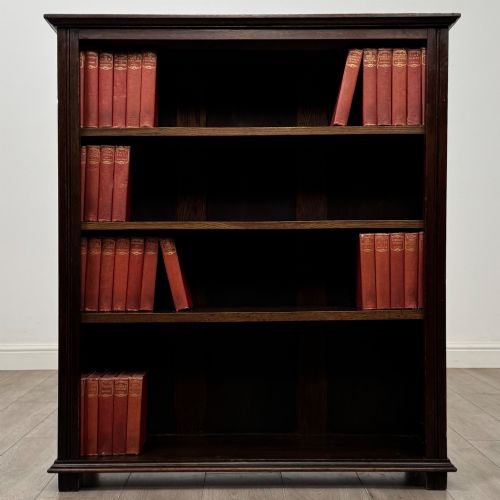
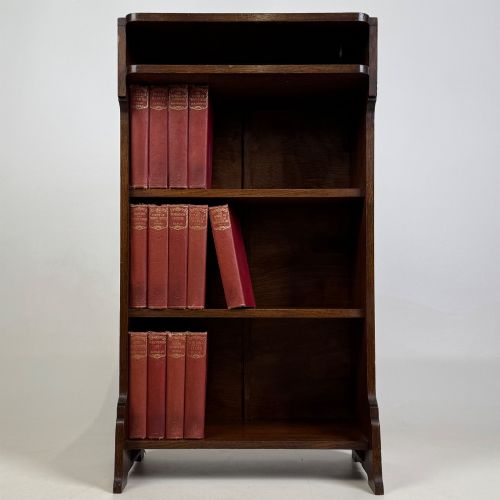
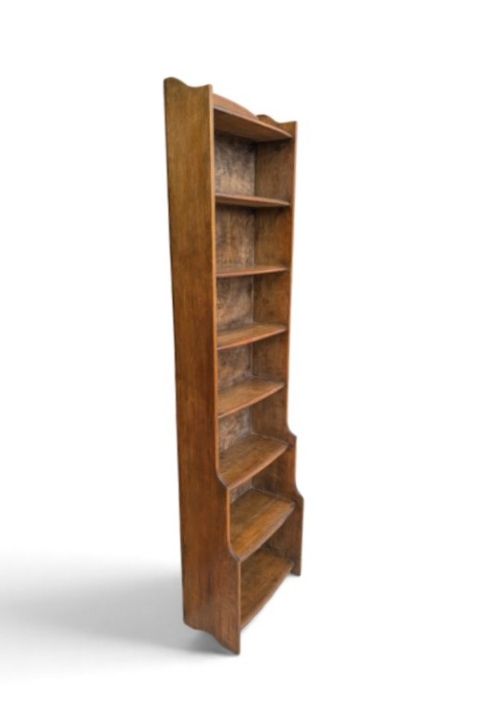
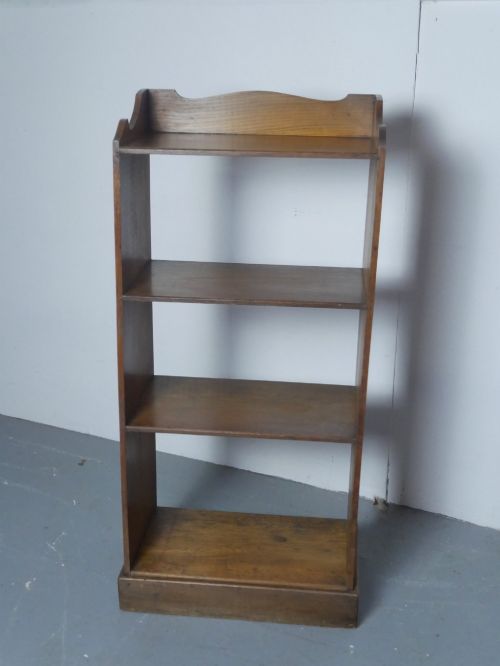
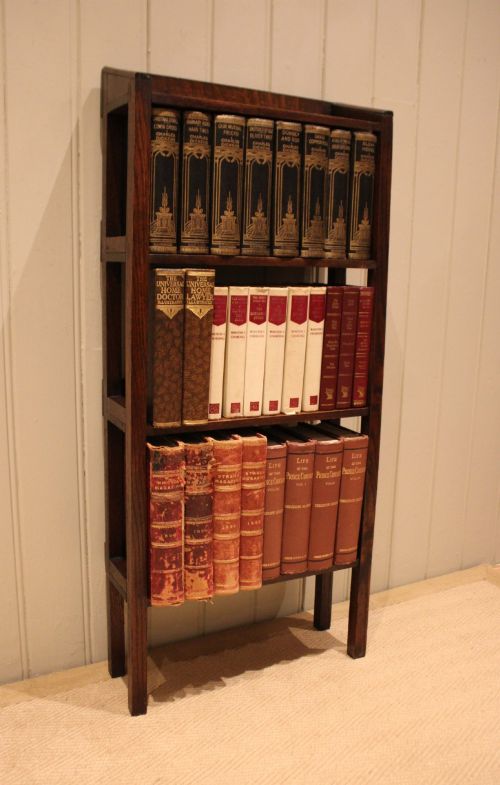
A freestanding oak bookshelf holds books in the middle of a room, combining solid utility with period character.
Freestanding Oak Bookshelf
A freestanding oak bookshelf provides accessible open storage for books without needing wall attachment. These pieces emerge from the 19th Century, Edwardian era, 1910, 1920, and 1930 periods, showing utility alongside decorative detail.
The Edwardian period and the 1920s supply the majority of examples on this page, alongside Arts and Crafts designs. Forms range from low waterfall bookcases and angled bookstands to large open shelving units.
Victorian Gothic variants also appear, demonstrating heavier proportions and carved ornamentation. Most pieces are straightforward open bookcases designed for domestic rooms and studies.
Materials and construction
Oak dominates the construction, appearing in golden tones, plain finishes, and carved formats alongside occasional mahogany and metal elements. Workshops utilised solid timber boards for the main body and shelves, building sturdy carcasses capable of holding heavy volumes.
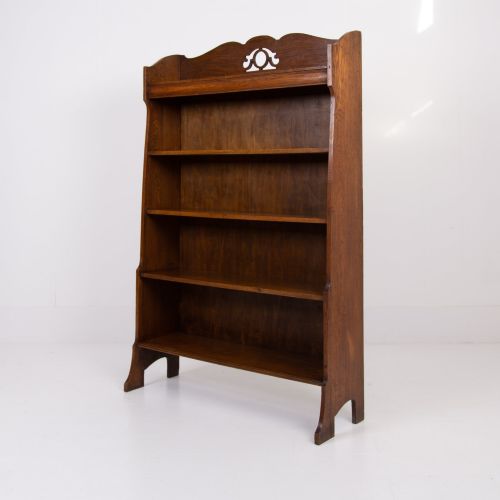
Decorative touches include beaded edges, mouldings to the front, and decorative cut-outs characteristic of the Arts and Crafts movement. Adjustable shelving systems also appear in Edwardian pieces, offering practical flexibility.
Some Edwardian designers added decorative cut-outs to their oak bookcases, ensuring even a row of ledgers had a hint of whimsy.
Distinctions in quality
Quality rests on the selection of the oak timber and the crispness of any carved or moulded detailing. Better pieces display thoughtful proportions, such as neat footprints and balanced shelf heights, rather than purely utilitarian construction.
Artisan involvement elevates certain examples, particularly those featuring Arts and Crafts cut-outs or Victorian Gothic architectural elements. Simpler factory-made units from the interwar years focus strictly on functional capacity.
The Freestanding Oak Bookshelf Glossary
- Freestanding
- A piece of furniture designed to stand independently on the floor without requiring wall support or fixing. This format allows bookcases to sit centrally in a room or against any partition.
- Open bookcase
- A bookcase featuring exposed shelves without glass doors or wooden fronts. This style allows immediate access to the book collection.
- Waterfall bookcase
- A shelving unit where each lower shelf steps forward and is wider than the shelf above it, creating a cascading profile. This form gained popularity during the Edwardian period.
- Arts and Crafts
- A design movement prioritising traditional craftsmanship, visible construction methods, and simple decorative motifs. Pieces from this style often feature exposed grain and hand-carved details.
Freestanding Oak Bookshelf: Frequently Asked Questions
Where should I place a freestanding oak bookshelf?
These bookcases work well against living room walls, in home studies, or positioned to divide an open space since the backs are often finished or designed to be seen.
Ensure the floor is level so the upright timber frame remains stable under the weight of books.
How do I identify an Edwardian oak bookcase?
Edwardian pieces typically combine lighter oak tones with modest proportions, sometimes incorporating adjustable shelves or simple carved edgings.
They reflect the domestic interior trends of the early twentieth century, balancing practicality with understated decoration.
Can these shelves hold heavy books?
Solid oak construction provides natural strength, making these bookcases well-suited for supporting dense rows of hardback volumes and reference books.
Heavier 19th Century and Arts and Crafts examples offer particularly robust frames for substantial libraries.
What is the difference between an open bookcase and a bookstand?
An open bookcase generally provides multiple tiers of vertical shelf space for general book storage against a wall.
A bookstand often refers to smaller, specialised, or angled formats designed to hold specific volumes or sit at a lower height.