

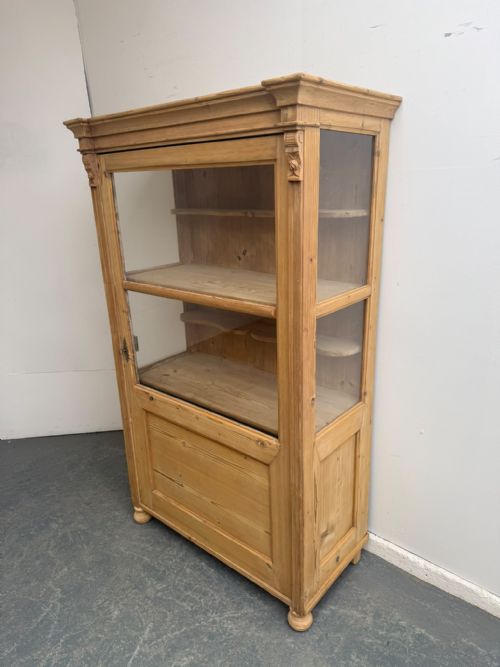
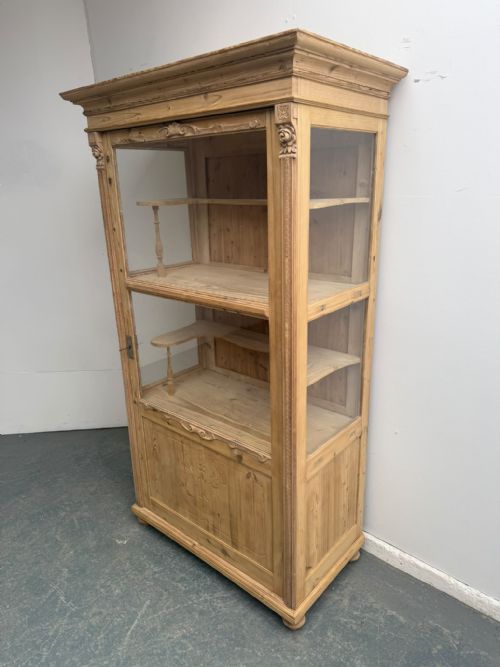
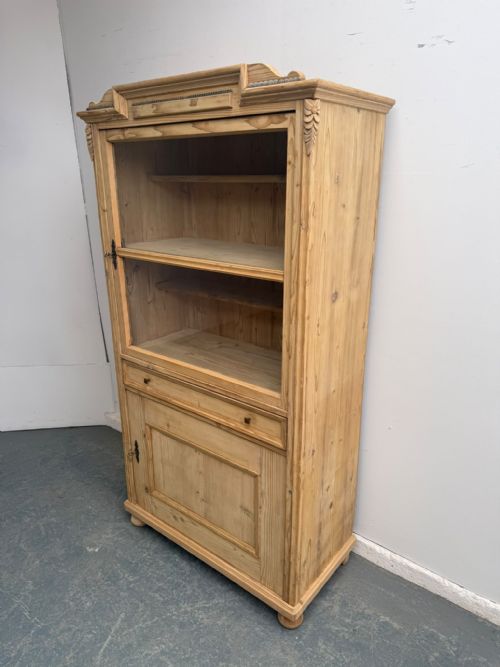


Freestanding Glass Vitrine
A freestanding glass vitrine lets light pass right through timber framing to show off precious objects from every possible angle.
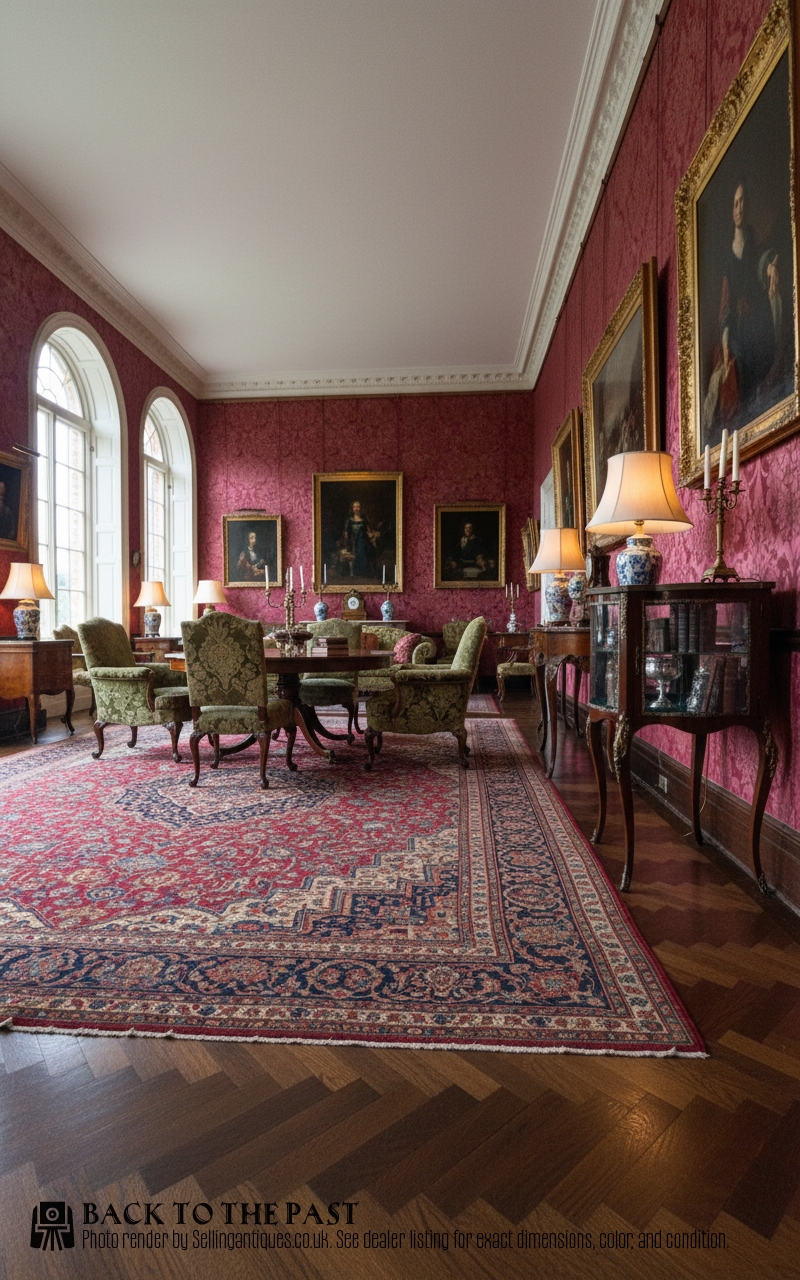
Freestanding Glass Vitrine
A freestanding glass vitrine is a tall or low display cabinet designed to exhibit books, small curiosities, or shop goods within transparent walls. When you search for this phrase, you find glazed cases built to stand clear of the wall in the middle of a room or shop floor.
The versions you meet most often on this page span the Victorian and Edwardian eras, running from late nineteenth-century French and English pieces up through nineteen-twenty tower cabinets and Art Deco steel designs. These take the form of display cabinets, bookcases, and specialised pedestals.
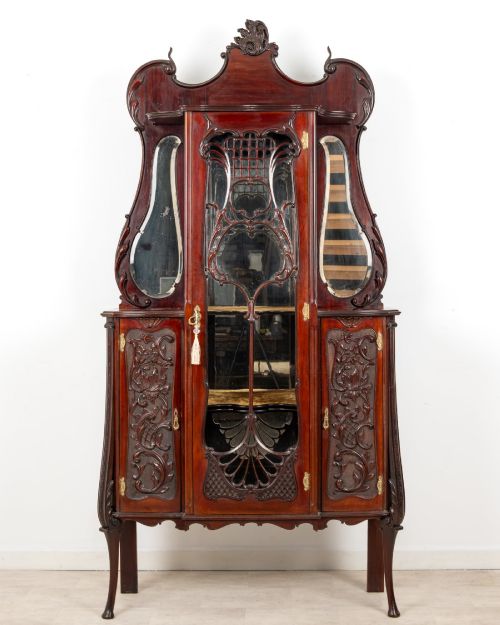
Timbers range from everyday pine and heavy oak to polished mahogany, satinwood, kingwood, walnut, and ebonised frames. Some pieces carry brass mounts, ormolu, or inlaid decoration while others use steel structures paired with leather accents.
Materials and construction
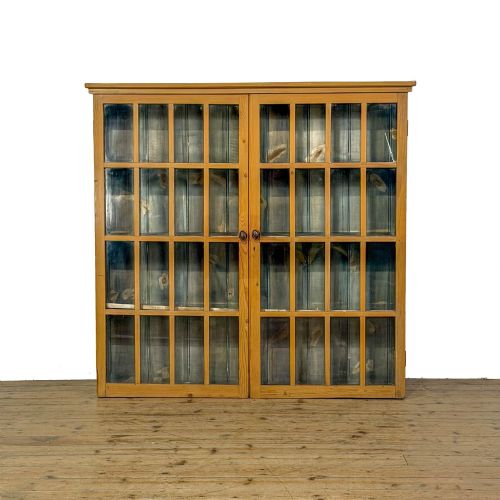
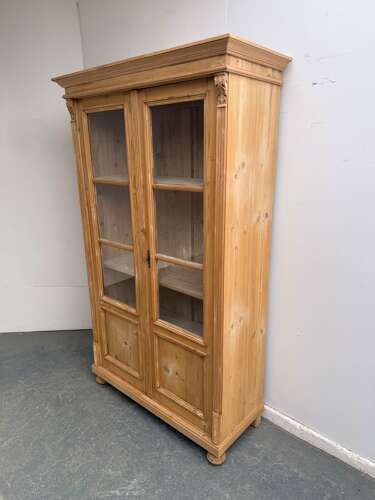
Makers built these cabinets using solid or veneered hardwoods like mahogany, oak, and walnut, alongside softwood pine frames meant for waxing or painting. Glazing forms the main body of each piece, supported by brass fittings, ormolu mounts, and occasionally steel and leather.
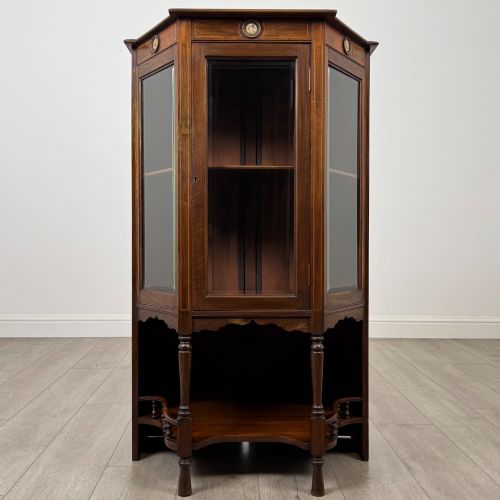
Cabinetmakers joined glass panels into timber frames using traditional joinery, creating tall towers, cylindrical pedestals, and flat or octagonal display cases. Structural detailing includes inlaid marquetry, carved mahogany, and ebonised finishes applied to nineteen-century and early twentieth-century carcases.
Freestanding Glass Vitrine Retail Price Guide 2026
Typical asking prices for freestanding glass vitrine among the pieces listed under this phrase on Sellingantiques today, from the lower quarter to the upper quarter. They describe what is for sale here now, not the wider market.
Cabinet forms include tall tower units, octagonal jardiniere display cases, cylindrical pedestals, and traditional two-door bookcases.
Quality differences
The upper tier of these cabinets relies on refined timber selection, such as figured mahogany or kingwood veneers, joined with precise cabinetwork rather than basic softwood construction. Quality shows in the crispness of carved details, the weight of cast brass or ormolu mounts, and the balance of tall tower or cylindrical forms.
Simpler pieces built from pine or standard oak offer practical utility for domestic display but lack the decorative inlays and specialised hardware found on grander French and English showroom examples. The integration of curved glass panes and fitted doors also distinguishes standard utilitarian shop cases from high-status drawing room vitrines.
F. Sage & Co
The Freestanding Glass Vitrine Glossary
- Vitrine
- A glass display cabinet used primarily for showing porcelain, curiosities, or fine objects. These cases usually feature glass panes on multiple sides to maximise internal illumination.
- Bijouterie cabinet
- A shallow glazed display table or cabinet designed specifically for small valuable trinkets and jewellery. They often lift open from the top or feature velvet-lined interior surfaces.
- Ormolu
- Gilded bronze ornamentation applied to furniture, popular in nineteenth-century French cabinetmaking. This metalwork adds bright metallic highlights to dark timber frames.
- Vernis Martin
- A type of simulated Japanese lacquer developed in France, used to decorate fine eighteenth and nineteenth-century cabinets. The technique involves applying multiple layers of translucent varnish over painted surfaces.
- Inlay
- A decorative technique where contrasting strips of wood, shell, or metal are set flush into the surface of a timber panel. Edwardian mahogany cabinets frequently employ this method for geometric or floral borders.
Freestanding Glass Vitrine: Frequently Asked Questions
What is a freestanding glass vitrine?
A freestanding glass vitrine is a glazed display cabinet designed to stand independently away from room walls. It allows light to illuminate items from all sides.
These cabinets were built in various shapes, including tall towers, octagonal pedestals, and cylindrical cases, utilising woods like mahogany, oak, and pine alongside glass and brass.
Where were vitrines used?
Vitrines served both domestic and commercial environments, appearing in Victorian and Edwardian drawing rooms, museums, and retail shops. They held delicate ornaments, books, and merchandise.
Commercial examples often functioned as shop display cabinets, while domestic versions protected collectibles and bijouterie from dust.
How do I care for wood and glass?
Protect antique timber surfaces by maintaining stable room humidity and applying appropriate waxes or polishes suited to woods like mahogany, oak, or walnut. Avoid placing cases in direct sunlight.
Clean the glass panels gently with standard glass cleaner applied to a cloth rather than sprayed directly, preventing moisture from seeping into old timber frames or brass fittings.