






Frameless Wall Mirror
These frameless wall mirror pieces capture the clean geometry of the nineteen thirties, offering straightforward reflection without heavy frames.
Frameless wall mirror forms
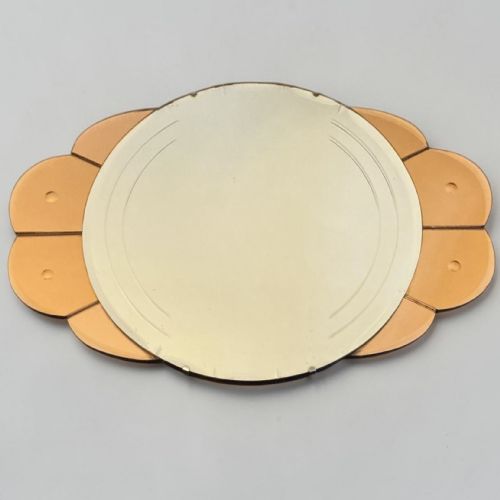
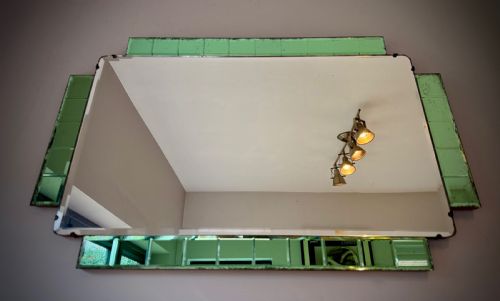
A frameless wall mirror relies entirely on its cut and shape for visual impact, presenting a pure surface without surrounding wood or metal borders. Examples on this page include oval and octagonal formats.
The nineteen thirties period dominates these items, bringing distinct Art Deco character to domestic spaces. Certain pieces also function as display stands.
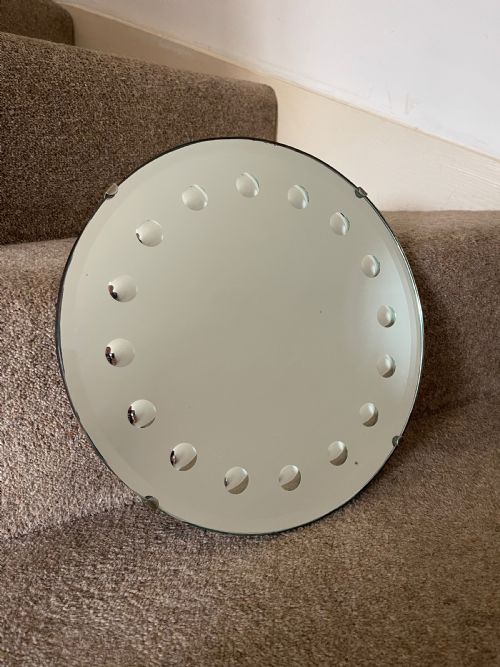
Circular and hanging wall mirrors complete the recorded range, showing how makers varied the geometry while keeping the glass completely exposed.
Materials and construction
Construction involves plain mirrored glass and standard glass panels, sometimes mounted with wooden elements or supported by chrome fittings. Edges typically receive decorative bevelling or precise cutting.
Makers shaped the glass into distinct geometric silhouettes, utilising simple hanging mechanisms or small stands to secure the frameless plate without obscuring the perimeter.
Every listed frameless wall mirror dates to the nineteen thirties and embodies the Art Deco style.
Judging quality
Quality rests in the precision of the glass cutting and the clarity of the reflection across the unbordered surface. Clean bevelling distinguishes a superior nineteen thirties piece from a simpler plate.
The integrity of any supporting chrome or wood components dictates how well the structure holds the mirror against the wall.
The Frameless Wall Mirror Glossary
- Frameless wall mirror
- A looking glass constructed without a traditional surrounding frame, leaving the shaped edges exposed to view. This design focuses attention entirely on the glass geometry.
- Art Deco
- A design style from the nineteen thirties characterised by sleek geometric shapes and streamlined forms. Pieces from this era often feature symmetrical cuts and clean lines.
- Bevelling
- An angled edge cut along the perimeter of the glass to catch the light. This technique adds depth and a finished appearance to unbordered plates.
- Chrome
- A metallic finish utilised for structural fittings and mounts in twentieth century design. It provides a bright, durable support that complements modern glass.
Frequently Asked Questions
How do I hang a frameless wall mirror?
These items typically use discreet rear mounts or secure hanging loops designed to support the glass weight safely against a wall.
Ensure proper fixings match your wall type to keep the unbordered edges stable and level.
What period are these mirrors from?
Recorded pieces originate from the nineteen thirties, carrying distinct Art Deco design elements in their silhouettes.
They reflect the modern aesthetic of that decade through simple geometric forms.
Can these mirrors be used as display stands?
Certain items serve a dual purpose as both wall mirrors and display stands depending on their specific configuration.
Check the individual piece details to see if a stand mechanism is included alongside the hanging hardware.
What shapes are available?
The selection includes oval, octagonal, and circular formats, each defined by precise glass cutting rather than a frame.
These varied shapes allow the glass to serve as the primary decorative element in a room.