


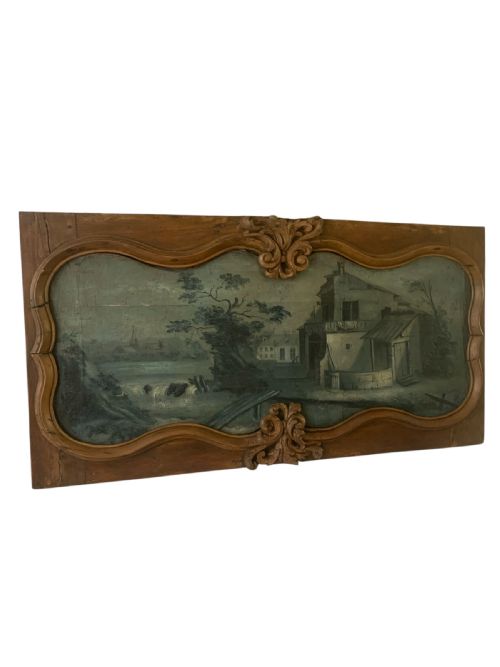


Framed Wooden Panel Painting
A framed wooden panel painting brings together rigid wooden supports and oil, tempera, or gouache pigments within period frames.
Framed Wooden Panel Painting
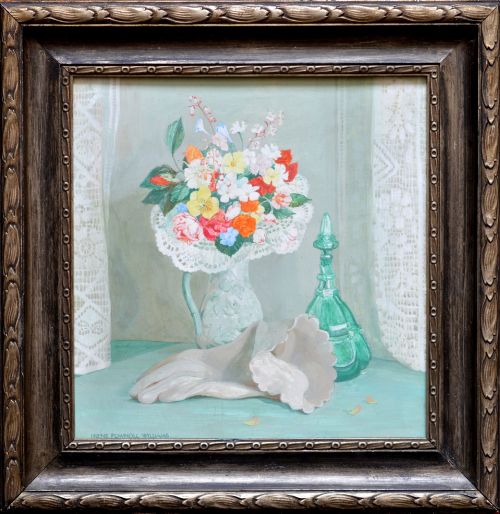
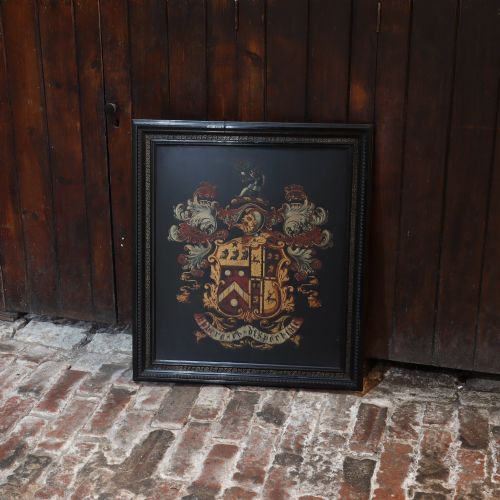
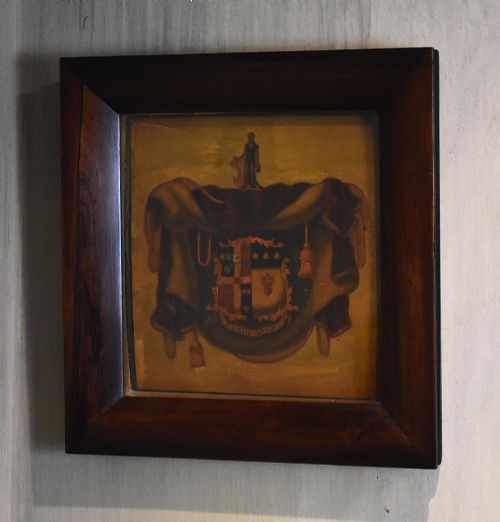
A framed wooden panel painting consists of a rigid wooden support holding an oil, tempera, or gouache work, frequently housed in a period wood, metal, or burr maple frame. Buyers seek these pieces for their tangible weight, distinct from canvas, and their survival across centuries in forms ranging from religious icons to heraldic coats of arms.
The selections available span from eighteenth-century pine panels and nineteenth-century landscapes to early twentieth-century views and decorative book cover bindings. Wall art and architectural elements dominate, alongside portraits, still lifes, and regional landscapes created by named and anonymous painters.
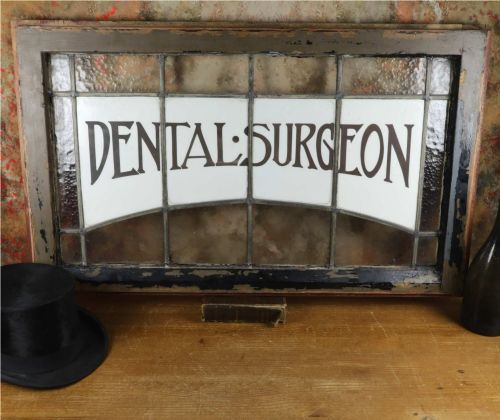
Origins stretch from Britain and France to Russia, Italy, and India, demonstrating diverse vernacular and academic traditions. Pieces appear as standalone artworks, overdoors, coach panels, and repurposed architectural fragments.
Materials and construction
Makers applied oil paint, tempera, or gouache directly onto prepared wooden surfaces such as pine, oak, or wood panels, sometimes using cardboard or board as a secondary support. Wood panels offered a stable foundation that resisted the slackening common to woven canvas.
Frames made from wood, burr maple, brass, or glass protect the painted edges and contribute structural integrity to the object. Joinery, backing boards, and original protective glazing reflect the period workshop practices of each origin.
Listings feature wood, paint, glass, and brass across periods spanning the eighteenth, nineteenth, and twentieth centuries.
Markers of distinction
Quality rests in the handling of the paint and the preservation of the wooden support against warping or historical woodworm. Superior examples retain their original pigments without excessive overpaint and sit securely within contemporary or period frames.
The skill of the brushwork defines the upper tier, distinguishing accomplished portraits and landscapes from simpler naive or folk art pieces. Retaining original mounting, framing, and untouched surfaces elevates a panel's historical integrity.
Irene Christobelle Pownoll Williams·Hubert Wellington·Icilio Federico Joni·William Williams·Alfred John Bouchette·Kershaw Schofield·Joseph Vickers de Ville
The Framed Wooden Panel Painting Glossary
- Panel painting
- A painting executed on a flat piece of wood rather than stretched canvas. This rigid support requires careful seasoning of the timber to prevent splitting.
- Tempera
- A permanent, fast-drying painting medium consisting of coloured pigment mixed with a water-soluble binder material. It yields a matte surface that resists yellowing over time.
- Icon
- A religious work of art, usually painted on a wooden panel within Eastern Christian traditions. Gold leaf and dark varnishes frequently accompany these sacred subjects.
- Trumeau
- A decorative architectural wall mirror or panel containing an oil painting in the upper section. French interiors popularised this combination during the nineteenth century.
- Tavolette
- Painted wooden book cover bindings historically used in Siena to record administrative archives. These pictorial panels function as standalone artworks when framed.
Framed Wooden Panel Painting: Frequently Asked Questions
How do I care for a wooden panel painting?
Keep the piece away from direct sunlight, radiators, and damp environments to protect the wood from expanding or contracting.
Dust the surface gently with a soft, dry brush and avoid liquid cleaners on both the paint and the frame.
Are these paintings on solid wood or veneer?
Most historical panels utilise solid timbers such as pine, oak, or fruitwood, prepared specifically to receive pigment.
Later decorative panels sometimes apply paint over prepared cabinet woods or secondary structural boards.
Can I hang a heavy wooden panel safely?
Assess the weight of the wood and the strength of the frame before selecting appropriate wall fixings.
Ensure picture wire and brackets are rated to support rigid panels securely without straining the corners.
How do I distinguish tempera from oil paint?
Tempera dries to a matte, opaque finish that lacks the glossy sheen and thick impasto texture associated with oil paint.
Microscopic examination often reveals the quick-drying, cross-hatched brushstrokes typical of tempera applications.