



Framed Vintage Seascape Art
Framed vintage seascape art brings the movement and atmosphere of coastal waters directly into a room.
Framed Vintage Seascape Art
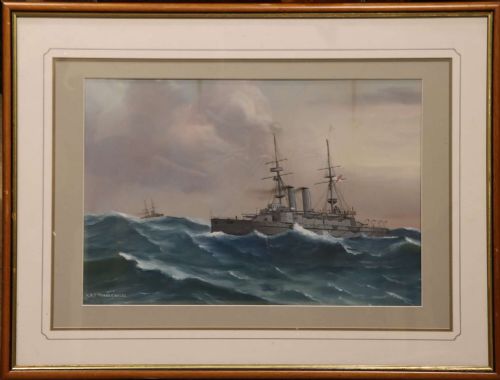
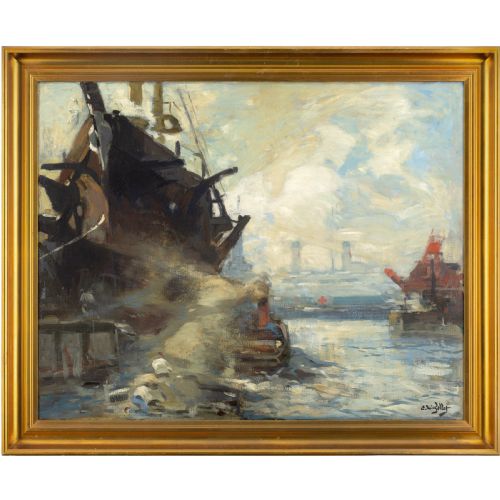
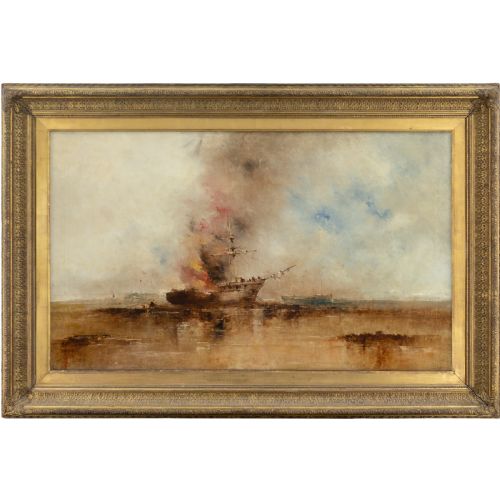
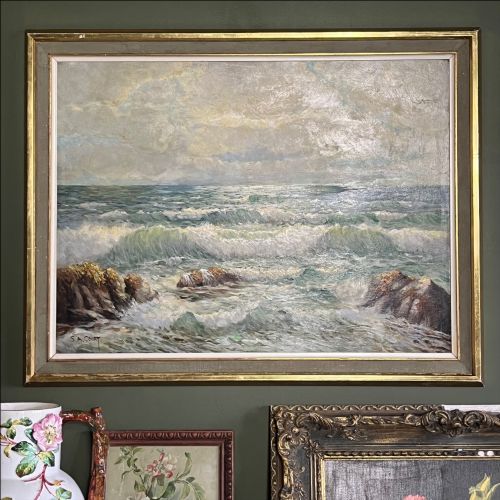
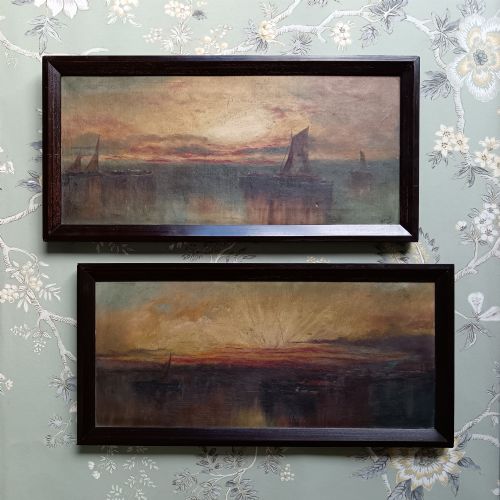
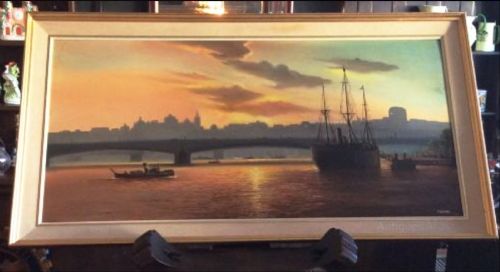
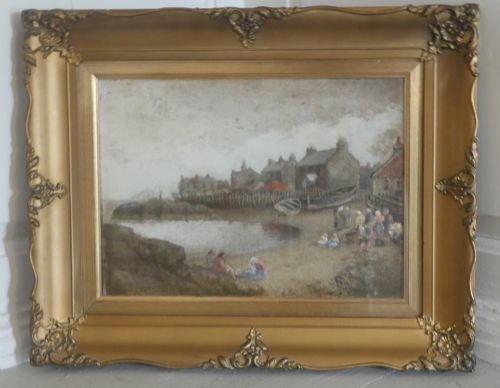
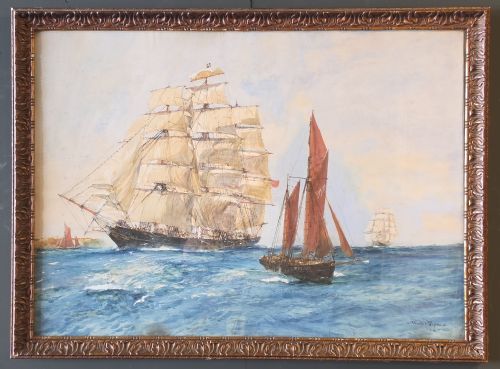
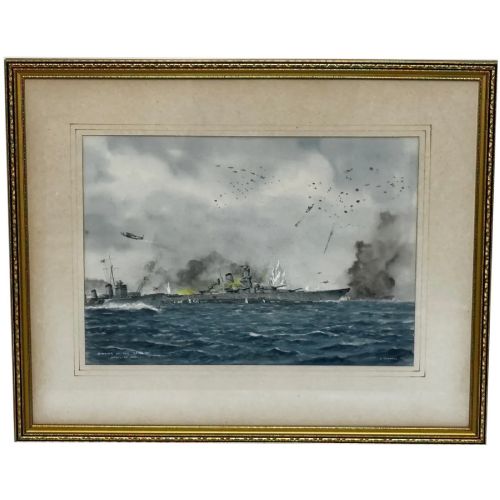
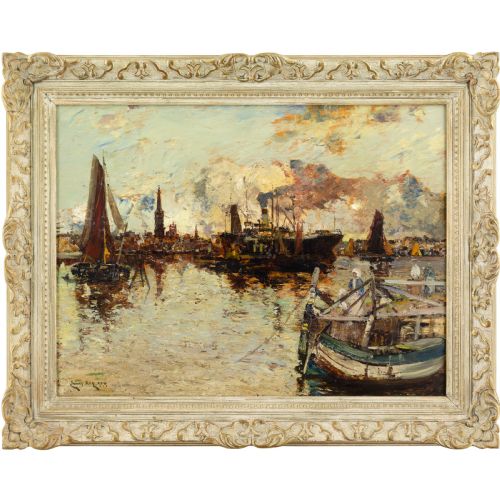
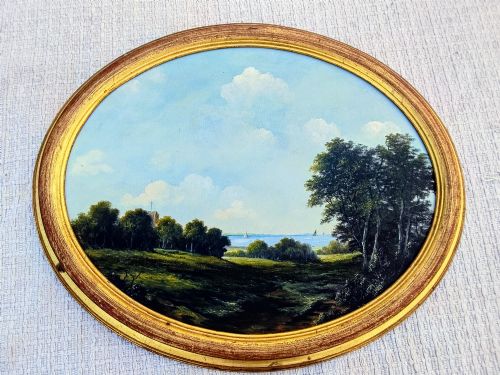
Framed vintage seascape art captures maritime scenes, coastal harbours and open waters across the nineteenth and twentieth centuries. These works range from early Victorian shipping views and Edwardian watercolours to mid-century modern oil paintings.
The pieces typically depict sailing vessels, stormy seas, tranquil coastal villages and industrial ports. Most examples on this page are presented in period wooden or gilt frames that complement the painting style.
Materials and methods
Artists painted these works primarily with oil paint on canvas or board, alongside watercolours and gouache on paper. Canvases were stretched over wooden frames and frequently housed within decorative gilt wood mouldings.
Techniques span traditional studio production and en plein air painting, where artists worked directly on the coast to capture shifting light. Paper supports for watercolours were protected beneath glass within fitted frames.
Geographic subjects range from local Cornish harbours and London bridges to the Venetian lagoon and the East China Sea.
Distinctions in quality
Quality rests upon the artist's ability to render water, light and atmospheric conditions convincingly rather than on the subject alone. Stronger works demonstrate confident brushwork and precise handling of maritime architecture or vessel rigging.
The harmony between the painting and its original frame influences the overall integrity of the piece. Well-preserved surfaces retain their original pigment depth without excessive restoration or flattening.
Clifford Hanney·Eugène-Louis Gillot·William McAlpine·Sidney A Court·B Nash·Edward Mills·Charles Edward Dixon·Eric Tufnell·William Banks Fortescue·James Kay·Frank Watson Wood·Bernard Gribble·Frank William Scarbrough·F Corpuz·Clive Browne·Peter Brannan·Bernard Benedict Hemy·Willem Bos·Cecil Allan Mould·Nicholas Condy·William Henry Williamson·John Holland
The Framed Vintage Seascape Art Glossary
- Seascape
- A work of art depicting the sea, coastal views or maritime scenes. These pieces focus on the movement of water and atmospheric weather conditions.
- En plein air
- The practice of painting outdoors directly from the subject. This technique allows artists to capture transient effects of natural light.
- Gilt wood
- Wood coated with a thin layer of gold leaf or metallic paint. This material is standard for traditional picture frames from the Victorian and Edwardian periods.
- Watercolour
- A paint consisting of pigment suspended in a water-soluble vehicle. It is traditionally applied to paper supports and mounted under glass.
- Maritime
- Pertaining to ships, shipping and the sea. This term covers both naval engagements and commercial harbour scenes.
Framed Vintage Seascape Art: Frequently Asked Questions
What periods do these seascapes date from?
The pieces span the nineteenth century through to the mid-twentieth century, including Victorian, Edwardian and mid-century modern eras.
Most items reflect the stylistic shifts of their specific decade, ranging from traditional maritime illustration to impressionistic coastal views.
Are the frames original to the paintings?
Many works retain their period wooden or gilt frames, which were often chosen to suit the aesthetic of the artwork.
Frame styles help date the piece alongside the canvas or paper support, though some have been reframed over time.
How should I hang a framed oil painting?
Oil paintings on canvas or board are relatively robust but benefit from stable indoor environments away from direct sunlight and dampness.
Ensure the hanging wire and wall fixings are rated to support the weight of the wooden frame and glass where applicable.
What is the difference between an oil and a watercolour?
Oil paintings use slow-drying paint on canvas or board, allowing for rich textures and deep colour blending.
Watercolours use water-soluble pigments on paper, creating translucent washes that require protective glass framing.