
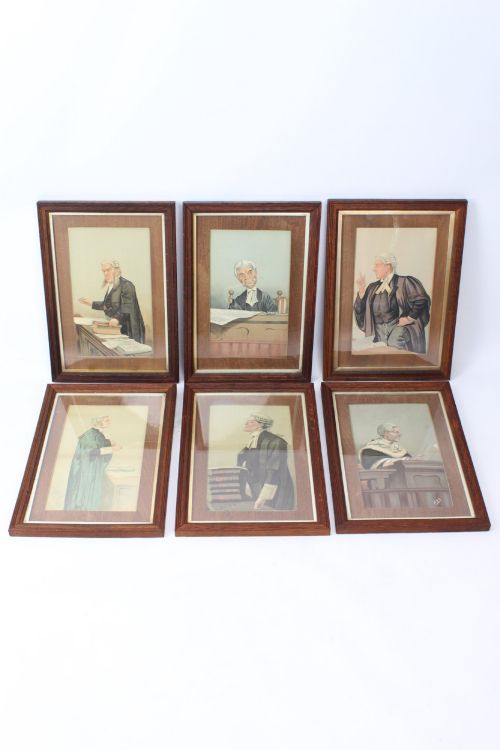
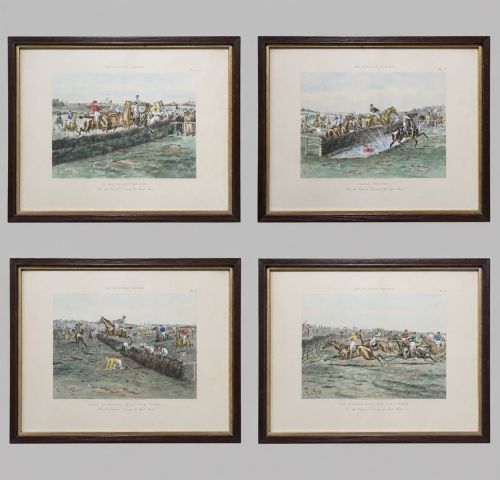
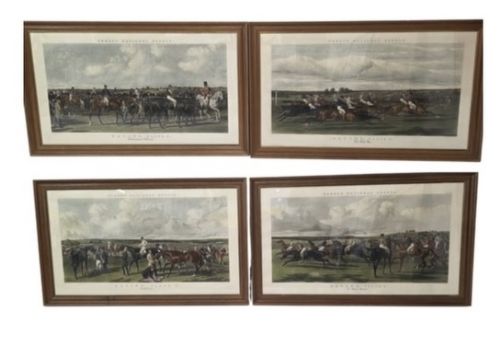
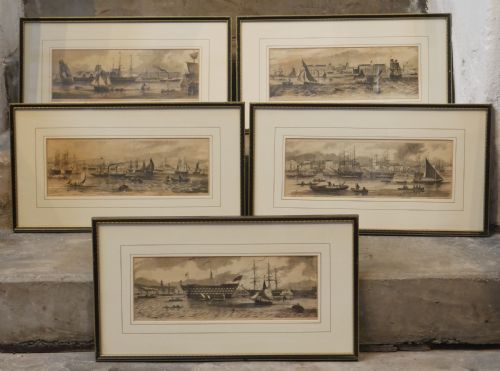
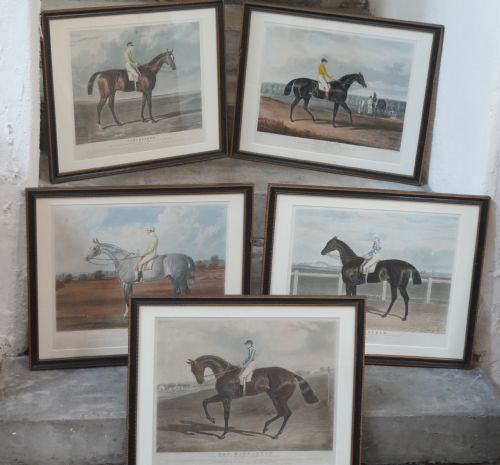


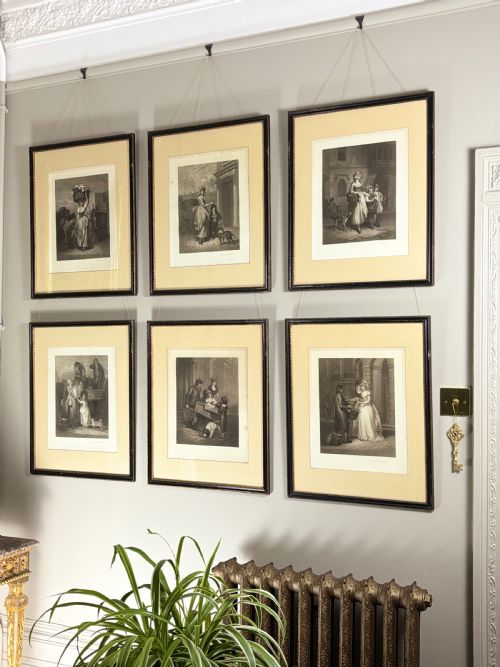


Framed Victorian Art Set
These framed victorian art set collections bring together curated multiples of nineteenth-century prints, watercolours and engravings designed to hang as a unified group.
Framed Victorian Art Set
A framed victorian art set consists of multiple matching works created in the nineteenth century and unified by a single theme, such as natural history, sporting scenes or portraiture. These multiples are typically found mounted behind glass within timber frames, offering a cohesive display ready for the wall.
The selections available range from botanical and ornithological series by notable illustrators to satirical character studies and architectural plans. Buyers encounter matching sets numbering from pairs up to twelve pieces, each grouping preserving a distinct nineteenth-century visual narrative.
Materials and Technique
The works within these sets utilise traditional nineteenth-century printmaking and painting methods, including hand-coloured engravings, mezzotints, lithographs and direct pencil and watercolour applications on paper. These delicate sheets are protected beneath glass to prevent environmental degradation.
Framing materials rely heavily on period woods such as oak and pine, frequently finished with gilt wood or gold leaf mouldings that complement the domestic interiors of the era.
Victorian households loved a good debate, often settling family arguments by pointing sternly at framed horse racing prints.
Evaluating the Sets
Quality in a framed victorian art set is determined by the crispness of the original impression, the vibrancy and accuracy of any hand-applied colour, and the integrity of the paper support. Fading or heavy foxing diminishes the visual impact of the composition.
The distinction between standard decorative series and superior examples rests on the renown of the original artist or publisher, the completeness of the original set, and whether the framing is contemporary to the artwork.
George Finch Mason·Oliver Goldsmith·Thomas G Appleton·Edward Stodart·Alken·Jonathan Couch·Thomas Mackay·David Roberts RA·John Curtis·William Swainson·Edward Lear·James Shoolbread and Co·K and K Hof Atelier Pietzner
The Framed Victorian Art Set Glossary
- Engraving
- A printmaking process where an artist cuts a design into a metal plate with a sharp tool. The inked plate transfers the fine lines onto paper under pressure.
- Mezzotint
- A tonal printmaking method derived from copper plate engraving that achieves rich dark backgrounds and subtle gradations of light. It was frequently used for portraits and romantic subjects.
- Lithograph
- A planographic printing technique based on the antipathy of oil and water, allowing artists to render fluid painterly lines and soft colour washes. Many Victorian botanical and architectural series utilised this method.
- Aquatint
- A variant of etching that produces broad areas of tone resembling watercolours. It became popular for nineteenth-century sporting and landscape prints.
- Foxing
- Brown spots and discolouration that develop on antique paper over time due to chemical reactions in the pulp or exposure to humidity.
Framed Victorian Art Set: Frequently Asked Questions
How should I hang a large set?
Maintain consistent spacing between each frame to preserve the visual rhythm of the series across the wall surface. Aligning the frames along a common centreline creates a balanced display.
Keep the grouping away from direct sunlight to protect the underlying paper and watercolours from fading over time.
Are these sets complete?
Many offerings comprise complete original publication runs, such as sets of four or twelve matching plates, while others represent assembled groupings of related subjects.
Checking the individual item descriptions will clarify whether the pieces share uniform publishing origins or were gathered later.
Can I reframe the artwork?
Original nineteenth-century frames contribute to the historical character and overall aesthetic of the pieces. Replacing them risks losing period context.
If reframing is necessary due to structural damage, consult a professional conservator to utilise appropriate archival mounting materials.
What themes are most common?
Natural history subjects, including botanical specimens, birds, and fish, appear frequently alongside nineteenth-century sporting scenes and equestrian prints.
Satirical character portraits and theatrical subjects also form a significant portion of the available groupings.