




Framed Portrait Plaque
These framed portrait plaque examples bring historical likenesses to interior walls through meticulous miniature craftsmanship.
Framed Portrait Plaque
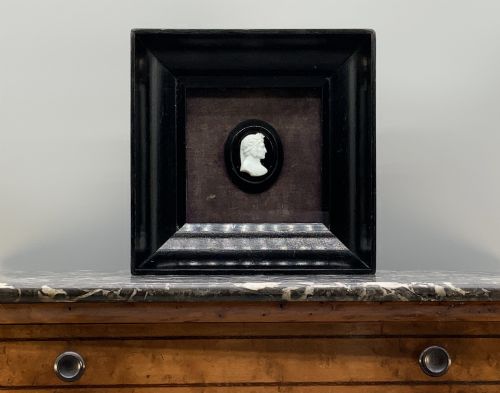
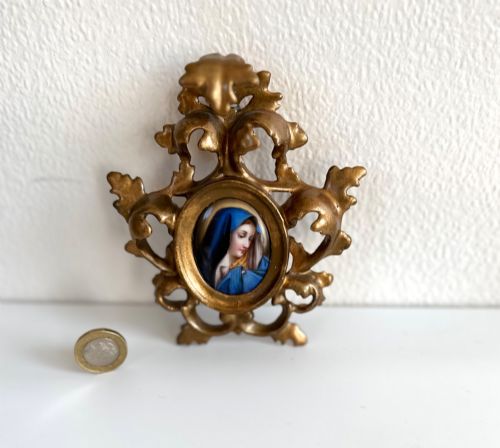
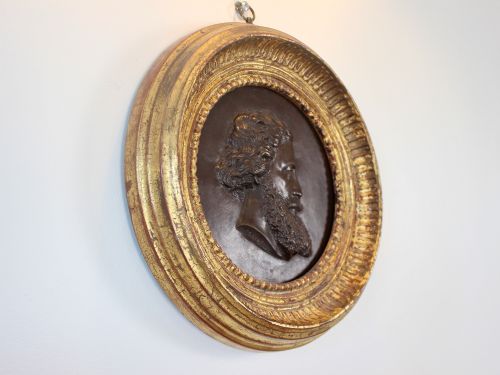
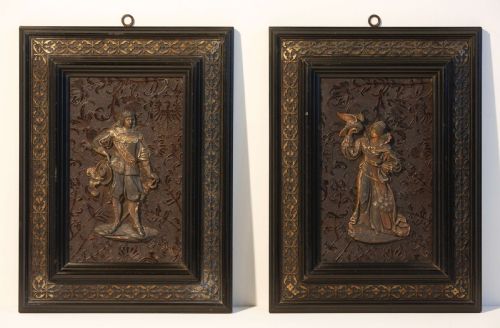
A framed portrait plaque captures the likeness of historical figures, nobility, and classical subjects within wall art formats. These pieces range from early eighteenth-century Limoges enamel works to nineteenth-century porcelain and bronze reliefs.
Buyers encounter diverse iterations spanning porcelain, enamel, carved ivory, and bronze, often mounted inside period wooden or ormolu frames. The selection includes individual miniature portraits alongside pairs depicting emperors, royals, and literary figures.
Origins stretch across European workshops, including English South Staffordshire productions and German KPM manufactories. The forms function primarily as wall plaques, decorative panels, and framed miniatures.
Materials and construction techniques
Materials divide between fired ceramics like porcelain and enamel, and cast metals such as bronze, brass, and copper. Artisans painted fine details by hand onto porcelain surfaces or fused vitreous enamel to metal bases.
Carved mediums utilise ivory, marble, and shell to build relief profiles in cameo style. Mountings incorporate gilt metal, ormolu, carved wood, and brass frames designed to enclose and protect the central plaque.
Listings feature works created from porcelain, enamel, bronze, marble, ivory, and wood across the eighteenth, nineteenth, and twentieth centuries.
Determinants of quality
Quality rests upon the precision of the painted likeness or the depth of the carved relief. Finer porcelain and enamel examples display superior brushwork, subtle colour gradations, and secure firing without surface distortion.
The integration between the plaque and its original frame dictates overall integrity. Cast metal mounts and carved wooden frames that complement the exact period of the portrait elevate the piece.
MAINFROY·George Atkinson·R. Pernice·Henry Pierce Bone·Sherwin and Cotton·Kershaw Schofield·F. Bienvue
The Framed Portrait Plaque Glossary
- Limoges enamel
- A technique developed in France where coloured glass enamels are fused to copper plates. These pieces often depict historical or religious scenes.
- Jasperware
- A fine stoneware developed by Josiah Wedgwood, characterised by white classical reliefs set against a coloured matte ground.
- Ormolu
- Gilded bronze or brass mounts applied to furniture, mirrors, and frames during the eighteenth and nineteenth centuries. The finish provides a bright golden appearance.
- Grand Tour
- A cultural journey undertaken by wealthy young Europeans in the eighteenth and nineteenth centuries. Souvenirs included carved cameos, marble reliefs, and miniature plaques.
- Bas-relief
- A sculptural technique where figures project slightly from the background plane, commonly seen in bronze, plaster, and marble plaques.
Framed Portrait Plaque: Frequently Asked Questions
How do I hang a framed portrait plaque safely?
Most antique plaques feature integrated loops or secure wooden frames suited for standard picture hooks. Ensure the wall fixing matches the weight of denser bronze or marble pieces.
Position the plaque at eye level away from direct sunlight to protect painted porcelain and enamel surfaces from fading over time.
What periods do these plaques come from?
The available selection spans the eighteenth, nineteenth, and early twentieth centuries. Pieces frequently date from the Georgian, Regency, and Victorian eras.
Earlier examples often originate from Limoges or South Staffordshire, while later nineteenth-century pieces frequently hail from Berlin and KPM manufactories.
How should I clean porcelain and enamel plaques?
Dust surfaces gently with a dry, soft microfibre cloth to remove accumulated particles. Avoid using water, chemical sprays, or abrasive cloths on painted enamel or porcelain.
Metal frames and ormolu mounts require minimal intervention beyond careful dusting to preserve the original patination.
Are these plaques signed by artists?
Certain examples bear signatures, monograms, or inscriptions painted on the plaque surface or stamped onto the reverse. Makers and artists such as Henry Pierce Bone and R. Pernice occasionally signed their work.
Unsigned pieces remain common, relying on style, material quality, and framing techniques to indicate their period and origin.