
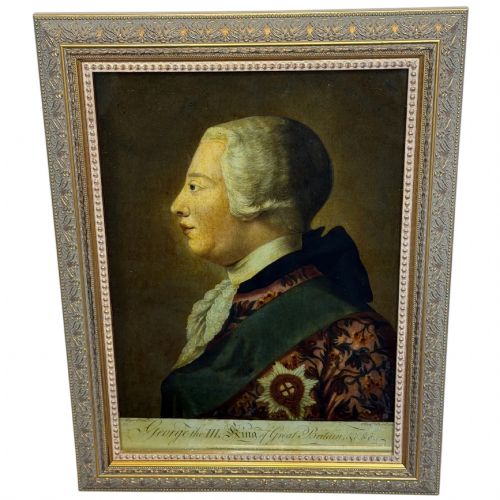
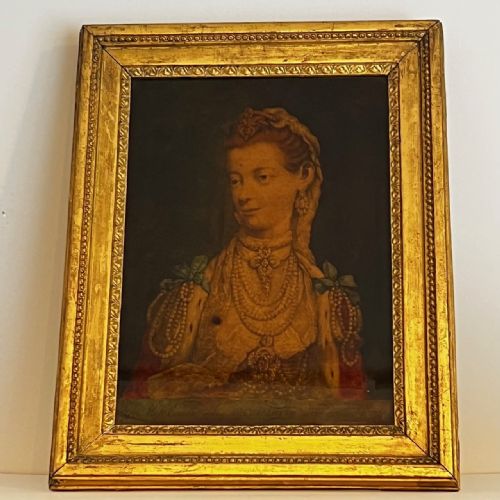
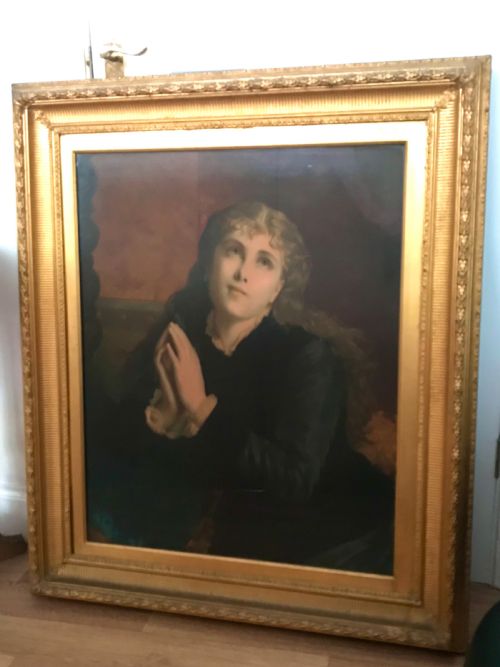


Framed Portrait Glass Print
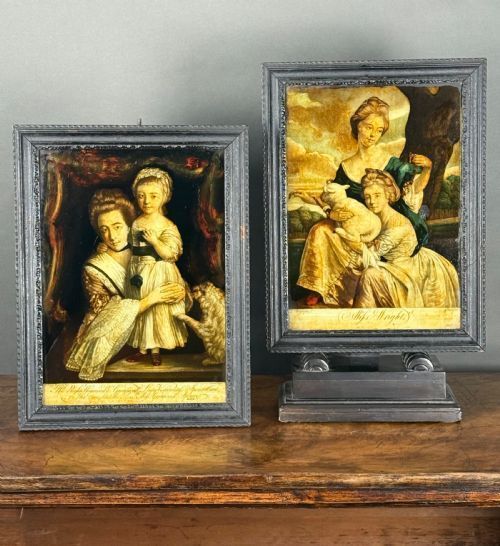
A framed portrait glass print brings historical faces into your rooms through the unusual technique of painting or printing directly onto the reverse of the pane.
Framed Portrait Glass Print
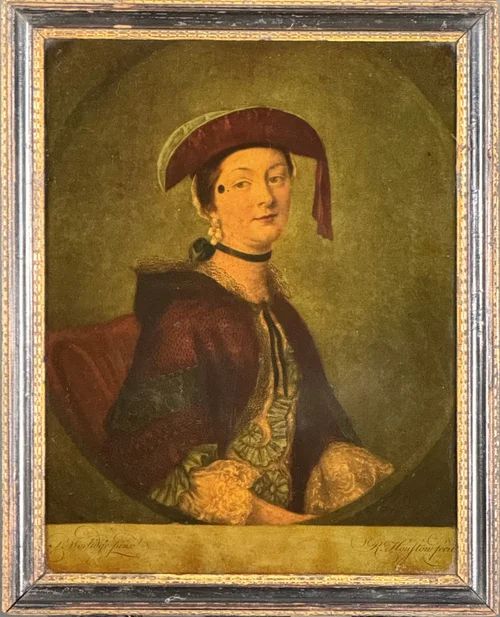
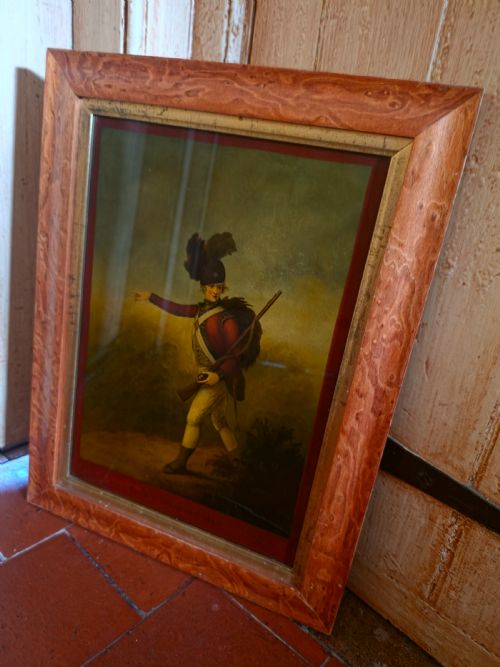
A framed portrait glass print presents historical likenesses, royalty, and religious figures set behind protective panes, primarily originating from the Georgian and Victorian eras. These works range from delicate mezzotints transferred to glass to later chrystoleums and painted panels.
Materials and Techniques
The creation of these works involved applying ink, oil paint, or pigments directly onto the reverse side of a glass sheet, often starting with a printed mezzotint outline. Artisans then meticulously hand-coloured the details from behind before sealing the backing to protect the delicate layers.
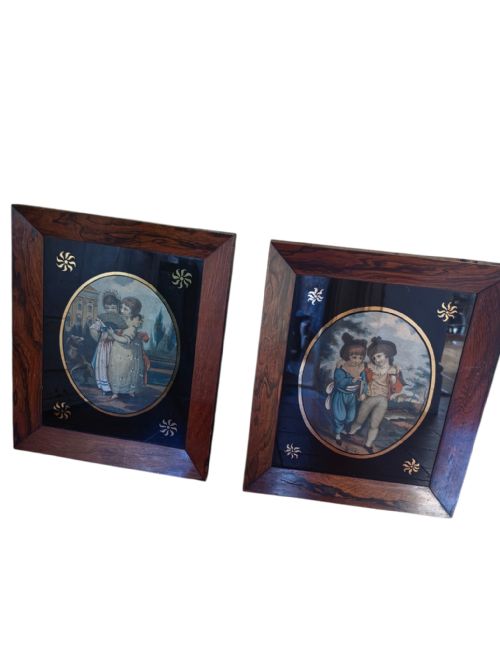
Frames played an integral structural and aesthetic role, utilising timber such as wood, rosewood, or gold leaf giltwood to secure the glass securely. Convex or dome-fronted glass was also utilised in later Victorian iterations to give depth to chrystoleum portraits.
Several portraits capture domestic pets and horses alongside nobility, proving that historic sitters loved their animals just as much as we do.
Assessing Quality and Execution
The distinction between ordinary and superior pieces rests upon the precision of the reverse painting and the crispness of the underlying mezzotint transfer. Finer examples display subtle hand-tinting that enhances the facial expressions and textiles of the sitter without obscuring the original lines.
The integrity of the original frame and the clarity of the glass substantially influence the overall merit of the piece. Retaining the early backing materials and mounting hardware indicates an uncompromised survival from the eighteenth or nineteenth century.
Charles Spooner·Richard Purcell·Robert Sayer·Abraham Cooper
The Framed Portrait Glass Print Glossary
- Reverse glass print
- An image transferred and painted onto the back of a glass sheet so that the finished picture is viewed through the front. This technique protects the pigments from dust and fading.
- Mezzotint
- A printmaking process of the intaglio family where the plate is roughened to produce tones of grey and black. It provided the detailed tonal foundation for many eighteenth-century glass pictures.
- Chrystoleum
- A Victorian method of applying hand-painting to a coloured photograph or print mounted convexly under glass. The paper was often made transparent with oil to allow pigments to be added from behind.
- Giltwood
- Timber carved and coated with gold leaf or metallic powder for a lustrous decorative finish. It frequently appears on grander frames housing Georgian and Regency portraits.
- Eglomise
- A technique involving cold painting and gilding on the reverse of glass. It creates a mirrored, reflective border or background popular in decorative framing.
Framed Portrait Glass Print: Frequently Asked Questions
What is a chrystoleum?
A chrystoleum is a Victorian coloured photograph or print mounted inside convex glass and hand-painted from behind. This method gave flat images a lifelike, three-dimensional depth.
They emerged in the late nineteenth century as a popular parlour decoration. Makers often used multiple layered prints to achieve realistic skin tones and clothing textures.
Are these portraits original?
The listings on this page include genuine period works dating from the seventeenth through to the early twentieth century. Many utilise authentic eighteenth-century mezzotint plates transferred to glass.
Checking the backing boards, framing style, and the ageing of the glass helps confirm the period. Later reproductions do exist, but genuine examples show natural material wear consistent with their age.
Why are they painted in reverse?
Painters worked backwards on the rear of the glass, applying fine details first and broader background washes last. When viewed from the front, the finished portrait gained a unique glassy sheen and luminosity.
This method also protected the artwork from airborne soot and dirt common in historic homes. The smooth glass surface made maintenance straightforward for owners centuries ago.