



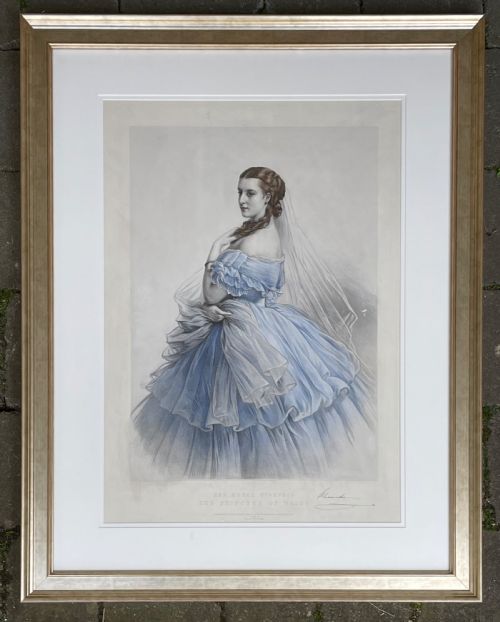

Royal Historical Portrait Print
A royal historical portrait print captures monarchs and nobility in ink, paper, and mezzotint, offering a direct line to centuries of courtly life.
Royal Historical Portrait Print
A royal historical portrait print brings centuries of British monarchy and nobility into domestic spaces through framed wall art and engravings. Buyers searching this phrase encounter works spanning from the seventeenth century through to the Victorian era.
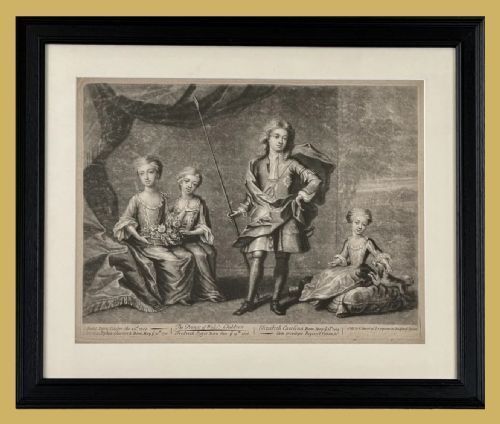
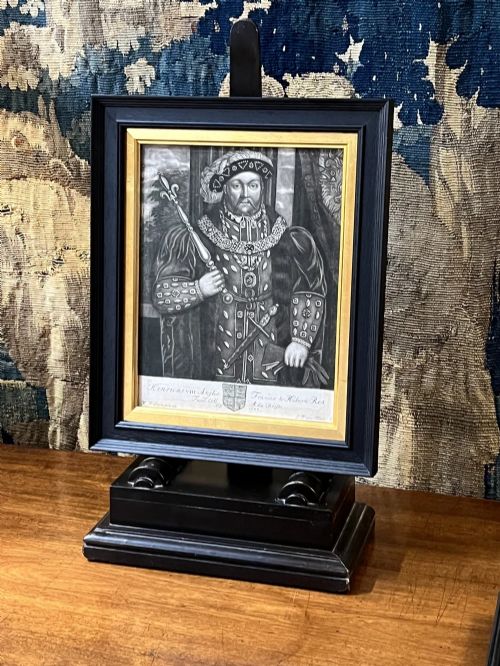
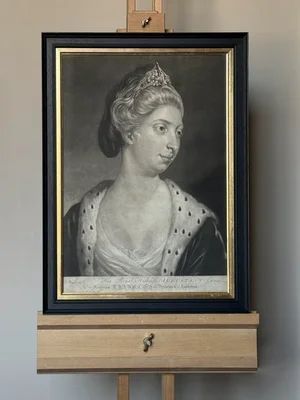
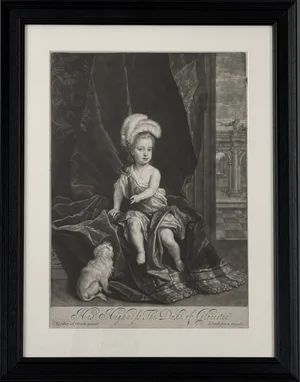
The selections on this page rely heavily on eighteenth-century mezzotints and engravings depicting royalty and dignitaries. Pieces range from large framed works showing figures like Queen Victoria to smaller historical prints of King George III and earlier monarchs.
Examples cross several distinct historical periods, including Stuart, Georgian, and Victorian eras. These items function primarily as framed prints and wall art, often retained within period wooden or gilt frames.
Materials and construction
These works utilise paper and ink, frequently transformed through the technique of mezzotint engraving. Master printmakers such as John Smith and John Faber translated painted portraits by artists like Sir Godfrey Kneller and Hans Holbein into printed editions.
Enclosures and mountings incorporate wood, glass, and gold leaf. Several pieces feature reverse glass printing and traditional giltwood framing, protecting the paper surfaces while adding weight and presence to the wall art.
Listings feature paper, ink, canvas, and oil paint housed within wood, glass, and gold leaf.
Assessing the pieces
Quality rests upon the skill of the original printmaker and the fidelity of the impression taken from the plate. Early mezzotints by recognised hands demonstrate sharper tonal gradation and deeper contrasts than standard later engravings.
The integrity of the framing also influences the character of the piece. Surviving period gilt frames and original glass enhance the historic weight of prints depicting figures such as Charles I and Queen Anne.
John Smith·John Faber Snr·Sir Godfrey Kneller·Hans Holbein the Younger
The Royal Historical Portrait Print Glossary
- Mezzotint
- A printmaking process where the copper plate is roughened to achieve rich dark tones and subtle gradations of light. This technique allowed eighteenth-century makers to reproduce oil paintings with remarkable fidelity.
- Giltwood
- Wood carved and coated with a thin layer of gold leaf or gilt. This material frames many of the historical portraits on this page.
- Engraving
- A method of cutting lines into a metal plate to hold ink for printing. It produces crisp, enduring lines suitable for historical and political subjects.
- Reverse glass print
- An image painted or applied directly onto the back of a glass panel for display. This method creates a luminous surface seen in seventeenth-century examples.
- Allegorical print
- An artwork using symbolic imagery to convey political or historical narratives. These prints often comment on reigns and events of the Georgian period.
Royal Historical Portrait Print: Frequently Asked Questions
What periods do these historical prints cover?
The works span from the seventeenth century through the Georgian and Victorian eras. They capture centuries of royal representation across changing artistic styles.
Earlier pieces often date to the Stuart period, while later examples extend into the twentieth century.
How were these royal portraits originally produced?
Many are mezzotints and engravings created by transferring painted likenesses onto printed media. Skilled makers worked from original paintings by prominent court artists.
Paper and ink served as the primary mediums, frequently paired with contemporary framing techniques.
What framing materials should I expect?
Pieces frequently feature traditional wood and giltwood frames designed to house wall art securely. Glass panels protect the paper prints from environmental wear.
Original frames contribute significantly to the historical character of the artwork.
Are these works original period pieces?
The selections represent historical periods including the seventeenth, eighteenth, and nineteenth centuries. Each item aligns with the manufacturing techniques and subjects of its era.
Documentation within the titles links them directly to historical printmakers and monarchs.