

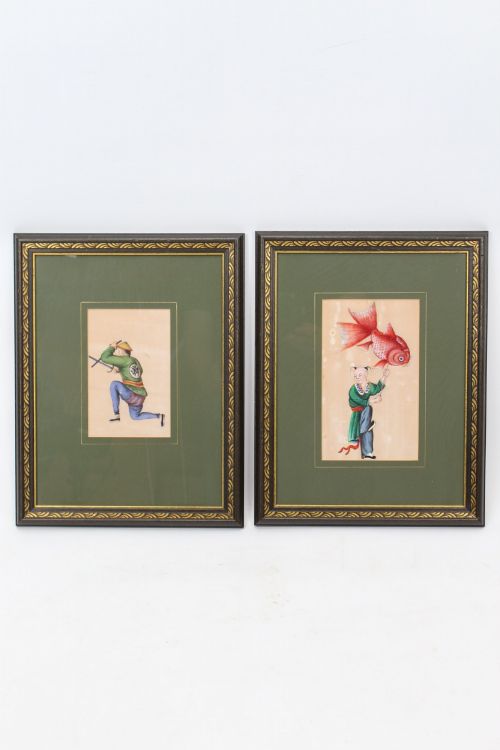


Framed Pith Paper Artwork
Framed pith paper artwork delivers the delicate texture of Chinese Export watercolours, offering collectors a glimpse into nineteenth-century trade and botanical illustration.
Framed Pith Paper Artwork
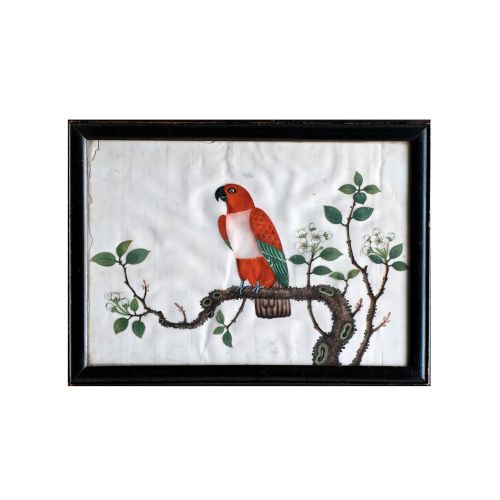
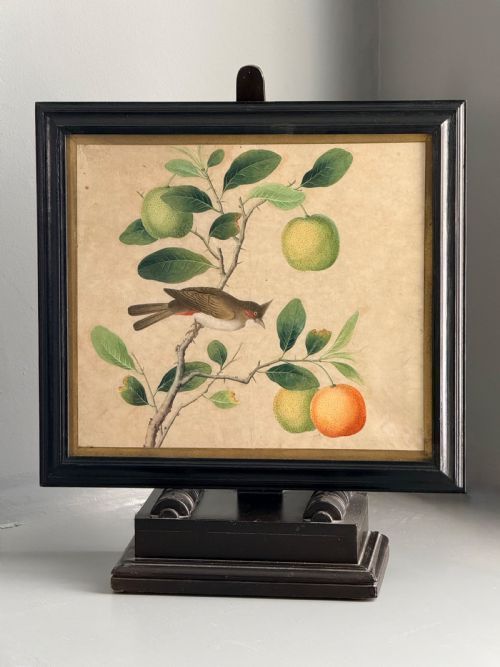
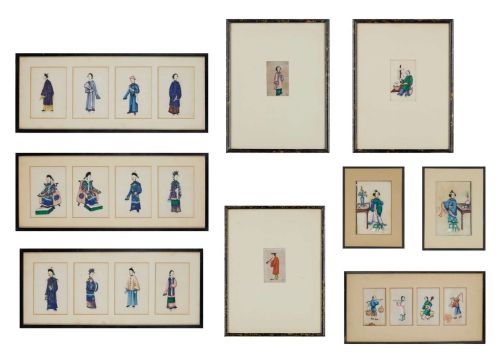
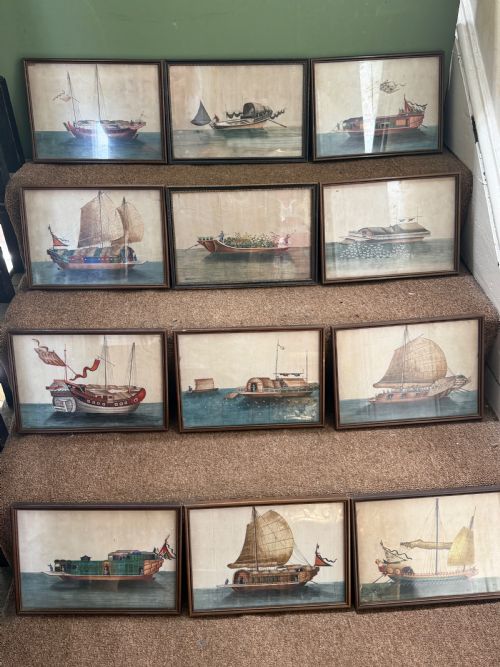
Framed pith paper artwork comprises delicate historical paintings executed on a spongy plant-derived material rather than standard wood pulp or rag paper. When searching for framed pith paper artwork, buyers frequently encounter pieces originating from the nineteenth century, particularly the Qing dynasty and Chinese export periods. These works capture traditional subjects including figural groups, junks and other ships, butterflies, insects, and floral studies.
Materials and construction
Artists painted these works using watercolours and gouache directly onto thin sheets of pith paper, a porous plant material derived from the pith of the Tetrapanax papyrifer plant. This cellular substrate absorbs pigments deeply, giving the colours a velvety, luminous quality that distinguishes them from works on standard paper or silk.
Makers housed these delicate sheets within wooden frames, frequently utilising ebonised wood to contrast with the bright pigments of the paintings. Glazing with glass protected the fragile surface from moisture and handling, ensuring the survival of the organic pith support.
Framed Pith Paper Artwork Retail Price Guide 2026
Typical asking prices for framed pith paper artwork among the pieces listed under this phrase on Sellingantiques today, from the lower quarter to the upper quarter. They describe what is for sale here now, not the wider market.
Listings span the eighteenth century, nineteenth century, and Edwardian period, utilising materials such as pith paper, gouache, and ebonised wood.
Quality factors in pith paper paintings
The fineness of the brushwork and the complexity of the composition separate standard export pieces from exceptional examples. Works depicting intricate subjects such as butterflies, insects, or detailed maritime scenes with numerous ships demand high technical skill from the painter.
Condition and completeness heavily influence the standing of a piece, particularly in larger sets of twelve or twenty-one paintings. Intact framing, minimal pigment flaking, and stable pith preservation determine the visual success of the artwork.
The Framed Pith Paper Artwork Glossary
- Pith paper
- A delicate, spongy material cut from the pith of the Tetrapanax papyrifer plant and used as a painting surface in nineteenth-century Chinese export art. It has a velvet-like texture that absorbs water-based pigments with exceptional brilliance.
- Gouache
- An opaque watercolour paint composed of pigment, a binding agent, and inert white filler. It provides dense, flat areas of colour on export paintings.
- Qing dynasty
- The final imperial dynasty of China, lasting from the seventeenth to the early twentieth century. Many export paintings originate from the late phase of this period.
- Ebonised wood
- Timber treated to resemble ebony, typically through staining or finishing a dark, uniform black. It appears frequently on frames for nineteenth-century export works.
- Chinese Export
- Goods manufactured in China specifically for Western markets during the eighteenth and nineteenth centuries. These items blend traditional local techniques with European aesthetic preferences.
Framed Pith Paper Artwork: Frequently Asked Questions
What is pith paper made from?
Pith paper is cut from the spongy internal cylinder of the Tetrapanax papyrifer plant, native to southern China. Artisans sliced the stems into thin sheets to create a smooth, velvety surface for watercolour painting.
The material handles water-based pigments differently than standard paper, absorbing colour deeply to produce a distinct, luminous finish that buyers prize in export pieces.
How should I hang these framed paintings?
These works require hanging away from direct sunlight and moisture to protect the fragile organic pith and water-based pigments. Maintaining stable indoor conditions prevents the paper from degrading over time.
Keep the original glass intact and ensure the frame hangs securely on a wall that does not experience significant temperature fluctuations.
Why are many pieces found in sets?
Chinese export artists frequently produced series of paintings depicting local industries, flora, fauna, or maritime shipping for foreign merchants. Buyers purchased these complete sequences as souvenirs of travel or trade.
Finding a matched set of twelve or more paintings remains a notable survival given the fragile nature of the pith medium.
How can I tell the period?
Dating relies upon stylistic markers within the painting, the framing materials, and the mounting techniques used behind the glass. Nineteenth-century examples often feature ebonised wooden frames and subject matter tied to Qing dynasty trade.
Comparison with documented export art helps narrow the production window to the late 1800s or Edwardian eras.