



Chinese Pith Watercolour Paintings
Chinese pith watercolour paintings are delicate export works depicting figures, junks, and flora, offering collectors a vivid window into historic trade art.
Chinese Pith Watercolour Paintings
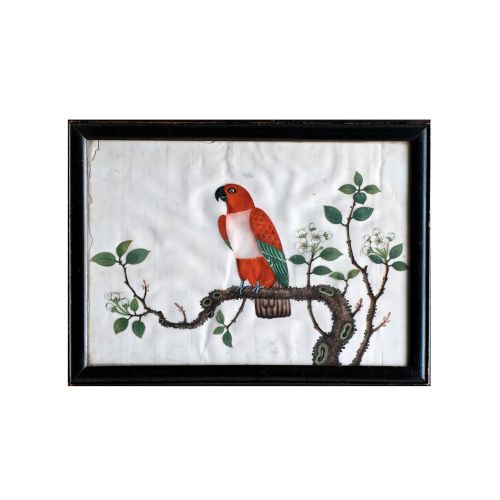
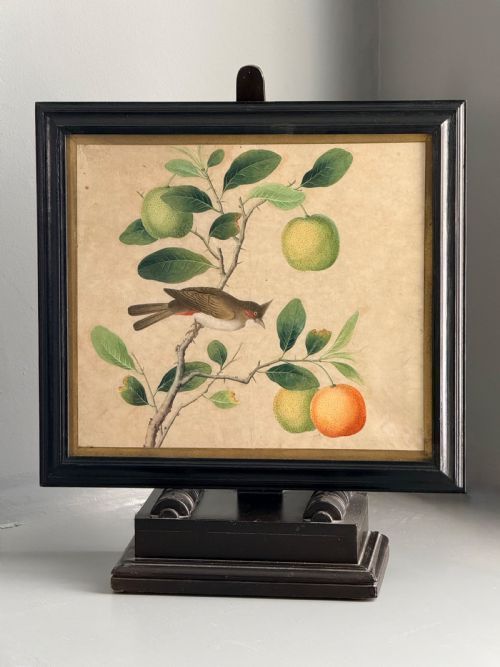
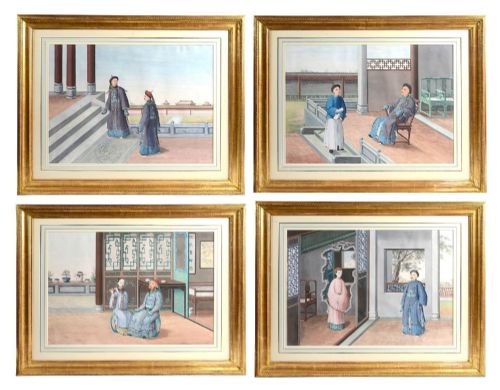
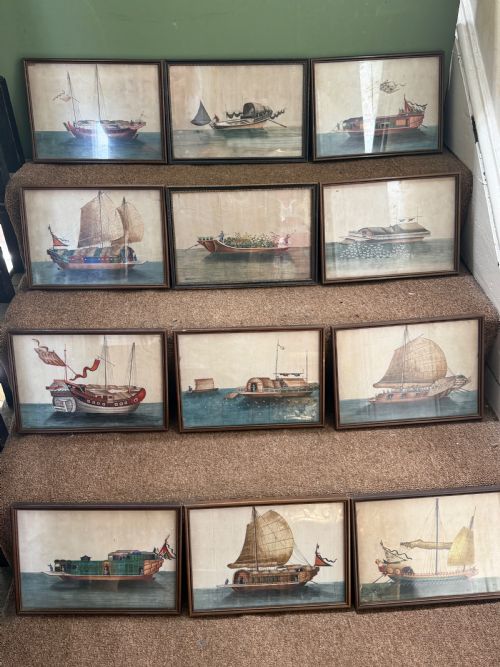
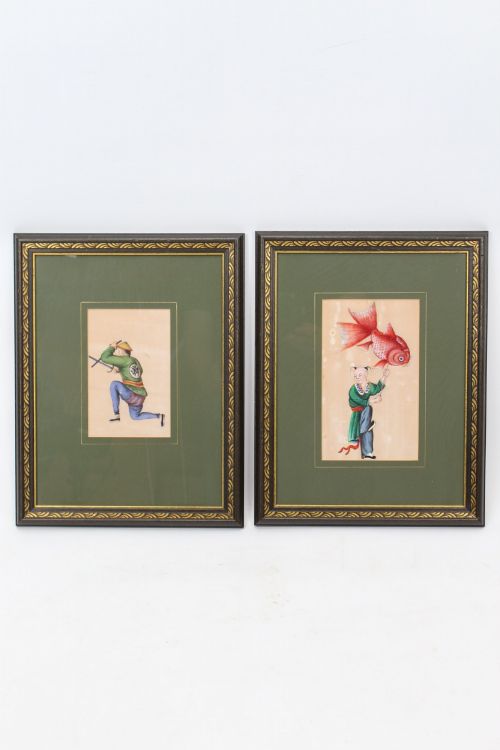
Chinese pith watercolour paintings are delicate original artworks produced for the export market during the Qing dynasty and the nineteenth century. These framed or mounted watercolours capture traditional subjects including figural scenes, junks, butterflies, and floral studies.
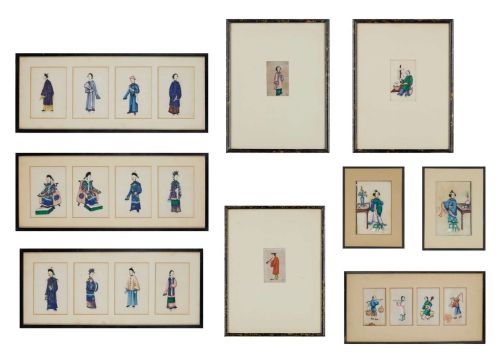
Buyers on this page are most likely to meet nineteenth-century examples, ranging from single sheets to decorative sets of twelve or twenty-one pieces. The listings encompass varied formats such as small pairs, larger framed artworks, and Canton watercolours.
Originating primarily within the Qing dynasty export art tradition, these pieces combine traditional Chinese painting techniques with Western framing and decorative tastes of the Regency, Edwardian, and later periods.
How they were made
These works are painted primarily on pith paper, historically referred to as rice paper, which is sliced from the spongy pith of the Tetrapanax papyrifer plant. This cellular material possesses a unique velvety texture that absorbs watercolours and gouache with exceptional brilliance.
Artists applied vivid gouache and watercolour pigments directly onto the fragile pith sheets, often mounting the completed paintings within wood, glass, and gilt wood frames to protect the delicate surface from damage.
Chinese Pith Watercolour Paintings Retail Price Guide 2026
Typical asking prices for chinese pith watercolour paintings among the pieces listed under this phrase on Sellingantiques today, from the lower quarter to the upper quarter. They describe what is for sale here now, not the wider market.
The listings here span the eighteenth century, the Regency era, the nineteenth century, and the Edwardian period.
What varies in quality
Quality in these watercolours depends on the fineness of the brushwork and the complexity of the composition, ranging from briskly painted decorative shipping scenes to intricately detailed studies of butterflies and insects. The preservation of the fragile pith paper and the vibrancy of the original gouache pigments also distinguish superior examples.
Complete sets remaining intact, such as groups of twelve or twenty-one related paintings, hold greater visual and historical cohesion than isolated single sheets. Furthermore, the craftsmanship of the original framing, including period wood and glass enclosures, influences the overall character of the piece.
The Chinese Pith Watercolour Paintings Glossary
- Pith paper
- A delicate material sliced from the stem of the Tetrapanax papyrifer plant rather than pressed from rice. It has a distinctive velvety surface that reacts uniquely to water-based pigments.
- Gouache
- An opaque water-based paint composed of pigment, water, and a binding agent such as gum. It provides the dense, saturated colour seen across these export paintings.
- Chinese Export
- Art created in China specifically for Western markets, blending traditional local subjects and techniques with European decorative preferences. This style dominated production through the Qing dynasty.
- Canton
- A major Chinese port city where many export goods, including watercolours and decorative items, were produced and traded during the nineteenth century.
- Junk
- A traditional Chinese sailing ship with battened sails, frequently depicted in nineteenth-century export paintings of maritime scenes.
Chinese Pith Watercolour Paintings: Frequently Asked Questions
What is pith paper made from?
Pith paper is sliced from the cellular core of the Tetrapanax papyrifer plant, a shrub native to Taiwan and southern China. It is commonly misnamed as rice paper due to its appearance.
The spongy internal structure gives the material its characteristic velvety texture, which absorbs watercolours and gouache to produce luminous, glowing tones.
How should I frame pith paintings?
These paintings require professional framing with conservation-grade materials that keep the fragile pith surface from touching the glass directly. Sealed backing helps protect the paper from humidity and atmospheric changes.
Displaying them away from direct sunlight preserves the vibrant gouache pigments, as prolonged exposure can cause the colours to fade.
Are these works original antiques?
The listings on this page comprise original nineteenth-century and eighteenth-century export artworks. They were produced during the Qing dynasty for Western visitors and traders.
Each painting is a hand-painted creation rather than a modern reproduction, showcasing period pigments and traditional mounting methods.
Why do subjects vary so much?
Export artists in Canton produced varied imagery to satisfy different European tastes and demands. Common subjects included daily life figures, local flora and fauna like butterflies, and maritime shipping.
Buyers could purchase single sheets or order comprehensive sets depicting local trades, ceremonies, or naval vessels.