




Framed Orientalist Landscape
A framed orientalist landscape brings distant light and ancient architecture into a room through nineteenth-century watercolours and oils.
Framed Orientalist Landscape
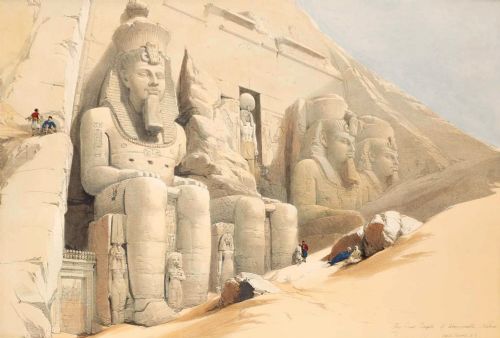
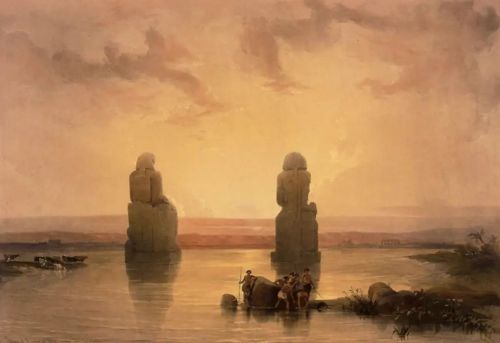
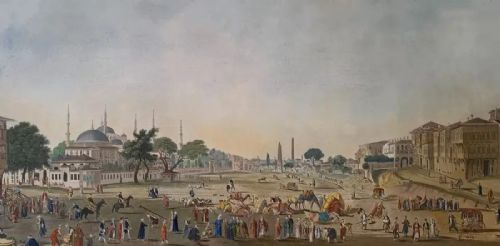
A framed orientalist landscape depicts scenes from the Middle East, North Africa, and South Asia, capturing desert vistas, river life, and ancient monuments. These works emerge predominantly from the nineteenth century, reflecting European and American fascination with eastern lands.
The most common formats on this page are watercolours and oil paintings, often housed in traditional wooden or gilt frames. Subjects range from the monumental temples of Egypt to quiet riverbanks along the Nile and desert camps with bedouin figures.
The styles span Victorian interpretations and works by foreign travellers, alongside modern Iraqi art and mid-century watercolours. Buyers encounter single sheets, pairs of watercolours in ebonised frames, and sets of coloured lithographs.
Materials and techniques
Artists utilised paper, canvas, and board as supports for their compositions, applying watercolour, gouache, ink, and oil paints. Watercolour washes capture the bright, arid light of desert skies, while oils on canvas build richer textures for river scenes and figures.
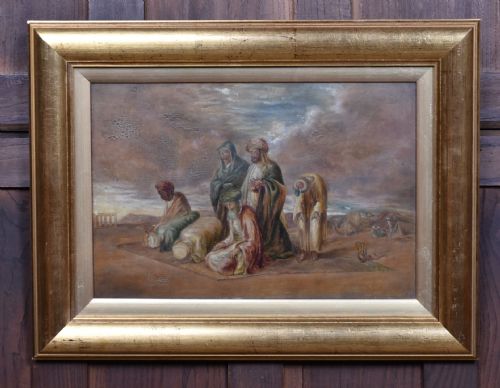
Framing materials include wood, gilt wood, and gold leaf, which protect the works behind glass or display open canvas. Ebonised frames appear on specific period pieces, providing a dark contrast to lighter watercolours of Arabic scenes.
Camels and nineteenth-century travellers populate these distant vistas, bringing an enduring sense of desert adventure indoors.
Distinctions in quality
Quality rests upon the precision of the brushwork and the artist's command of light and atmosphere in depicting distant landscapes. Finer watercolours show deft handling in architectural details and natural foliage, whereas lesser examples rely on formulaic compositions.
The integration of the frame with the period of the artwork influences the piece's overall cohesion. Original frames that complement the painting without overpowering the subject elevate the presentation of nineteenth-century views.
David Roberts·Anton Ignaz Melling·Edwin Lord Weeks·Otto Pilny·Abdul Kadir Al Rassam
The Framed Orientalist Landscape Glossary
- Watercolour
- A painting method where fine pigment is suspended in water-based solution on paper. This medium allows for luminous washes that suit bright skies and distant horizons.
- Gouache
- An opaque water-based paint that adds solid highlights and dense colour to works on paper. It often appears alongside watercolour in nineteenth-century landscapes.
- Lithograph
- A print created from a stone or metal plate, allowing multiple copies of an original image. Coloured lithographs offer affordable access to topographical views.
- Gilt Wood
- Wood treated with a thin layer of gold leaf or metallic paint. This finish creates a reflective border that frames and brightens the artwork within.
Framed Orientalist Landscape: Frequently Asked Questions
What subjects appear in these landscapes?
These works display Egyptian monuments, Nile river scenes, desert encampments with bedouin tribesmen, and Indian temples. Artists recorded ancient architecture and daily life across the Middle East.
The compositions range from military watercolours of mountain valleys to tranquil village views by the water.
How should I hang these framed works?
Display these paintings away from direct sunlight to protect delicate watercolours and paper supports from fading. Grouping pairs or sets of prints together maintains historical context on the wall.
Ensure rooms maintain stable humidity levels to preserve both the wooden frames and the paper or canvas beneath.
How do I identify nineteenth-century pieces?
Examine the materials, signatures, and framing methods typical of the period, such as ebonised wood or early gilt frames. Subject matter often reflects nineteenth-century travel routes and archaeological interest in Egypt and the Levant.
Paper grain and handwritten inscriptions on the reverse also offer clues to the approximate date of creation.
Are these works original paintings?
The selection includes both original hand-painted works in oil and watercolour, alongside period lithographs and engravings. Each listing specifies the exact medium used by the artist or printmaker.
Original watercolours feature visible brush strokes and pigment texture on paper, whereas prints show patterned ink dots under close inspection.