
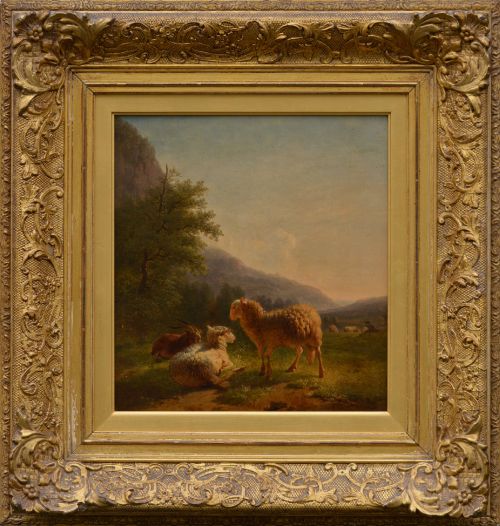
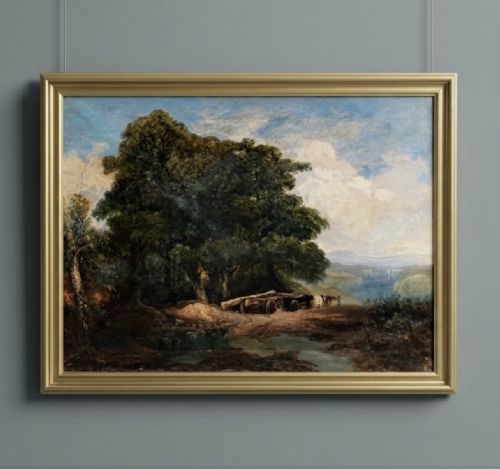
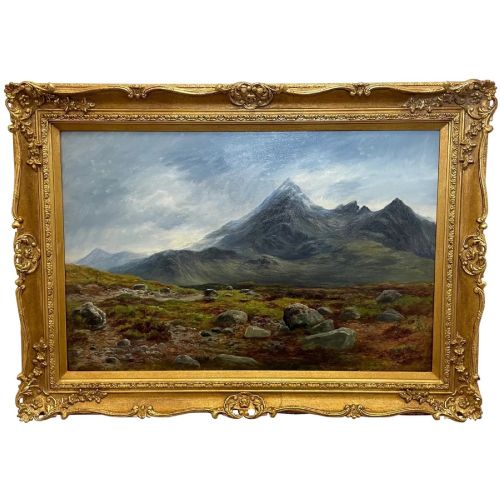
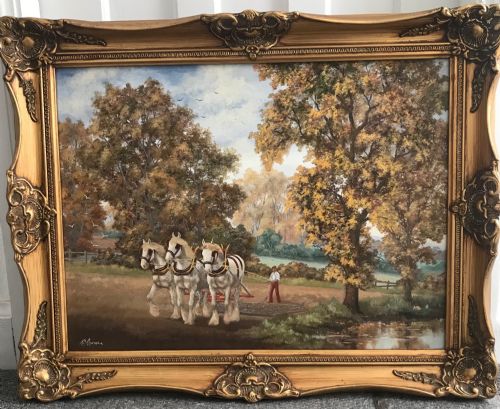


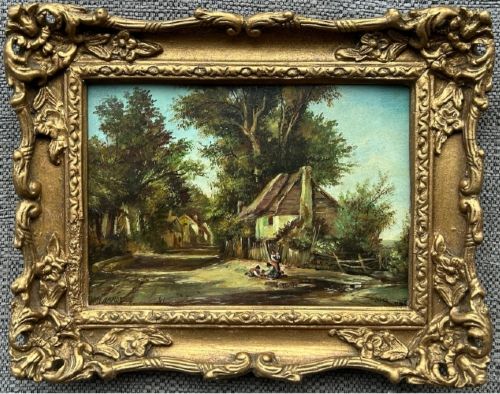
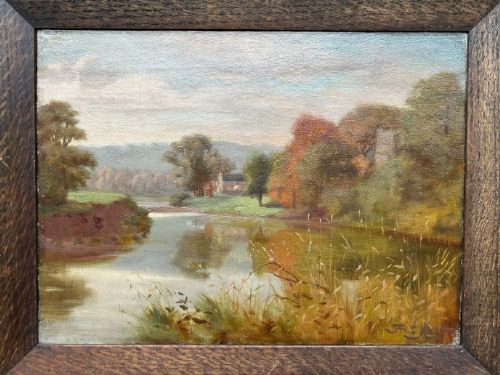
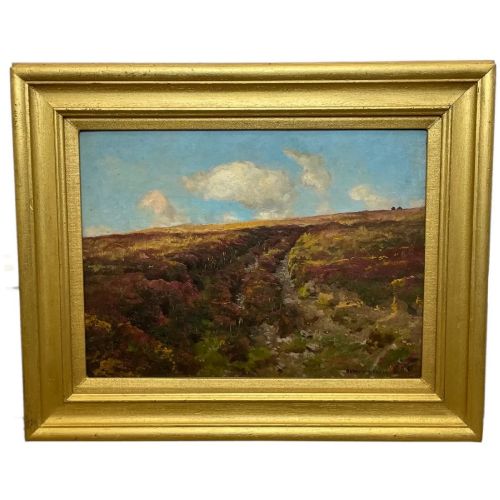
Framed Oil Landscape
A framed oil landscape brings historical depth to a wall, combining painted pigment on canvas, card, or wood with period moulding.
Framed oil landscape pieces
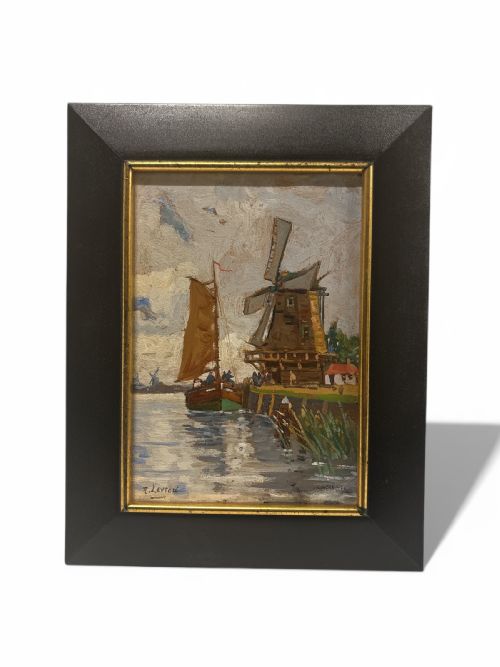
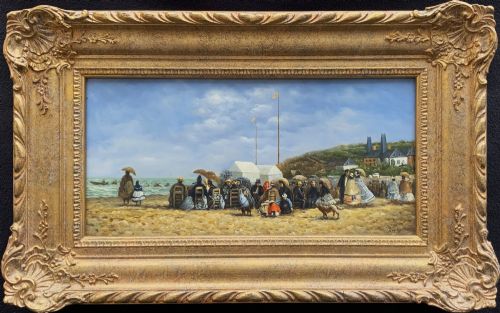
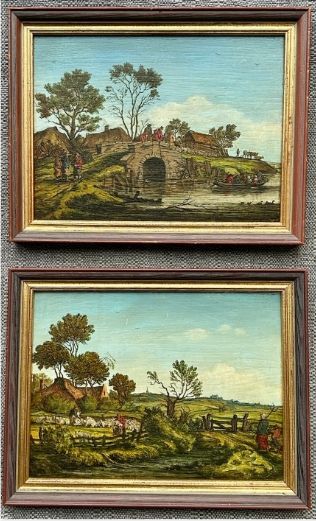
When you search for a framed oil landscape, you encounter works executed in oil paint that capture rural scenes, rivers, coastlines, and windmills. These paintings span the eighteenth, nineteenth, and twentieth centuries, reflecting British Impressionism, Dutch School, Georgian, and Victorian Realism traditions.
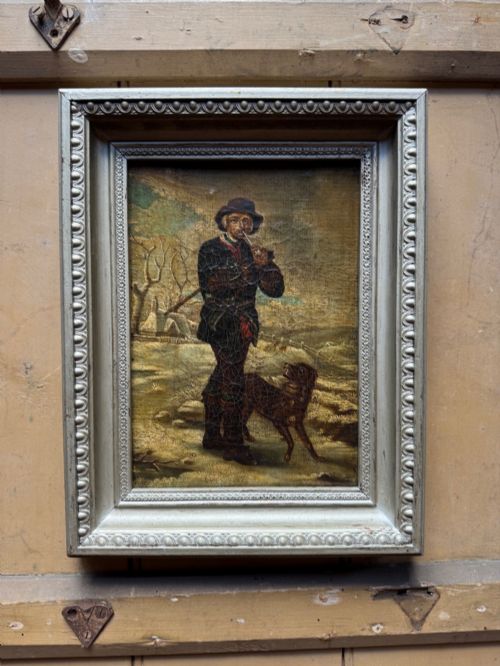
The most common examples on this page are nineteenth-century oils on canvas and board housed in giltwood or gesso frames. Subjects range from Welsh mountains and Yorkshire dales to Italian classical vistas and Dutch sunsets.
Makers and schools represented include the British School, Norwich School, and named artists such as Cecil Allan Mould and Johannes de Haas. Each piece retains the original relationship between the canvas and its protective wooden border.
Materials and construction
Artists painted primarily using oil on canvas, wood panel, card, and board. Canvas supports required stretching over wooden frames before brushwork commenced, whilst panels offered rigid surfaces for detailed application.
Frames utilise wood, gilt moulding, giltwood, and gesso to enclose the paintings. Gesso served as a plaster base layer on wooden mouldings, receiving gold leaf or gilt paint to create reflective decorative borders.
Retail Price Guide 2026
Typical UK retail prices for framed oil landscape, calculated from the Sellingantiques database of over a million retail prices indexed since 2003. This retail price guide relies exclusively on Sellingantiques data; no external sources or auction records are used, so the figures do not describe the wider market.
Listings feature works spanning the 18th, 19th, and 20th centuries, executed in oil on canvas, wood panel, card, and board.
Quality and execution
Quality rests in the handling of light, brushwork confidence, and composition depth. Stronger works display subtle tonal shifts in skies and water, whereas simpler pieces rely on standard formulae for foliage and structures.
The integration between painting and frame dictates visual success. Hand-carved giltwood and gesso mouldings that complement the palette and period of the canvas elevate the presentation above standard replacement framing.
Cecil Allan Mould·Johannes de Haas·Edward J Cobbett·Fred Lawson·Mary Lord·G Vincent·Kevin Platt
The Framed Oil Landscape Glossary
- Oil on canvas
- A painting technique using pigment suspended in drying oils applied to woven fabric. This combination allows for rich colour blending and textured brushwork.
- Gesso
- A mixture of binder mixed with chalk, gypsum, or pigment used to prepare wood surfaces before gilding. It provides a smooth base for decorative frame moulding.
- Giltwood
- Wood that has been treated with gold leaf or gold paint. It forms the ornate borders common in nineteenth-century display framing.
- Wood panel
- A rigid support base utilised for early paintings before canvas became standard. Panels provide stability and prevent the cracking associated with flexible fabrics.
- British Impressionism
- A painting style focusing on light and everyday subjects through visible brushstrokes. Artists working in this manner prioritised atmospheric outdoor effects.
Frequently Asked Questions
How do I date a framed oil landscape?
Dating relies on stylistic markers within the brushwork, the species of wood used in the stretcher, and the composition of the gesso frame.
Paintings from the Georgian and Victorian periods often exhibit distinct clothing, pigment chemistry, and framing techniques that separate them from later twentieth-century works.
Were these paintings always kept in these frames?
Many retain their original giltwood or gesso surrounds, which were designed specifically to complement the palette and scale of the canvas.
Replacement frames occur when earlier mouldings suffered damage, though period-appropriate swaps remain common in the antique trade.
What is the difference between canvas and board supports?
Canvas provides a flexible woven surface that reacts to atmospheric changes, requiring periodic tension adjustment on its wooden stretcher.
Board and card offer rigid, stable grounds that prevent sagging, frequently utilised by artists working outdoors on smaller plein air studies.
How should I clean a historic oil painting?
Surface dust should be removed gently with a soft, dry brush by someone experienced in textile and pigment preservation.
Chemical cleaning and varnish removal require professional conservation to prevent irreversible damage to the underlying paint layers.