



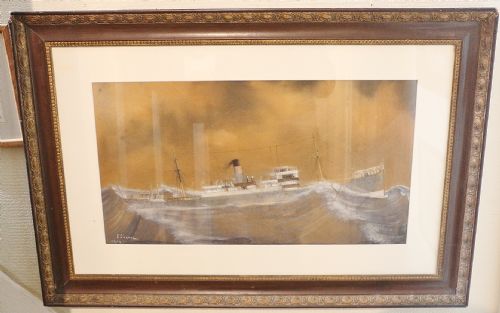
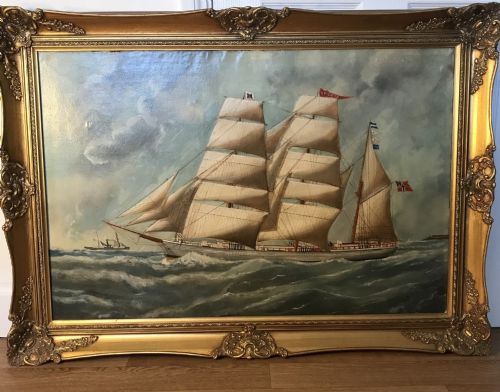
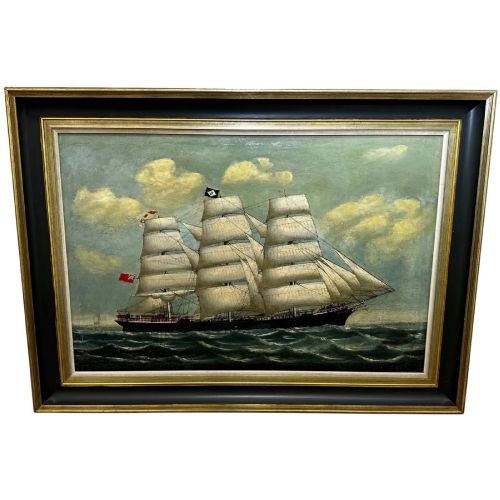
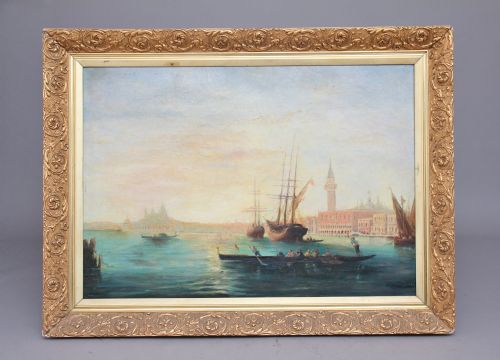
Framed Ocean Seascape Painting
A framed ocean seascape painting brings the motion and light of open water directly into a room.
Framed Ocean Seascape Painting
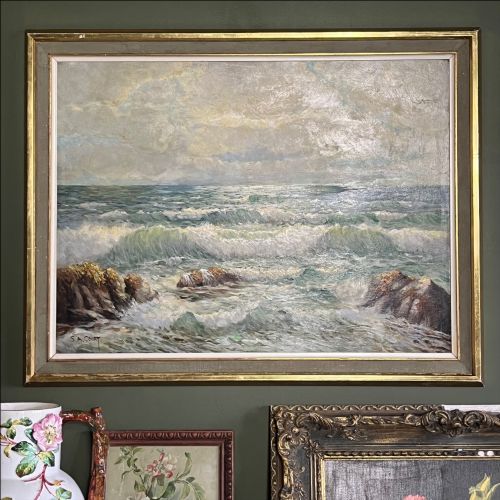
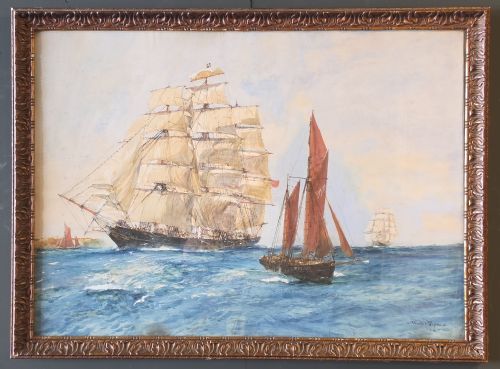
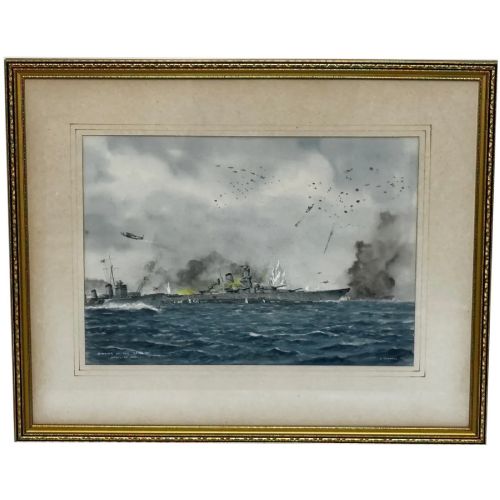
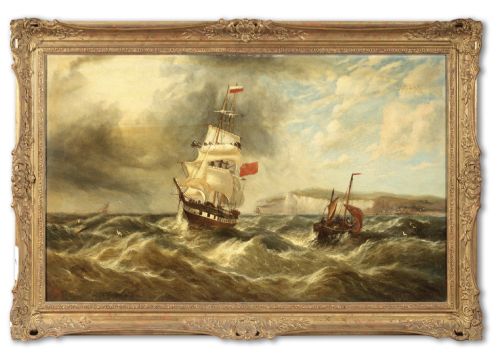
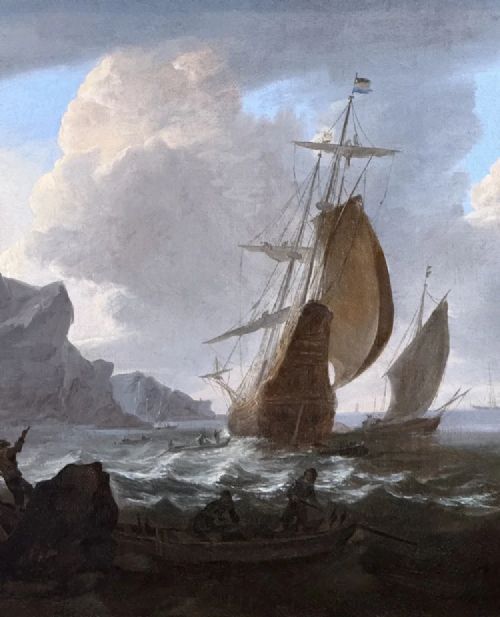
When searching for a framed ocean seascape painting, a buyer encounters works spanning from the nineteenth century through the mid twentieth century, capturing coastal views, merchant shipping, and open water in varying conditions.
The most common examples on this page are oil on canvas or watercolour paintings housed in period wood or gilt frames, reflecting British, French, and Dutch maritime traditions.
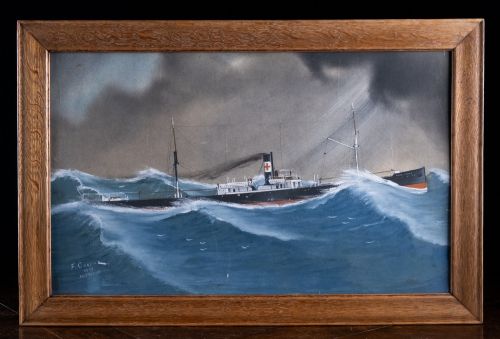
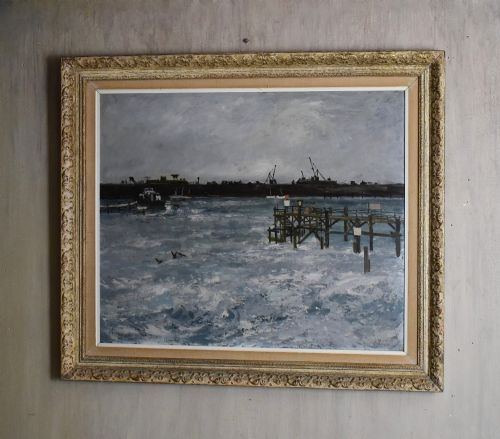
These works range from quiet coastal inlets and harbour scenes by artists such as George Stanfield Walters to dramatic storm narratives involving schooners and steamships.
How they were made
Artists primarily used oil on canvas, oil on board, or watercolour on paper, frequently applying pigment en plein air to capture transient weather and light along the coastline.
Support materials include stretched canvas, paper, and gouache on board, paired with protective glass for watercolours and heavy wood or gilt frames for oils.
Listings feature works from the nineteenth and twentieth centuries, utilising oil, watercolour, and gouache on canvas, board, and paper.
What varies in quality
Quality rests upon the artist's handling of atmospheric perspective, the convincing movement of waves, and the structural accuracy of the vessels depicted.
Framing also plays a role, with original period gilt wood frames offering greater coherence than later replacements.
Clifford Hanney·Sidney A Court·Charles Edward Dixon·Eric Tufnell·William Banks Fortescue·John Rose Miles·Bonaventura Peeters·Peter Brannan·John Moore of Ipswich·Nicholas Condy·Thomas Hodgson Liddell·William Henry Williamson·George Stanfield Walters·John Moxon·Elisabeth Bardon·Charles William Adderton·Charles Napier Hemy·Norman Lloyd·Gustave De Bréanski·Daniel Sherrin·William Greaves·Abraham Hulk Snr·Charles Sim Mottram·Stephen J Renard
The Framed Ocean Seascape Painting Glossary
- En plein air
- Painting outdoors to capture natural light and direct observation of coastal weather. This method produces immediate, lively brushwork.
- Gouache
- An opaque watercolour medium that allows for rich, solid areas of colour and sharp detail in maritime works. It was frequently used on board or paper.
- Impasto
- Thick application of paint that stands out from the surface, creating texture and a tangible sense of churning water. Artists utilised this technique to render foam and waves.
- Gilt wood
- Wood carved and covered with a thin layer of gold leaf or metallic paint. It provides a reflective border that complements marine paintings.
Framed Ocean Seascape Painting: Frequently Asked Questions
How do I date a seascape painting?
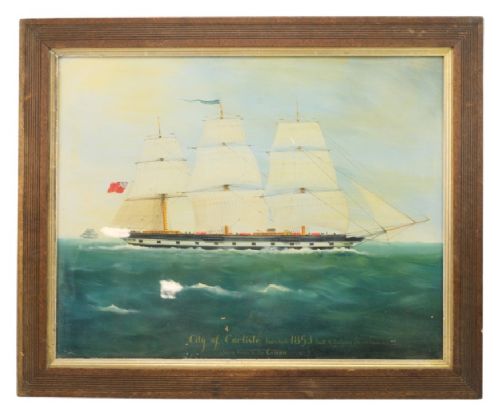
Dating relies on stylistic clues, the vessel types shown, artist signatures, and framing materials. Victorian works often feature detailed square rigged ships, while later twentieth century pieces show looser brushwork.
Examining the canvas backing, stretcher bars, and framing construction also helps narrow down the decade of creation.
What is the difference between oil and watercolour?
Oil paintings use pigment suspended in drying oil on canvas or board, offering rich textures and deep tones. Watercolours use water soluble pigments on paper, creating lighter, more luminous effects.
Watercolours require protective glass framing, whereas oil paintings are typically displayed open to the air within a heavy frame.
Where should I hang a marine painting?
Marine paintings suit rooms with good natural light that can accentuate the varied tones of the water and sky. They pair well with traditional wooden interiors or neutral walls.
Avoid placing watercolour paintings in direct sunlight to prevent fading of the delicate pigments on paper.
How do I identify the ship types in these paintings?
Ship identification depends on the number of masts, the rigging configuration, and the presence of steam funnels. Nineteenth century works frequently depict three masted barques, schooners, and merchant clippers.
Naval vessels and local fishing boats also appear regularly, reflecting the working history of the coastal areas portrayed.