



Framed Nautical Wall Decor
Framed nautical wall decor brings maritime history indoors through oil paintings, watercolours and shadow box dioramas.
Framed Nautical Wall Decor
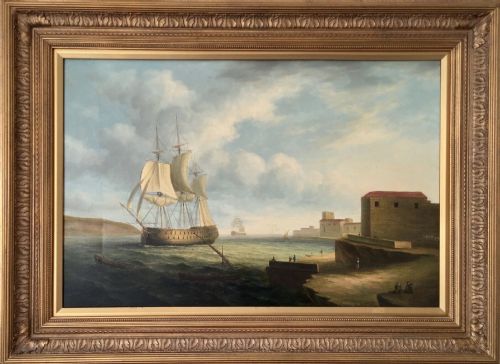
When you search for framed nautical wall decor, you encounter visual records of maritime life spanning several centuries. These pieces capture ships at sea, coastal ports, and naval engagements through various artistic mediums.
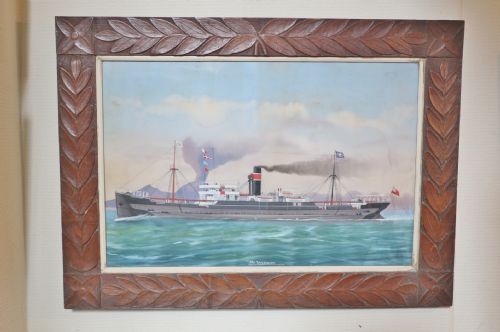
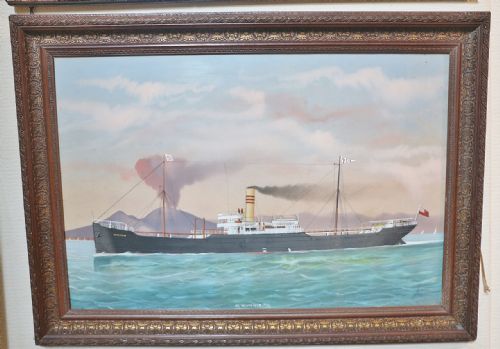
The selections available range from detailed oil on canvas paintings of steamships and barques to folk art dioramas housed behind glass. You frequently find works depicting specific vessels such as the burning HMS Bombay or four-masted sailing ships.
Originating largely from British and European maritime traditions, these framed items reflect the commercial and naval dominance of the sea. Victorian and Edwardian periods supply a substantial portion of the maritime oil paintings and watercolours.
Materials and construction
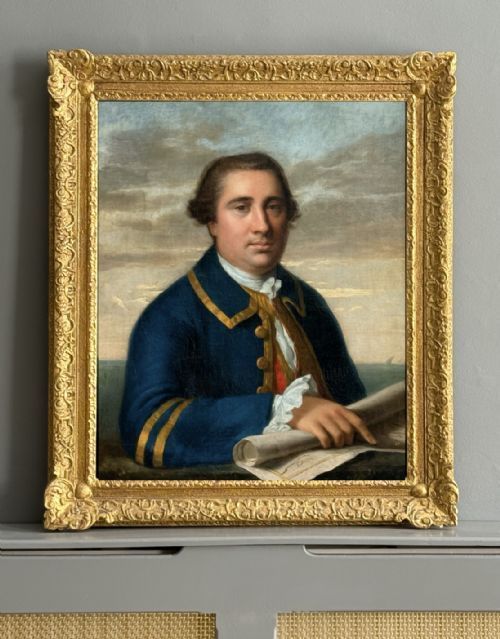
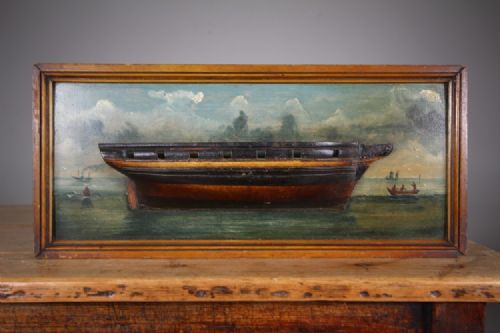
Artists painted oil on canvas, oil on board, and watercolours on paper to capture seascapes and ship portraits. Giltwood and plain wood frames enclose these works, frequently protected behind glass.
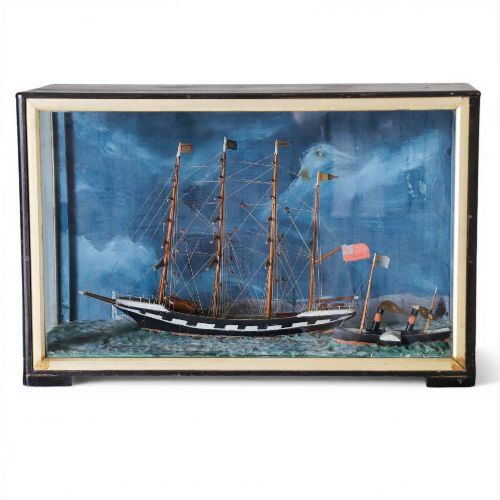
Dioramas utilise three-dimensional models set within shadow boxes, combining carved or constructed elements with painted backgrounds. These pieces present scenes of sailing ships and steam barges using wood, paper, and canvas.
Listings feature works from the 18th century, Victorian period, Edwardian era, and mid-20th century, utilising oil, watercolour, glass, and wood.
Quality and execution
The sophistication of the vessel rendering and the accuracy of maritime rigging distinguish finer paintings from simpler works. Master painters handle light and sea conditions with greater subtlety than anonymous folk artists.
The construction of the frame and the preservation of the canvas or paper support influence the overall character of the piece. Shadow box dioramas depend upon the intact survival of their internal model components.
Lemuel Francis Abbott·Richard Brydges Beechey·Dion Pears·Frank Wood·Thomas Bush Hardy
The Framed Nautical Wall Decor Glossary
- Diorama
- A three-dimensional scene enclosed in a shadow box. These displays often feature detailed model ships and painted coastal backdrops.
- Barque
- A sailing vessel with three or more masts. The rear mast is fore-and-aft rigged while the others are square-rigged.
- Giltwood
- Wood carved and covered with a thin layer of gold leaf. This material frequently frames formal 19th-century oil paintings.
- Galleon
- A large multi-decked sailing ship used for trade and war from the 16th to 18th centuries. Artists often depict them in historical or dramatic coastal engagements.
Framed Nautical Wall Decor: Frequently Asked Questions
What periods do these nautical pieces cover?
The works span from the 18th century through the Victorian and Edwardian eras into the mid-20th century. Earlier pieces often depict historical naval actions or merchant vessels.
Later items extend into the interwar period and the 1950s and 1960s, showing steamships and fishing trawlers.
How are maritime shadow box dioramas constructed?
Makers build miniature ship models and place them inside shallow wooden frames behind glass. Painted canvases serve as the background seascapes.
Additional elements like lighthouse details or steam barges are sometimes included to create depth.
Are these paintings executed in oil or watercolour?
Both mediums appear frequently across the listings. Oil on canvas and oil on panel provide rich textures for stormy seas and vessel hulls.
Watercolours on paper offer a lighter touch, often utilised for Beached fishing boats and coastal views.
How do I identify the ship in a painting?
Artists often inscribed vessel names directly onto the canvas, frame plaques, or reverse panels. Details such as hull design, rigging, and flags also provide clues.
Historical shipping registries help connect specific vessels like the SS Bregonian or the barque Sindia to their respective eras.