


Framed Miniature Prints
Framed miniature prints are compact works on paper and silk set behind glass in wood, brass, and gilt frames, offering intimate detail for cabinet display or small wall spaces.
Framed Miniature Prints
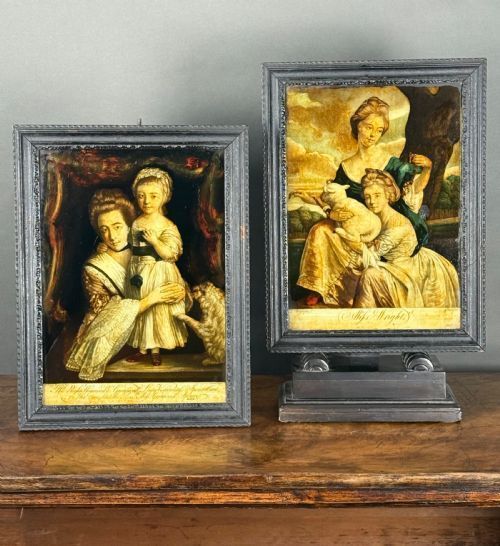
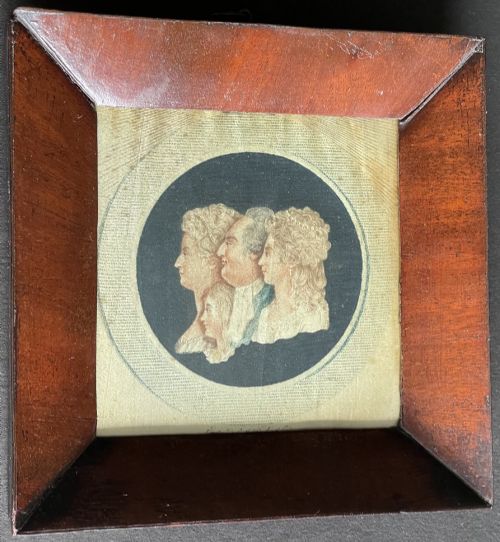
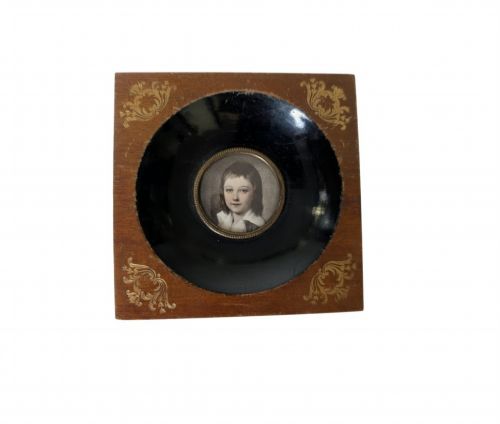
Framed miniature prints encompass works produced across the eighteenth and nineteenth centuries, spanning Georgian, Regency, Victorian, and Edwardian periods. Collectors encounter reverse glass mezzotints, stipple-engravings, hand-coloured portraits, fashion prints, and silkwork pictures housed in small timber or gilt surrounds.
The category includes portraits of nobility, theatrical subjects, naval officers, romantic scenes, and animal studies by printmakers and artists. Examples range from eighteenth-century royal family silk prints and Bartolozzi engravings to nineteenth-century Pre-Raphaelite portrait groups mounted in oak shelves and Chrystoleums.
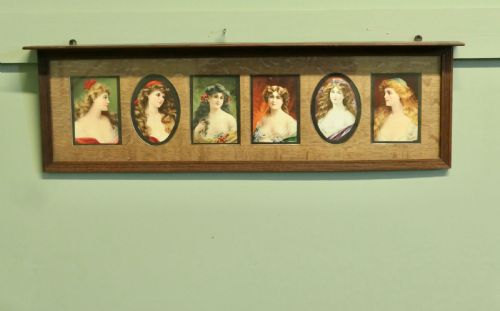
Buyers exploring framed miniature prints find both single decorative pieces and matched pairs set in period frames of wood, mahogany, and gilt. The forms vary from oval portrait frames to rectangular wall shelf displays holding multiple small works.
How they were made
Makers utilised printmaking techniques including etching, stipple-engraving, and mezzotint on paper, alongside silk fabrics for textile art and silkwork pictures. Artists applied hand-colouring directly to printed surfaces, and printmakers transferred delicate lines to small plates.
Makers protected these delicate works behind glass within frames constructed from mahogany, oak, gilt wood, and brass. Chrystoleums combined photographic prints placed under convex glass and hand-painted from behind with oil paint.
Even fierce lions and tigers were miniaturised by nineteenth-century etchers for domestic parlour walls.
What varies in quality
The fidelity of the engraving work and the precision of hand-colouring separate superior portrait miniatures and fashion prints from simpler decorative items. Crisp definition in etched lines and stipple work indicates skilled execution by the printmaker.
The material integrity of the original frame, whether gilt wood, mahogany, or brass, contributes significantly to the piece. Period frames that match the age of the print and retain their original gilding or polish elevate the overall object.
Bartolozzi·Herbert Dicksee·Hans Holbein
The Framed Miniature Prints Glossary
- Stipple-engraving
- A printmaking technique using dots of varying density to create tonal gradations and soft shadows. This method was frequently employed for portraiture and fine artistic reproductions.
- Mezzotint
- A printmaking process where the copper plate is roughened to achieve rich dark tones and subtle tonal variations. Reverse glass mezzotints involve fixing the printed image face down onto glass before colouring.
- Chrystoleum
- A nineteenth-century method of applying a coloured photograph or print to convex glass and hand-painting the reverse with oil paint. The paper backing was often rubbed away to leave only the transparent tinted image.
- Silkwork picture
- Embroidery created using silk threads on a fabric ground to produce pictorial scenes, popular in Georgian and Victorian interiors. These textured works were frequently framed behind glass.
- Gilt wood
- Timber coated with a thin layer of gold leaf or gilt preparation, commonly used for nineteenth-century picture frames. The finish adds bright reflectivity suited to small cabinet works.
Framed Miniature Prints: Frequently Asked Questions
How do I date a framed miniature print?
Dating relies upon the framing materials, the printing technique, and the subject matter depicted. Eighteenth-century pieces often feature stipple-engraving or reverse glass work, while nineteenth-century examples may utilise chrystoleum or mid-century silkwork.
Examining the construction of the wood or gilt frame provides further evidence of the period. Backings, fixings, and glass type also help confirm the age of the complete object.
Where should I hang miniature prints?
These small works suit narrow wall spaces, alcoves, or study walls where large canvases overwhelm the room. Grouping pairs or series together creates a focal point without cluttering the decor.
Keeping them out of direct sunlight protects delicate silk, watercolour, and hand-coloured paper from fading. Small wooden shelves also offer an alternative display method for multiple mounted portraits.
What is a reverse glass mezzotint?
A reverse glass mezzotint is an eighteenth-century print transferred face down onto glass and then hand-coloured from behind. This technique gives the image a luminous quality behind the protective glass layer.
These prints require careful handling because the delicate ink and paint layer adheres directly to the glass substrate. Original frames are essential for housing these fragile plates safely.
Are silkwork pictures fragile?
Silkwork pictures require gentle care due to the organic nature of silk threads and textiles used in their creation. Protection behind glass shields the fabric from dust, atmospheric pollutants, and physical snagging.
Maintaining stable indoor humidity prevents the silk fibres from degrading over time. Direct sunlight must be avoided to prevent the colours from fading.