

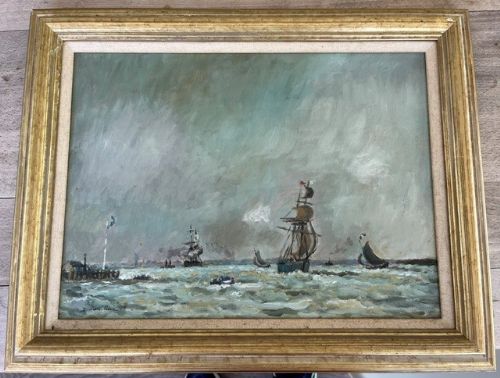
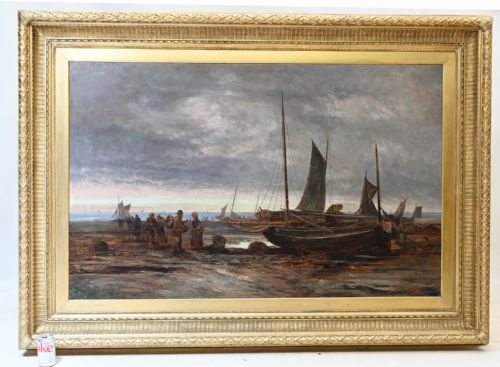

Framed Maritime Oil Picture
A framed maritime oil picture brings the movement of water, the height of sail, and the reach of distant coasts onto a wall.
Framed Maritime Oil Picture
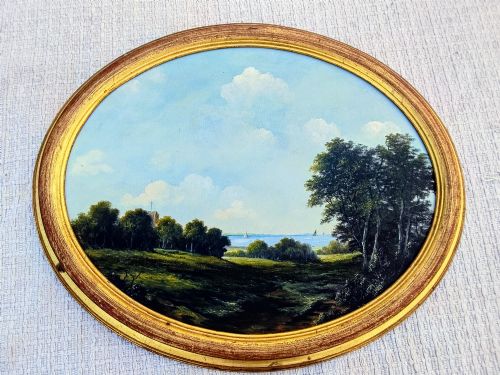
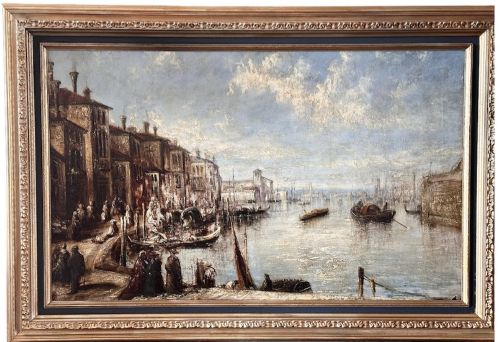
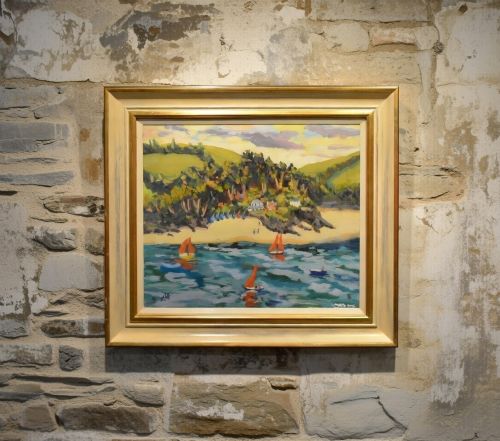
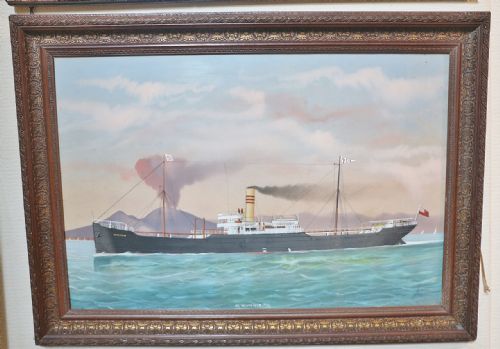
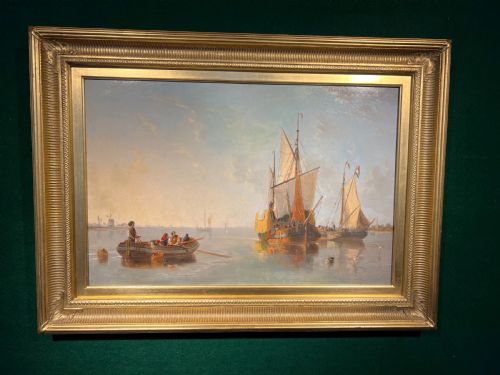
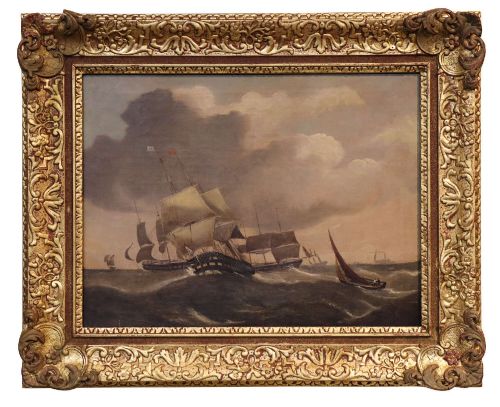
When you search for a framed maritime oil picture, you meet works that capture ships, shores, harbours, and open water through oil paint on canvas or board. These pieces range from nineteenth-century Victorian scenes of heavy seas and coastal shipping to mid-twentieth-century French and British impressions of harbours and sea views.
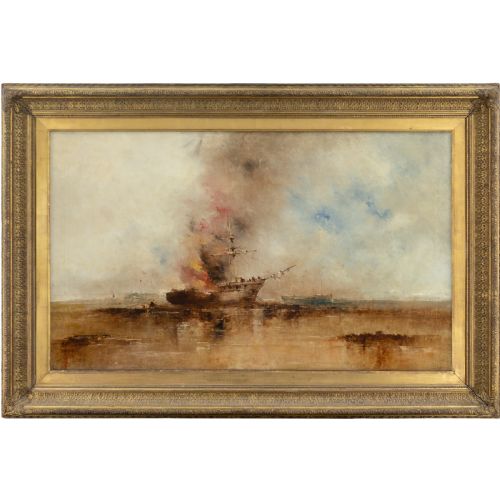
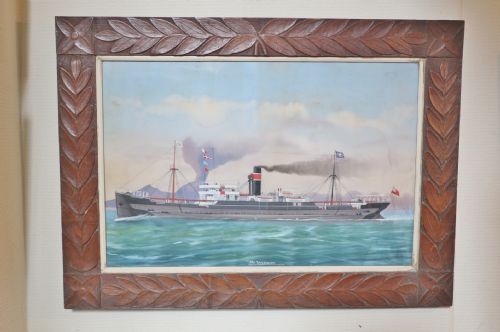
You encounter both large canvases suited to grand spaces and smaller oval or rectangular views intended for intimate rooms. The subjects stretch from named vessels and royal yachts to unnamed fishing boats, Venice lagoons, and dramatic shipwrecks.
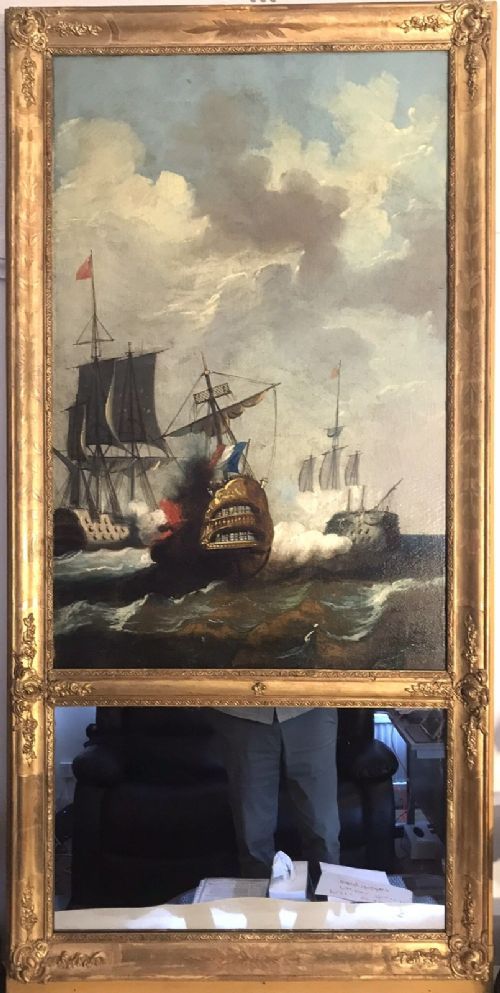
Many of these works arrive housed in period giltwood or gesso frames, while some appear within decorative architectural pieces such as trumeau mirrors. The origins span British, French, and European schools, reflecting centuries of artistic engagement with the sea.
How they were made
Artists painted these works using oil paint applied to stretched canvas, wooden panels, or board, building depth through layered brushwork and impasto textures. Pigments captured the shifting light of water, the pale smoke of steamships, and the dark tones of hulls against stormy skies.
The enclosing frames combine carved wood, moulded gesso, and applied gilt, providing both structural support and decorative weight to the painting.
Several canvases record named vessels ploughing through foreign waters, preserving the exact appearance of steamships off the coast of Italy.
What varies in quality
Quality rests upon the artist's command of light, water movement, and atmospheric perspective, distinguishing loosely rendered sketches from carefully observed maritime compositions. The handling of rigging, hull proportions, and wave dynamics reveals the painter's technical experience.
The material integrity of the canvas and the preservation of the original giltwood frame also shape the character of the piece, as untouched surfaces maintain greater visual depth.
William McAlpine·Francis Moltino·John Wilson Carmichael·Joseph Farquharson·Charles William Wyllie·Elisabeth Bardon·Charles Napier Hemy·Gyrth Russell·Gustave De Bréanski·James Webb·Jane Vivian·William Raymond Dommersen·Alfred Henry Vickers·George Henry Knight
The Framed Maritime Oil Picture Glossary
- Oil on canvas
- Pigments bound in drying oil applied to a woven fabric support. This surface allows for subtle blending of marine light and water tones.
- Giltwood
- Wood carved and covered with a thin layer of gold leaf or gilt finish. This material forms the ornate frames typical of nineteenth-century picture presentation.
- Impasto
- Paint applied thickly to a canvas so that it stands proud of the surface. This technique creates a textured representation of churning waves and thick clouds.
- Trumeau
- A decorative wall mirror incorporating an oil painting within its upper wooden panel. These dual-purpose pieces combine reflective glass with scenic art.
- Provenance
- The documented history of a painting's ownership and origin. This record connects the artwork to specific makers, exhibitions, or collections.
Framed Maritime Oil Picture: Frequently Asked Questions
What subjects appear in these paintings?
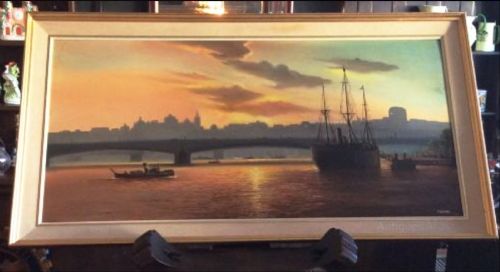
The canvases show sailing ships, steamships, royal yachts, fishing boats, and naval vessels navigating coastal waters, heavy seas, and calm harbours. Views often include specific locations such as Venice, the River Thames, Naples, and various British and European coastlines.
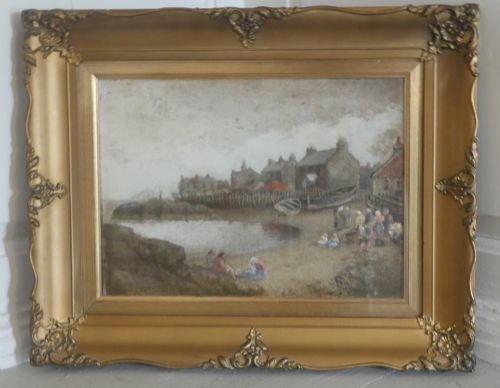
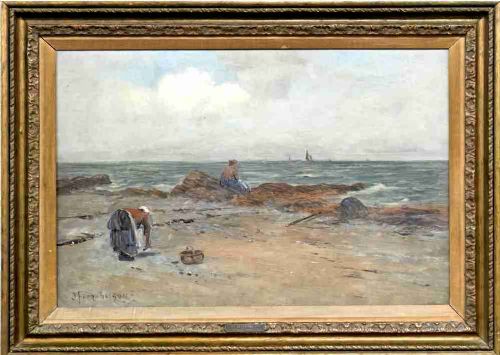
Artists also recorded lighthouses, shipwrecks, coastal figures, and quiet village harbour scenes, documenting maritime life across the nineteenth and twentieth centuries.
How should I hang a framed oil painting?
Select a wall protected from direct sunlight and steady moisture to safeguard both the oil paint and the underlying canvas. Secure fixings must support the combined weight of the heavy canvas and its wooden or gilt frame.
Allow adequate space around the piece so the carved frame and the maritime subject remain visually distinct from surrounding furniture.
How do I date a maritime oil painting?
Examine the style of the vessel, the rigging, and the clothing of any figures, as these details often point to specific decades such as the Victorian or Edwardian eras. The construction of the canvas, the stretcher frames, and the composition of the paint layer provide further chronological clues.
Original frames, signatures, and inscribed titles on the reverse of the canvas or stretcher also help establish when the work was created.
What is a trumeau mirror painting?
A trumeau incorporates a painted panel set directly above a mirror glass within a single decorative architectural frame. These pieces originated in France and were designed to hang between windows to reflect light while displaying landscape or maritime art.
The oil painting within the upper section typically depicts coastal scenes, shipping, or pastoral views tailored to the room's proportions.