


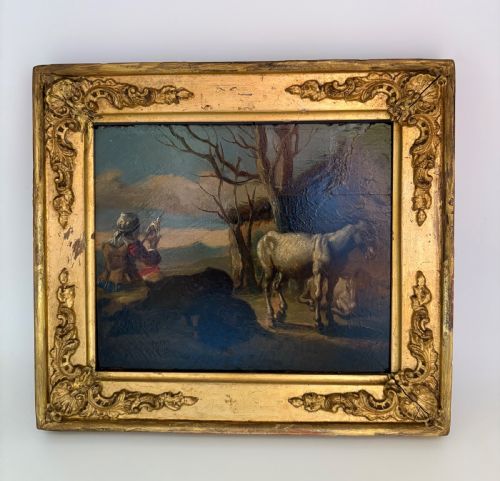


Framed Livestock Oil Painting
A framed livestock oil painting brings the quiet weight of the pasture and the farmyard directly onto an interior wall.
Framed Livestock Oil Painting
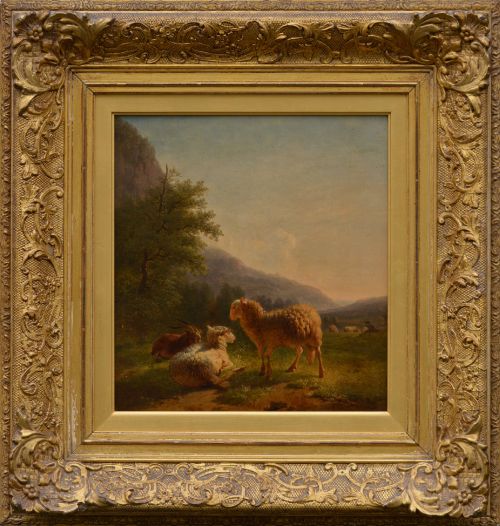
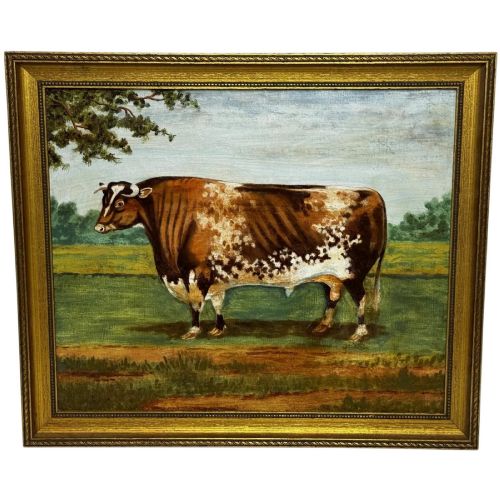
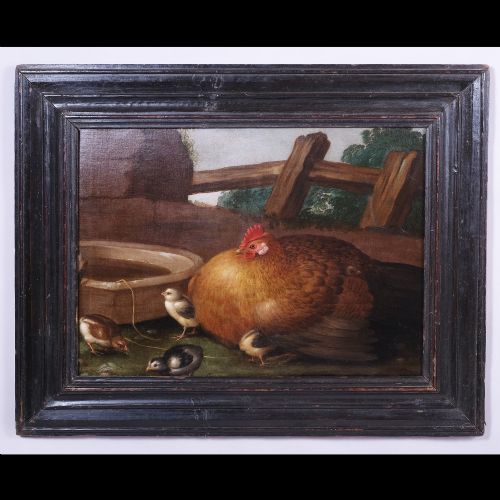
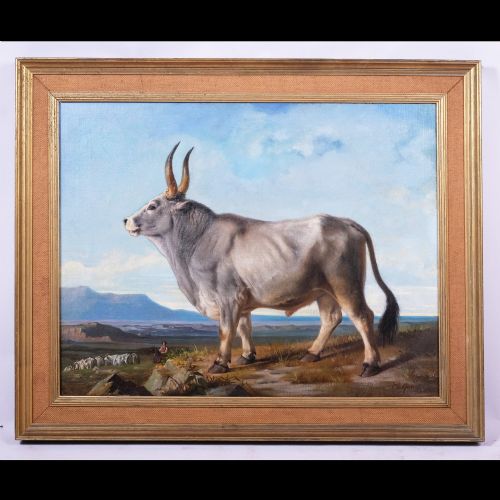
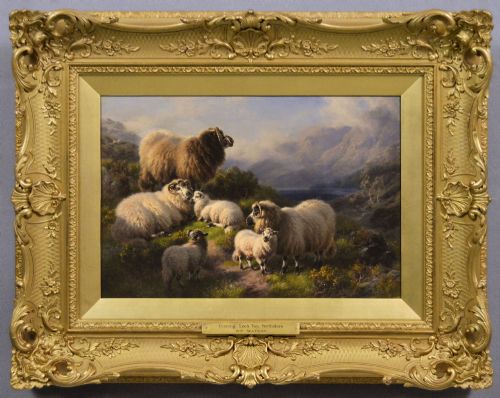
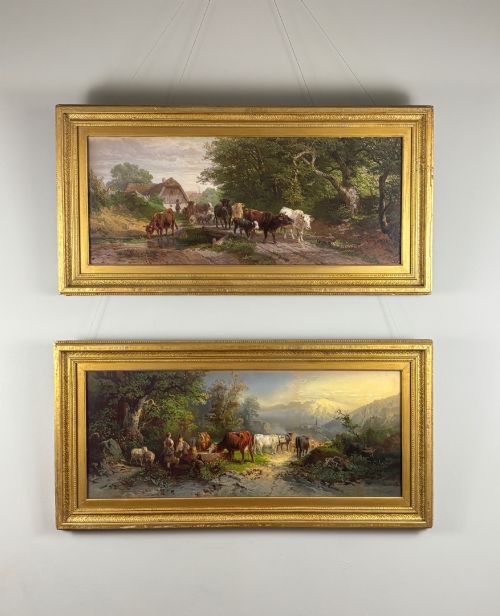
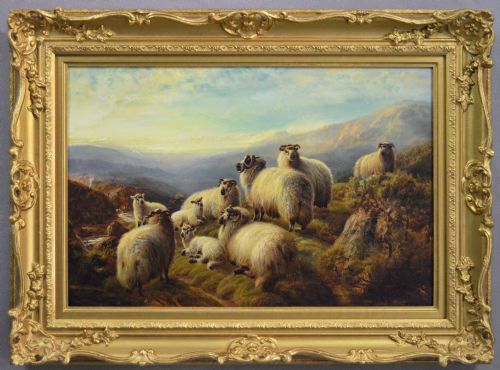
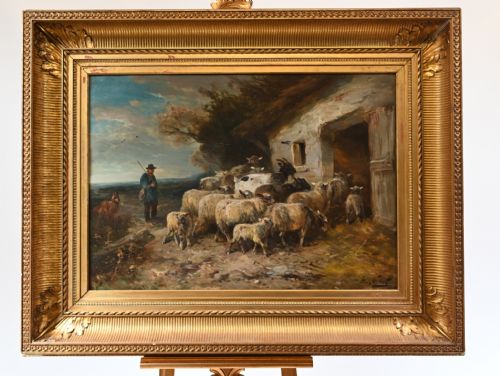
A framed livestock oil painting depicts cattle, sheep, horses, and poultry within pastoral, rural, and agricultural settings created across the eighteenth, nineteenth, and early twentieth centuries. These works record prized shorthorn bulls, grazing flocks, and farmyard scenes through the hands of British, Belgian, German, and Dutch artists working in realist and romantic modes. Buyers meet canvases rendered on wood panels and stretched linen, enclosed in heavy period frames of gilded wood and gesso.
The selection centres heavily on nineteenth-century animal portraiture and Victorian pastoral landscapes, alongside earlier Georgian farmyard compositions and later Edwardian examples. Canvases range from intimate studies of sheep to large-scale depictions of Highland cattle in winter landscapes or sheltered barns. Each piece preserves a distinct agricultural past through oil paint applied to canvas or oak panel.
Materials and Technique
Artists built these works using oil paint applied to stretched canvas or wooden panels, layering pigments to capture the dense fleece of sheep, the glossy hides of cattle, and the shifting light of rural skies. Brushwork moves from tight, meticulous realism in animal portraits to looser, atmospheric handling in broader landscape settings.
Surrounding the paintings are period frames constructed from wood, enriched with moulded gesso, and finished with gold leaf or gilt. These frames provide structural support and optical depth, matching the aesthetic standards of the Georgian, Victorian, and Edwardian eras in which the artworks were produced.
Framed Livestock Oil Painting Retail Price Guide 2026
Typical asking prices for framed livestock oil painting among the pieces listed under this phrase on Sellingantiques today, from the lower quarter to the upper quarter. They describe what is for sale here now, not the wider market.
Listings feature works spanning the eighteenth, nineteenth, and early twentieth centuries, executed in oil on canvas and oak panel.
Judgement of Quality
Quality rests upon the artist's command of anatomy, proportion, and texture when rendering the animal subjects, distinguishing a master observation from a stiff, formulaic copy. The handling of light across a beast's coat or within a dim barn reveals the painter's true technical skill.
The integrity and originality of the surrounding giltwood or gesso frame significantly influence a piece, as period-correct mounts that retain their original gilding elevate the entire object. Furthermore, the depth of the surrounding landscape and the subtlety of the atmospheric background separate standard decorative works from fine art paintings.
Eugène Verboeckhoven·William Watson Jnr·Johann Friedrich Voltz·Robert Watson·Henry Schouten·A M Gauci·William Henry Mander·Thomas Sidney Cooper·Franz van Severdonck·Philipp Peter Roos·James de Rijk·Julius Caesar Ibbetson·Charles Jones·Arthur Charles Dodd·Claude Cardon·John W Morris·Frederick Richard Lee·W.A. Clark·Henry Brittan Willis·Edgar Hunt·Henry Cheadle·William Sidney Cooper
The Framed Livestock Oil Painting Glossary
- Oil on canvas
- A painting medium where pigments are suspended in a drying oil and applied to a woven fabric stretched across a wooden frame. This combination allows for rich colour blending and textured brushwork.
- Giltwood
- Wood that has been coated with a thin layer of gold leaf or metallic powder. It is commonly found on traditional frames surrounding nineteenth-century artworks.
- Gesso
- A paint mixture consisting of a binder mixed with chalk, gypsum, or pigment, used to prepare wood or canvas surfaces. In framing, it is built up to create ornate moulded decorations before gilding.
- Pastoral realism
- An artistic style depicting rural life and agricultural scenes with a focus on lifelike accuracy and unidealised detail. It dominated much of nineteenth-century animal painting.
- Oak panel
- A rigid wooden support used for early paintings before canvas became the dominant substrate. Panels offer a smooth, stable surface for fine detail work.
Framed Livestock Oil Painting: Frequently Asked Questions
How do I care for an antique oil painting?
Keep the artwork away from direct sunlight and sudden temperature shifts to prevent the canvas from warping and the oil paint from cracking.
Dust the surface and the surrounding frame gently with a dry, soft brush without applying pressure to the paint layer.
Are these paintings signed by the artists?
Many examples bear the artist's signature or monogram, often inscribed in the lower corner of the canvas or on the reverse.
Unsigned works are frequently attributed to specific schools or followers based on technique, subject matter, and palette.
What subjects appear in these livestock paintings?
Common subjects include prized shorthorn bulls, grazing sheep flocks, Highland cattle in winter landscapes, and horses resting near farmyards.
Scenes frequently incorporate human figures such as shepherds, drovers, and farm workers tending to animals.
How can I tell the period of the frame?
Period frames exhibit traditional construction methods, such as corner mitres joined with wooden splines and hand-modelled gesso ornamentation.
Original gilding often shows natural signs of age, including subtle craquelure and thinning that matches the era of the painting within.