


Antique Farm Animal Artwork
These antique farm animal artwork pieces capture rural life through oil and canvas from the nineteenth and early twentieth centuries.
Antique Farm Animal Artwork
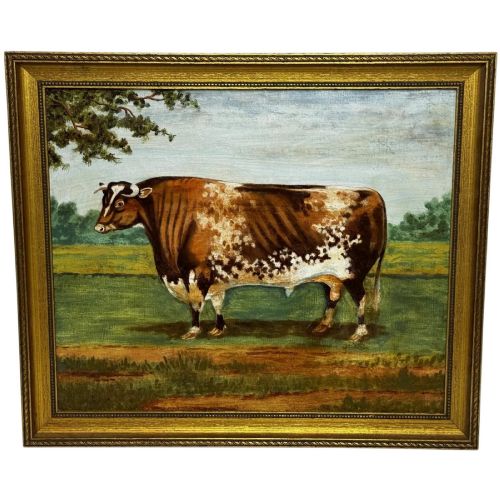
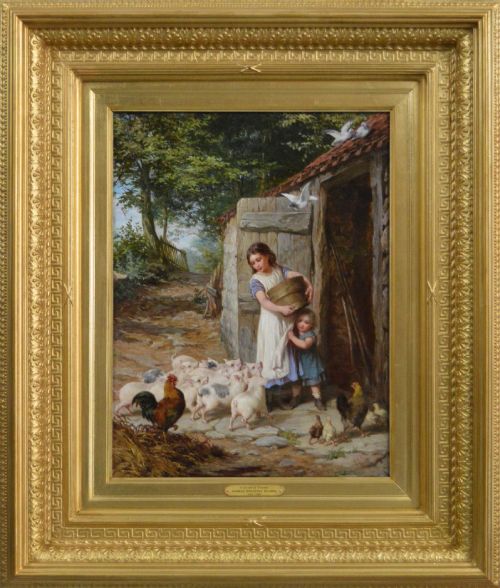
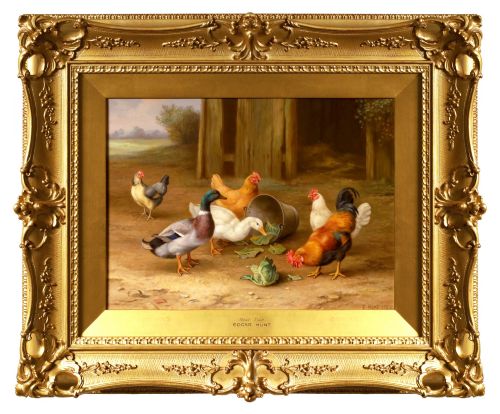
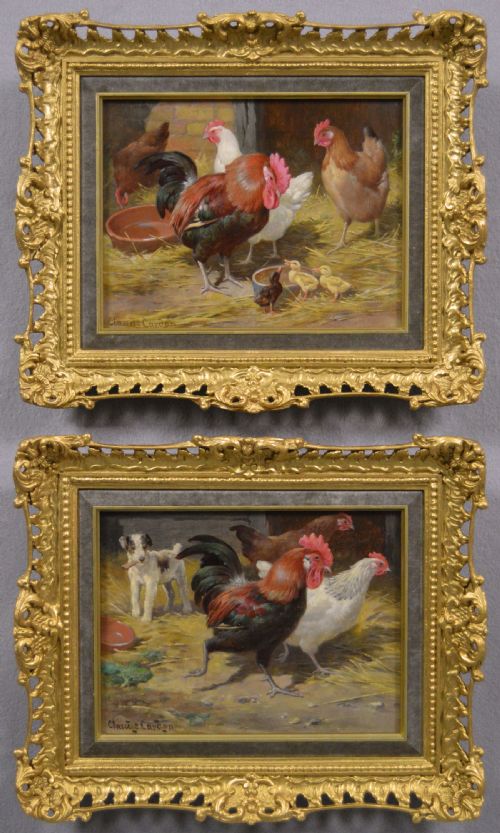
When you search for antique farm animal artwork, you encounter oil paintings and watercolours depicting cattle, sheep, horses, and poultry in pastoral settings. These works range from detailed portraits of prized livestock to bustling farmyard scenes populated by figures, horses, and various farm animals.
The pieces on this page stem primarily from the nineteenth century and the Edwardian era, spanning styles such as Victorian Realism, Pastoral Realism, and the British Animalier tradition. You are most likely to meet framed canvas works created by British and continental European painters who specialised in rural and domestic subjects.
Materials and methods
Artists painted these works using oil paint applied to canvas or wood panels, occasionally employing watercolour on paper as seen in specific Edwardian examples. The physical build typically includes wooden stretcher frames enclosed by period frames finished in giltwood or gold leaf.
The technique relies on layered oil pigments to render the textures of animal coats, feathers, and country landscapes with high fidelity. Brushwork varies from the tight realism found in animalier studies to looser application in impressionist Scottish works and folk art pieces.
The listings feature nineteenth century and Edwardian works executed in oil on canvas, wood, and watercolour.
Assessing quality
Quality in these paintings rests upon the anatomical accuracy of the animals, the depth of the landscape, and the handling of light within the scene. Master painters render fur, plumage, and livestock musculature with distinct individuality, whereas lesser works treat these subjects with repetitive brushwork and flat composition.
The distinction also lies in the provenance and the reputation of the artist, with signed pieces by recognised nineteenth century painters commanding greater artistic interest. Additionally, the preservation of the original canvas and the integrity of the period giltwood frame contribute to the overall standard of the piece.
George Augustus Holmes·Edgar Hunt·Claude Cardon·Franz van Severdonck·John Frederick Herring Jnr·Samuel Joseph Clark·Eugene Verboeckhoven·Percival Glenfern·Pierre Emmanuel Dielmans·Thomas Sidney Cooper·R Lauritsch·W A Clark·George Smith RSA·A Davis·Louis Marie Dominique Robbe·Charles Hunt Jnr
The Antique Farm Animal Artwork Glossary
- Animalier
- An artist who specialises in the realistic depiction of animals. This term frequently applies to nineteenth century painters of livestock and wildlife.
- Pastoral Realism
- An artistic style focusing on authentic, idealized representations of rural life and agricultural scenes. These compositions typically integrate domestic animals with rustic landscapes.
- Giltwood
- Wood that has been treated with gold leaf or metallic paint to create a decorative metallic finish. It is commonly found on the frames housing nineteenth century oil paintings.
- British School
- A loose categorisation for artists trained or working primarily within Britain during a specific period. Many nineteenth century farmyard paintings align with this tradition.
Antique Farm Animal Artwork: Frequently Asked Questions
What subjects appear in farm animal paintings?
These artworks depict cattle, sheep, horses, pigs, and poultry situated within farmyards, pastures, and rural landscapes. Many compositions also include human figures engaged in daily agricultural labour or feeding the animals.
Scenes range from solitary portraits of prize-winning livestock to busy pastoral gatherings featuring multiple species alongside barns and cottages.
How do I date these paintings?
Dating relies on stylistic clues, artist signatures, framing materials, and inscriptions left on the reverse of the canvas or wood panel. Nineteenth century works often display Victorian realism, while Edwardian pieces from the early nineteen hundreds show softer impressionistic influences.
Documentation such as signatures and exhibition labels assist in narrowing the production window to specific decades between eighteen-hundred and nineteen-fifty.
Where should I hang these artworks?
These pieces suit traditional living rooms, studies, and dining spaces where their rustic themes complement classic interior decor. They function effectively as focal points above mantelpieces or integrated within a gallery wall of complementary paintings.
Protect the canvas from direct sunlight and excessive moisture fluctuations to preserve the oil paint and the giltwood frame.
What is the difference between a study and a scene?
A study typically concentrates on a single animal or a specific group, such as a prize shorthorn bull or a small flock of sheep resting in a field. These focus heavily on anatomical precision and animal character.
A scene incorporates broader narratives involving multiple animals, human figures, farm buildings, and surrounding country landscapes to portray daily rural life.