
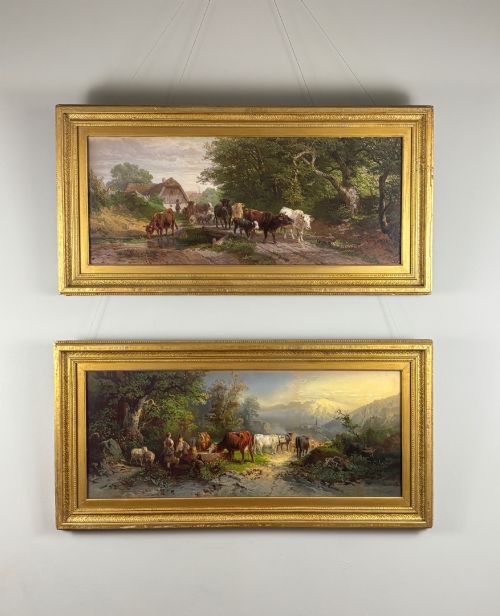
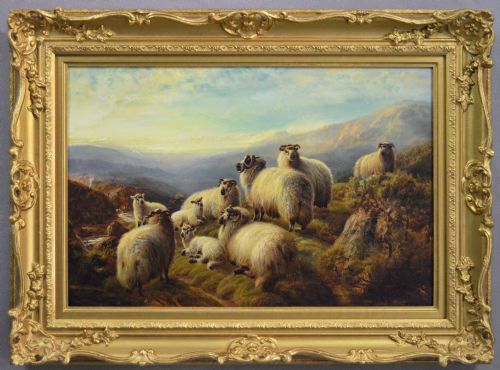
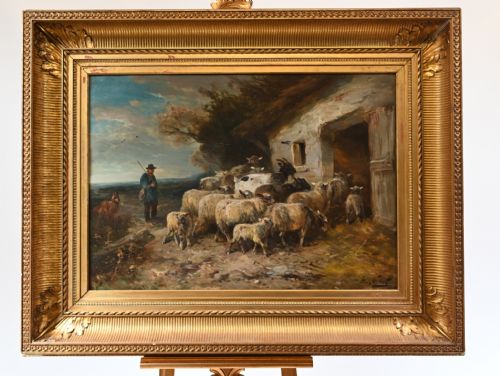


Victorian Livestock Oil Painting
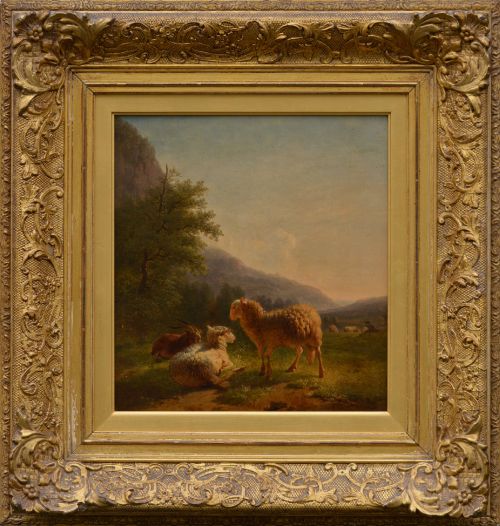
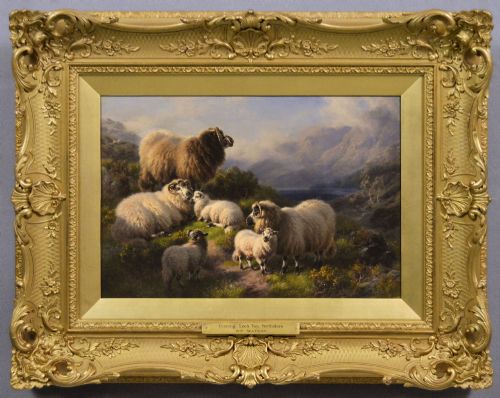
A victorian livestock oil painting brings the heavy-coated cattle and huddled sheep of nineteenth-century pastoral life directly into a room.
Victorian Livestock Oil Painting
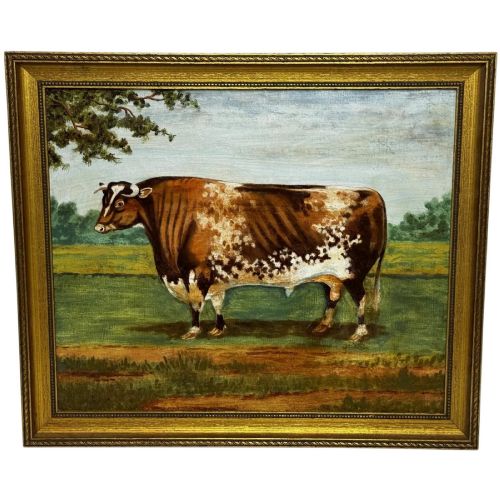
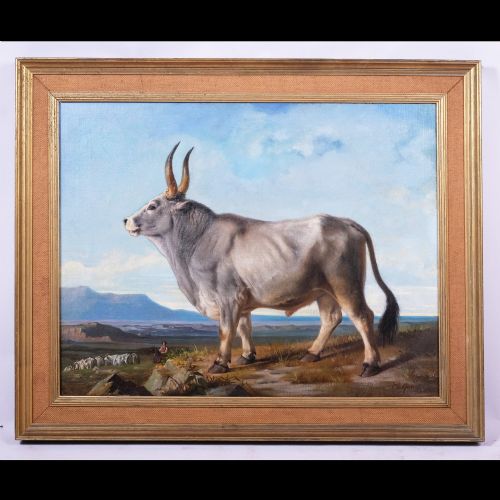
A victorian livestock oil painting depicts cattle, sheep, horses and farmyard birds set within rural landscapes, Scottish highlands or stable interiors. The examples met on this page span the nineteenth century, ranging from naive studies to detailed academic animal portraits.
Many works pair heavy-coated shorthorn bulls and Highland cattle with shepherds, drovers or farm women tending flocks near rivers and coastal cliffs. These pieces record the agricultural priorities of the period through structured compositions of domestic animals.
The selections include British and continental European hands, showing sheep and cattle rendered in styles from romanticism and pastoral realism to fine art animalier.
Materials and Technique
The base support for these works is woven canvas stretched over wooden frames, often held within heavy giltwood and gesso frames enriched with gold leaf. Artists applied oil paint in layered brushstrokes to capture the dense fleece of sheep and the wet hides of cattle.
Painters built up the rural scenes using mixed oil pigments that allowed for deep shadow in barns and bright morning light across pastures and winter snow. The original frames utilise moulded gesso ornament over timber construction to finish the pieces.
Listings feature oil paint on canvas supported by wood frames, accompanied by giltwood and gesso surrounds dating from the nineteenth century.
Evaluating Quality
Quality rests in the anatomical accuracy of the animals, the handling of light on fleece and hide, and the strength of the surrounding landscape composition. Stronger works render the weight and musculature of a shorthorn bull or the texture of wool with clear observation.
The integration of the livestock into the wider rural setting separates standard studio output from exceptional examples by recognised animal painters. Original giltwood frames with intact gesso moulding also elevate the presentation of a canvas.
Eugène Verboeckhoven·William Watson Jnr·Johann Friedrich Voltz·Robert Watson·Henry Schouten·A M Gauci·William Henry Mander·Thomas Sidney Cooper·Franz van Severdonck·Andre de Moller·Charles Jones·Arthur Charles Dodd·Claude Cardon·John W Morris·Frederick Richard Lee·Henry Brittan Willis·Edgar Hunt·Henry Cheadle·William Sidney Cooper·W A Clark·William Huggins·A Davis·Louis Marie Dominique Robbe
The Victorian Livestock Oil Painting Glossary
- Animalier
- A nineteenth-century artistic classification dedicated to the realistic portrayal of animals. Artists in this grouping focused heavily on livestock, dogs and wild game.
- Gesso
- A plaster mixture applied to wood frames and moulded into relief ornament before gilding. It provides the crisp decorative borders found on period frames.
- Oil on Canvas
- Pigment mixed with drying oils applied to a woven fabric surface. This medium allowed artists to blend tones smoothly across large pastoral scenes.
- Pastoral
- A genre of art focused on rural life, shepherds and domestic farm animals in idyllic country settings. It romanticised agrarian work and livestock farming.
Victorian Livestock Oil Painting: Frequently Asked Questions
What is a victorian livestock oil painting?
It is an artwork created during the nineteenth century featuring cattle, sheep, and other farm animals in rural or highland settings.
These pieces reflect the period's focus on agriculture, livestock breeding, and romanticised pastoral landscapes.
Where were these paintings displayed?
In the nineteenth century, these canvases hung in country houses, farmhouses, and urban drawing rooms to display an appreciation for rural wealth and prize livestock.
Today, they suit studies, dining rooms, and traditional interiors alongside wooden furniture.
How do I identify the period?
Period indicators include the style of clothing worn by figures in the background, the specific breed of cattle shown, and the construction of the canvas stretcher.
The heavy giltwood and gesso frames also point directly to nineteenth-century framing conventions.
Who painted these farm scenes?
Both British and continental European artists specialising in animalier and pastoral subjects painted these works, often travelling to farms to sketch prize bulls and sheep.
Many signed their canvases or left identifying inscriptions on the reverse.