

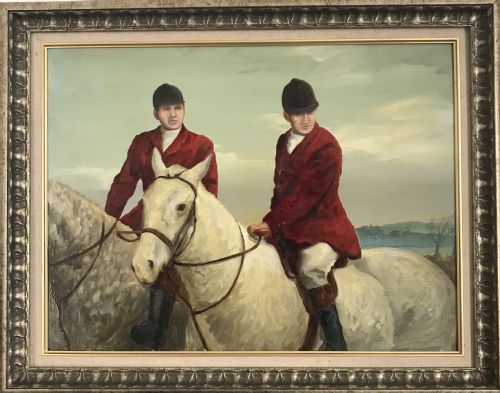


Framed Hunting Scene Art
Framed hunting scene art captures horses, hounds, and sporting pursuits across centuries of painting, drawing, and printmaking.
Framed Hunting Scene Art
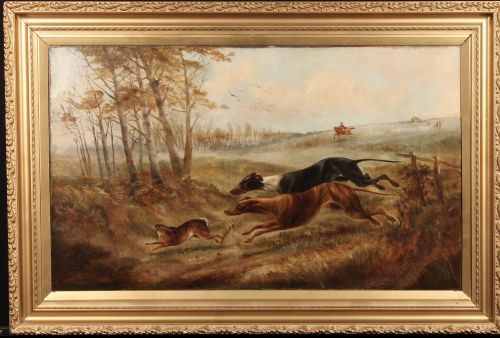
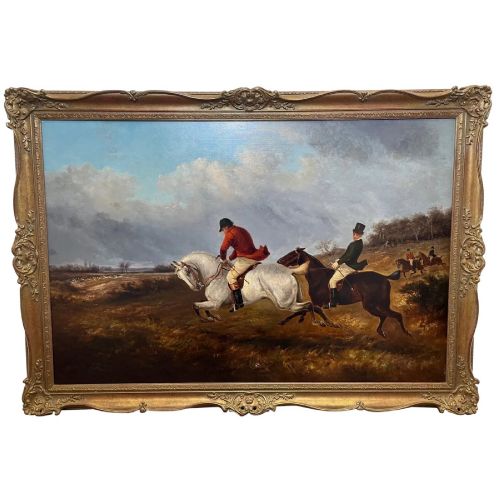
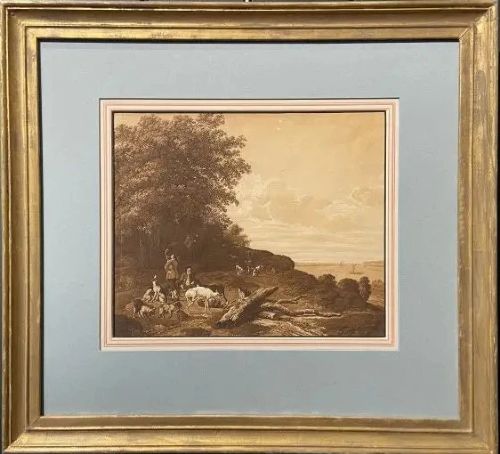
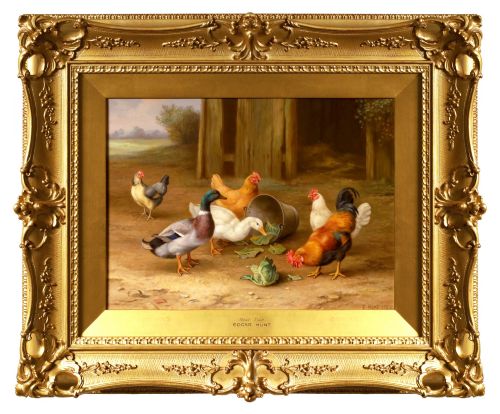
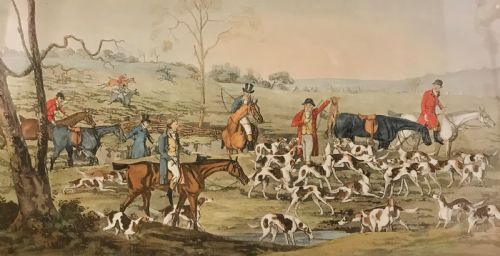
Framed hunting scene art spans oil paintings, watercolours, engravings, lithographs, and framed beadwork fragments. These works depict equestrian subjects, hounds, shooting scenes, and countryside pursuits.
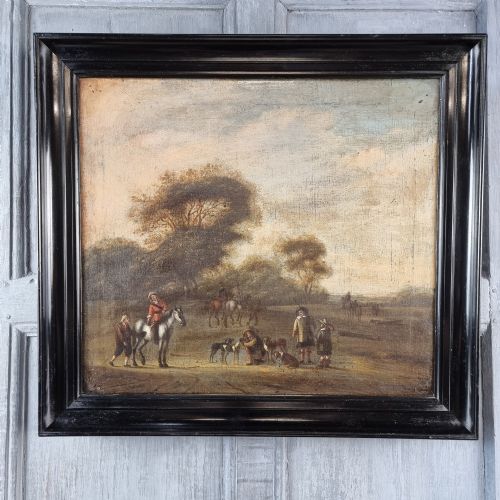
Victorian sporting art and nineteenth-century canvases dominate the selection, alongside eighteenth-century works and occasional seventeenth-century pieces. Buyers encounter large framed oils, detailed pencil drawings, and hand-coloured prints.
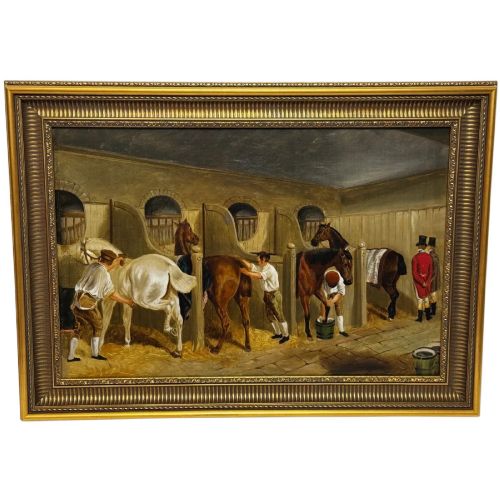
Subject matter ranges from fox hunting meets and hare coursing to stagecoaches, stable portraits, and quiet landscape settings. Each piece preserves historical rural pastimes within period frames.
How they were made
Artists painted oil on canvas or board, utilising oil paint to capture the rich textures of horses, coats, and hounds. Engravings and lithographs on paper provide detailed narrative records of sporting events.
Makers housed these works in wood, glass, and gilt wood or giltwood frames, protecting delicate watercolours, chalk drawings, and reverse silhouette glass paintings.
Materials include oil on canvas, wood, paper, glass, gilt wood, oil paint, giltwood, and canvas.
What varies in quality
Anatomy and movement distinguish skilled handwork from rigid depictions, particularly in the rendering of horses and hounds in motion. The handling of light across landscape backgrounds and clothing creates depth in superior compositions.
Frame craftsmanship contributes significantly to the overall integrity of the piece, with original gilt wood mouldings enhancing historical character.
George Armfield·Thomas Smythe·Johannes Lingelbach·Edgar Hunt·Charles Hunt·George Wright·Philip Henry Rideout·Michael Lyne·Charles Faulkner·Henri Schouten·Heywood Hardy·John Charles Tunnard·John Sanderson Wells·Guillaume Urban Régamey·George Goodwin Kilburne
The Framed Hunting Scene Art Glossary
- Lithograph
- A print made from a flat stone or metal plate on which an image is drawn with a greasy substance. This technique allowed artists to reproduce detailed hunting scenes for wider distribution.
- Giltwood
- Wood carved and coated with thin layers of gold leaf or metallic powder. It provides a bright ornamental border for traditional frames.
- Equestrian
- Pertaining to horses and horseback riding. Many sporting paintings focus on riders, hunters, and stable yards.
- Engraving
- A print produced by cutting a design into a metal plate with a sharp tool. Ink is applied to the grooves and transferred to paper under pressure.
Framed Hunting Scene Art: Frequently Asked Questions
What periods do these artworks come from?
The selection spans from the seventeenth century through the Victorian era up to the twentieth century. Many pieces originate in the nineteenth century during the height of British sporting art.
Earlier seventeenth-century examples and later Edwardian watercolours also appear among the selections.
How should I hang framed hunting art?
These artworks suit traditional living spaces, studies, or hallways where timber furniture and period decor predominate. Their gilt wood and timber frames pair well with neutral or dark wall colours.
Ensure placement avoids direct sunlight to protect oil paint and paper from fading over time.
How do I identify a Victorian sporting painting?
Victorian sporting paintings typically feature rich earth tones, detailed depictions of horses and hounds, and narrative titles concerning specific hunts or meets. Artists often signed their work directly on the canvas or board.
Original period frames constructed from heavy gilt wood often accompany these nineteenth-century works.