



Victorian Hunting Engraving
A victorian hunting engraving brings the field sports of the nineteenth century into the room with crisp line work and spirited animal subjects.
Victorian Hunting Engraving
Buyers seeking a victorian hunting engraving will find framed prints and paper plates depicting hounds, stags, and riders across the nineteenth century. These works capture the energetic atmosphere of rural pursuits through detailed prints.
The items span the Victorian era, the Edwardian period, and specific dates in the nineteenth century. Prints such as sets of coloured engravings dominate this visual category alongside related framed art.
Materials and production methods
These works rely on paper sheets printed from hand-worked plates, often featuring hand-applied colour to enhance the subject matter. The prints are typically housed in wooden frames to protect the delicate paper surface.
Makers utilised skilled plate engraving techniques to achieve fine detail in the depiction of figures, animals, and landscape backgrounds. The resulting impressions record the visual culture of nineteenth century sporting life.
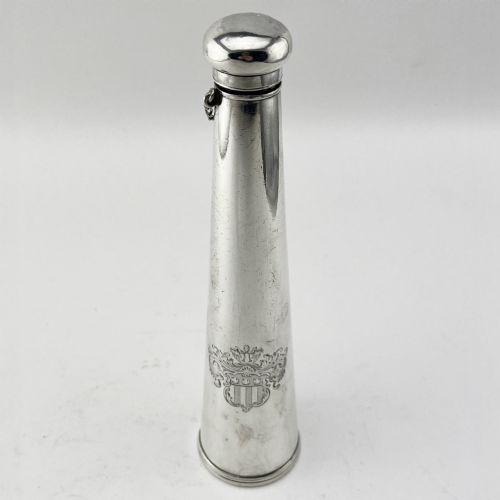
A cow horn table gong sits unexpectedly among the hunting engravings, ready to summon the household.
Assessing quality in prints
Quality separates routine decorative prints from works by named artists through the clarity of the lines and the precision of the hand-colouring. Strong impressions retain sharp details in the subjects and crisp contrast across the paper.
The presence of a recognised publisher or printmaker elevates an individual plate. Complete sets maintain greater visual cohesion than isolated fragments.
Charles Hunt·Francis Calcroft Turner·J F Herring
The Victorian Hunting Engraving Glossary
- Engraving
- A printmaking method where an artist cuts lines into a metal plate to hold ink for transfer onto paper. This technique allows for exceptional detail and fine tonal gradations.
- Coloured engraving
- An engraving that has received pigment by hand after the initial printing process. This adds vibrancy to the clothing of riders and the natural tones of the landscape.
- Framed art
- Artwork mounted behind glass within a protective border and housing. This presentation method preserves fragile paper from dust and environmental moisture.
- Edwardian
- A historical period spanning the start of the twentieth century until the First World War. Objects from this era often refine earlier Victorian aesthetics.
Victorian Hunting Engraving: Frequently Asked Questions
How do I care for antique paper engravings?
Keep framed paper prints away from direct sunlight to prevent the ink and any applied colour from fading over time. Maintain stable indoor humidity levels to protect the paper from warping or foxing.
Ensure that the backing board and framing materials are acid-free to stop chemical degradation. Clean the exterior glass gently with a cloth rather than spraying liquid directly onto the frame.
Where were these sporting prints displayed?
Nineteenth-century households commonly hung hunting scenes in libraries, smoking rooms, and entrance halls to reflect the sporting interests of the occupants. These large framed works served as bold decorative statements.
The prints also appeared in country houses and town residences alike, celebrating rural traditions within domestic spaces. Today they function well in studies or traditional living areas.
How do I distinguish nineteenth-century prints from later copies?
Examine the surface of the paper under magnification to check for plate marks where the printing press pressed the metal edge into the sheet. Genuine period impressions show ink resting in depressions within the paper fibres rather than sitting as uniform dots from modern commercial printing.
Look closely at the paper stock and framing construction for signs of age appropriate to the nineteenth century. Hand-applied watercolour wash exhibits subtle brush variations absent in mechanical reproductions.
Why are some prints found in complete sets?
Publishers originally issued sporting subjects as serial portfolios or grouped sequences that documented the stages of a chase or seasonal events. Keeping these four-part sets together preserves the narrative flow intended by the creator.
Buyers value complete groups because they demonstrate how collectors historically acquired and displayed the works. Individual plates from a broken set are more common than intact series.