
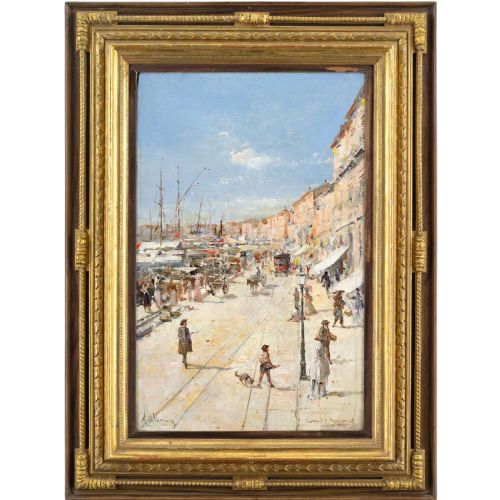
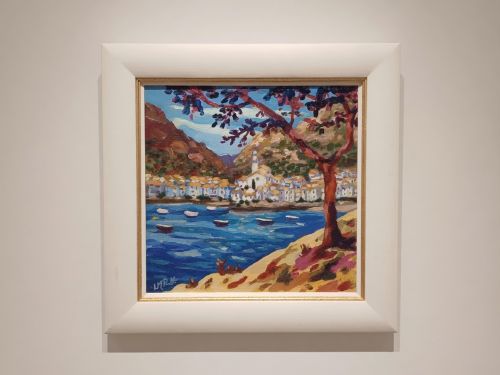
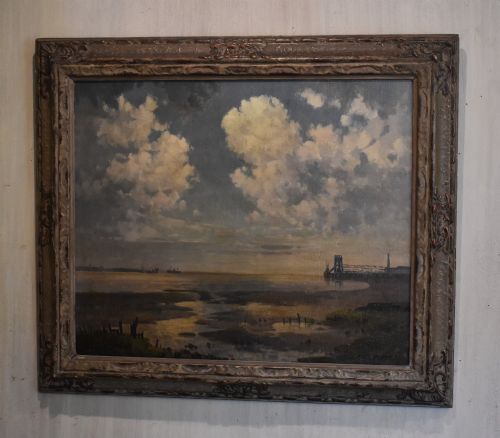
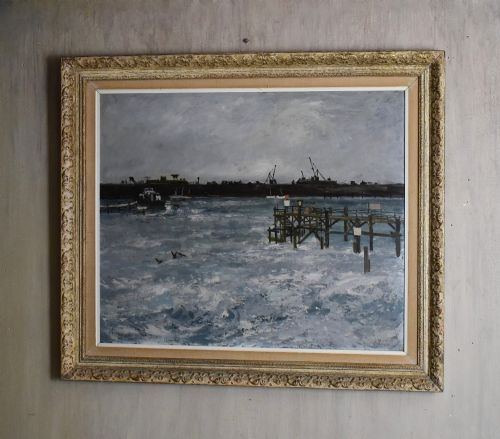
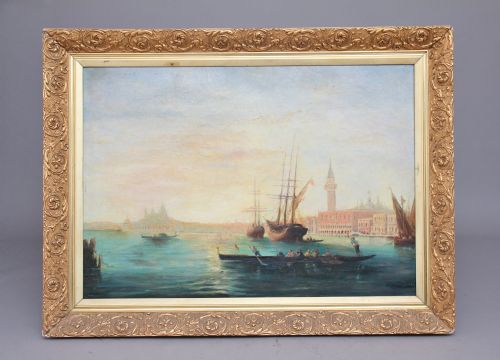
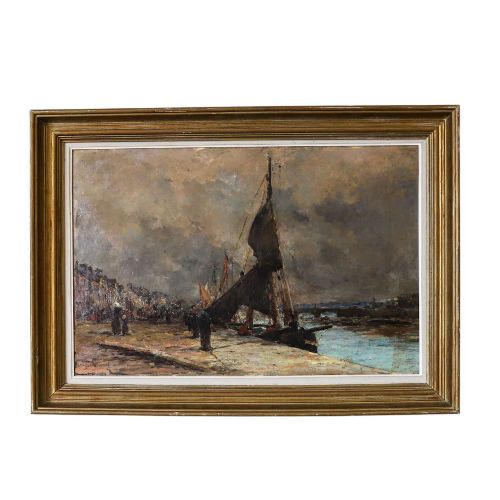
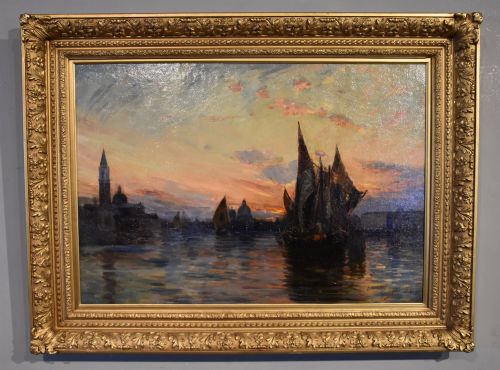
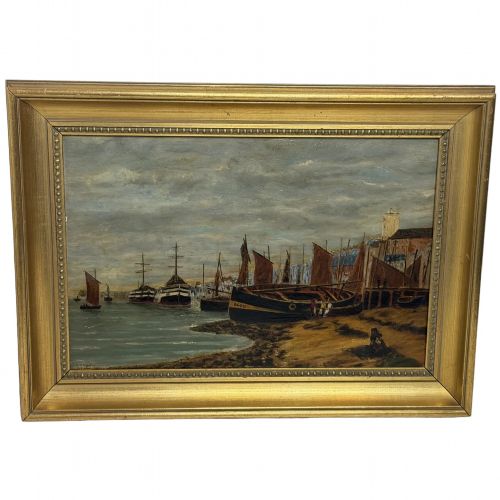
Framed Harbour Oil Painting
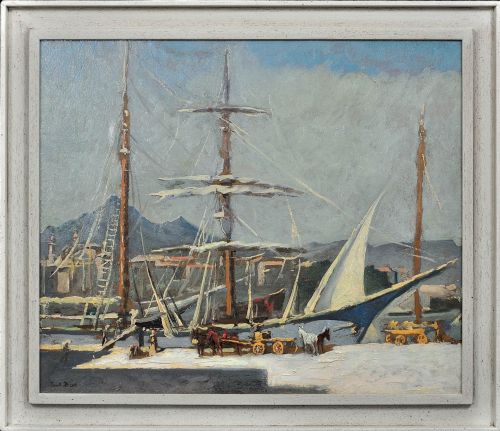
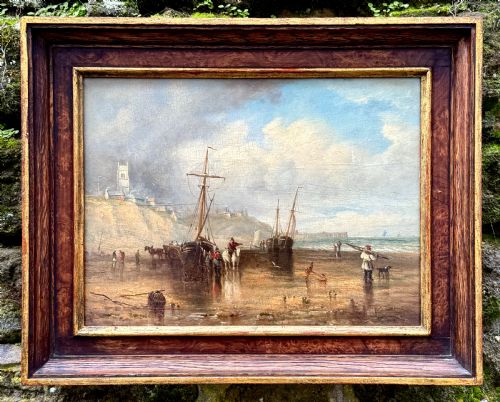
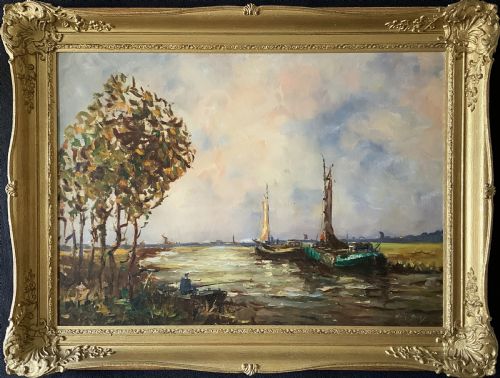
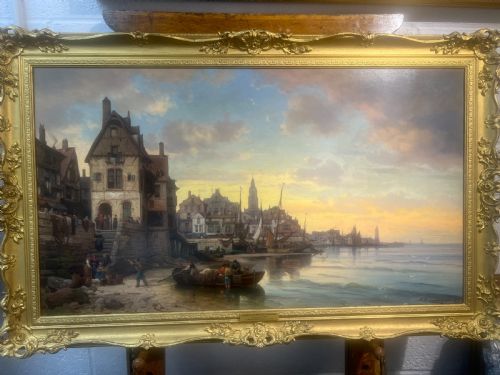
A framed harbour oil painting captures bustling quays, quiet coastal inlets and maritime traffic through the varied lenses of nineteenth and twentieth century artists.
Framed Harbour Oil Painting
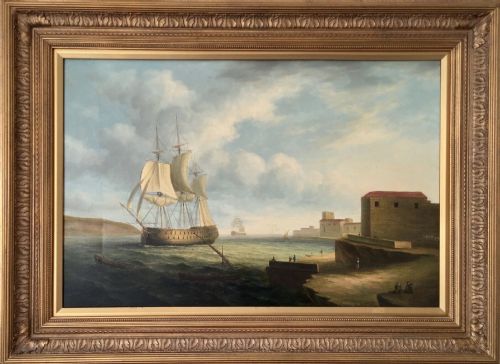
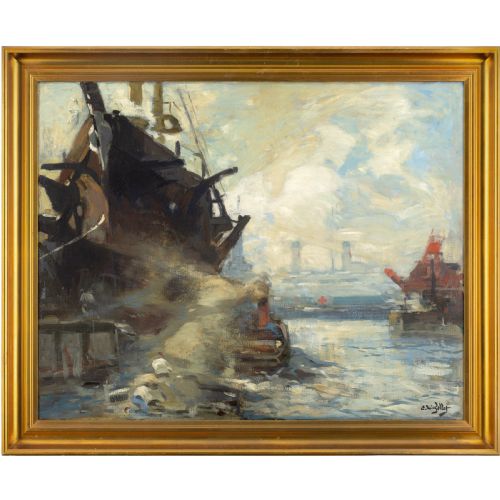
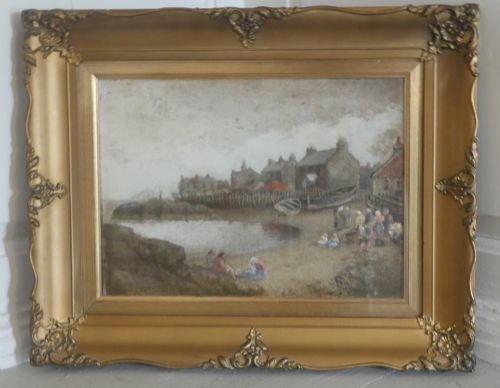
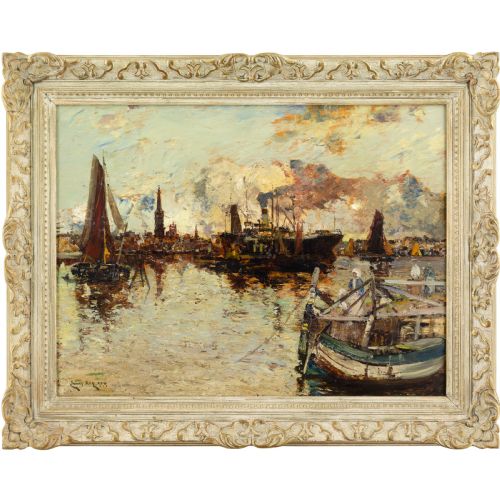
When you search for a framed harbour oil painting, you encounter works depicting domestic fishing ports, international trade hubs and Mediterranean anchorages spanning the nineteenth and twentieth centuries.
The selections on this page range from Victorian maritime canvases and Edwardian coastal views to mid-century impressionistic depictions of French and British quays.
These works typically portray sailing vessels, steamships, loading quays and coastal architecture captured in oil pigments upon canvas, board or panel.
Materials and Construction
Artists painted primarily with oil pigments applied to stretched canvas, wooden panels or paper boards, utilising the slow-drying medium to blend atmospheric light over water and sky.
Surviving works are commonly housed within contemporary or period frames constructed of wood, often finished with gilt or gold leaf to complement the composition.
Several artists captured the quiet drama of vessels waiting in port while domestic life unfolded along the quayside.
Factors That Distinguish Quality
Quality rests upon the artist's handling of light, atmosphere and perspective, where confident brushwork brings movement to water and architectural clarity to quayside buildings.
The integration between the painting and its frame matters considerably, as period gilt wood surrounds designed specifically for the canvas enhance the visual depth of the marine scene.
James Kay RSW·Augusto Alberici·Paul Bret·Willem Bos·Charles William Wyllie·William Edward Webb·Donald McIntyre
The Framed Harbour Oil Painting Glossary
- Canvas
- A heavy woven fabric stretched across a wooden frame to form the primary support for oil paint. It provides a textured surface that catches light and holds thick applications of pigment.
- Impasto
- A technique where oil paint is laid thickly on the surface, standing out from the canvas so that the marks of the brush or palette knife remain visibly textured.
- Panel
- A flat piece of wood used as a rigid support for painting instead of flexible canvas. Wooden panels were common in nineteenth-century works and offer a smooth, stable ground.
- Gilt Wood
- Timber framing coated with a thin layer of gold leaf or metallic powder to create a reflective golden finish. These frames frequently accompany nineteenth-century and Edwardian marine paintings.
- Seascape
- A work of art depicting the sea, coastal views, ships and maritime activities. This genre forms the core subject matter for harbour paintings across all represented periods.
Framed Harbour Oil Painting: Frequently Asked Questions
What periods do these paintings cover?
The works span from seventeenth-century compositions through nineteenth-century Victorian and Edwardian maritime pieces up to mid-twentieth-century modernist interpretations.
Most available paintings originate in the nineteenth and twentieth centuries, reflecting changing artistic movements from realism to impressionism.
Where were these harbour scenes painted?
Artists recorded ports and coastal locations across Britain, such as St Ives, Folkestone and North Shields, alongside international destinations including Venice, Malta and Rouen.
These diverse geographic settings illustrate both local domestic fishing industries and major European trade routes.
How should I hang a framed oil painting?
Secure wall fixings suited to the weight of the wooden and gilt frame must be installed directly into solid wall studs or masonry.
Position the painting away from direct sunlight and steady heat sources to protect the oil pigments and the wooden support over time.
How can I tell the age of a frame?
Period frames often display hand-carved gesso details, shrinkage splits in the wooden mitres and traditional corner construction methods unique to their era of manufacture.
Examining the backing boards and fixings also helps determine whether the frame is original to the canvas or a later replacement.