
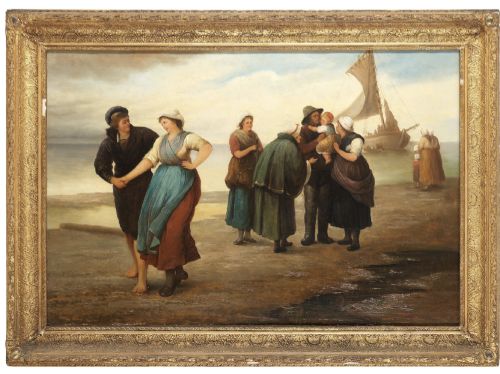
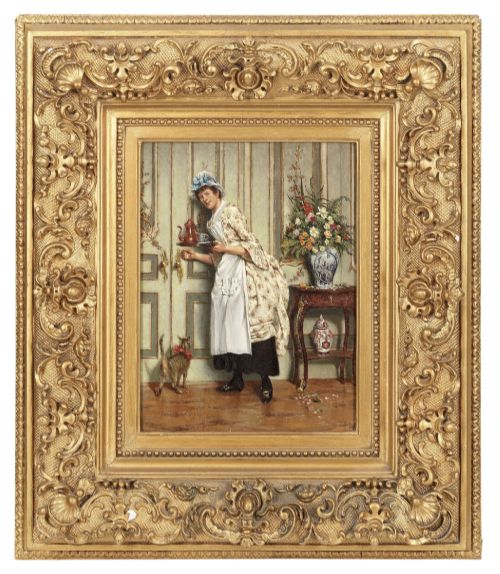
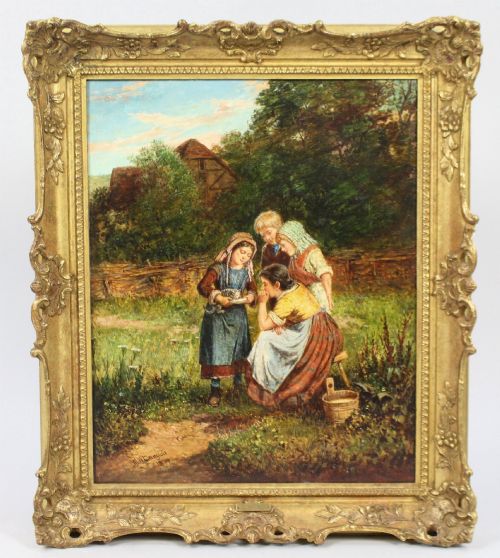
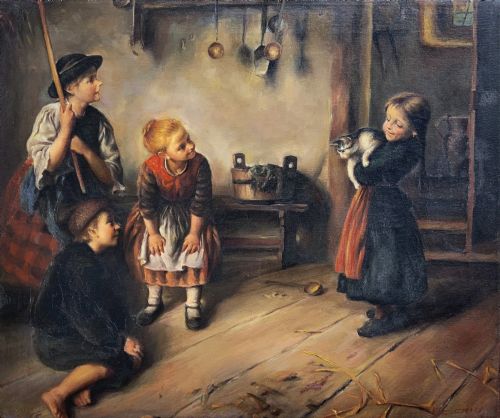
Framed Genre Scene Painting
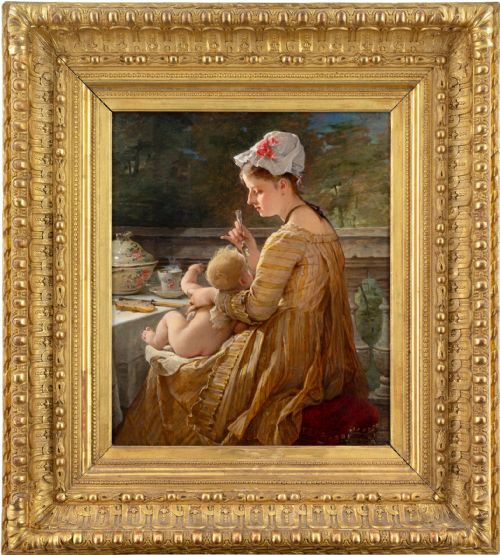
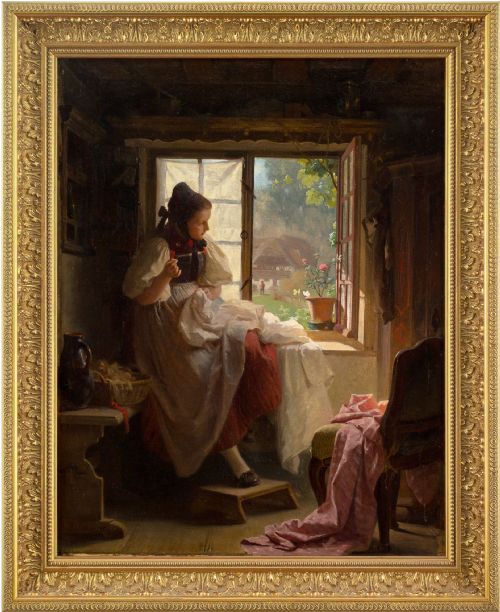
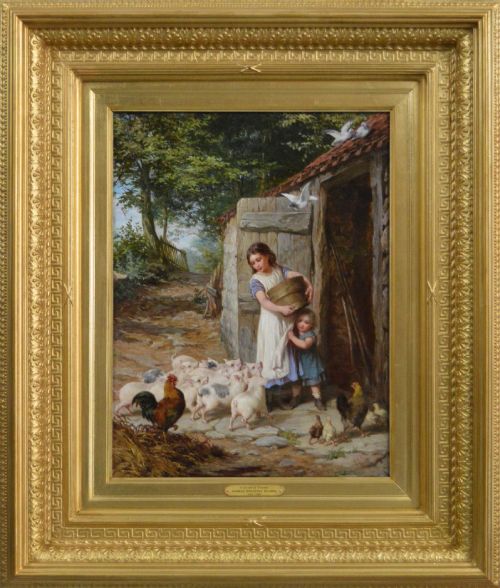
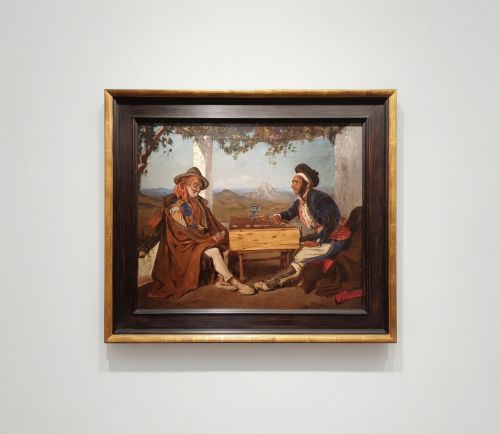
A framed genre scene painting captures everyday life in domestic interiors or rural settings, offering a window into past social habits.
Framed Genre Scene Painting
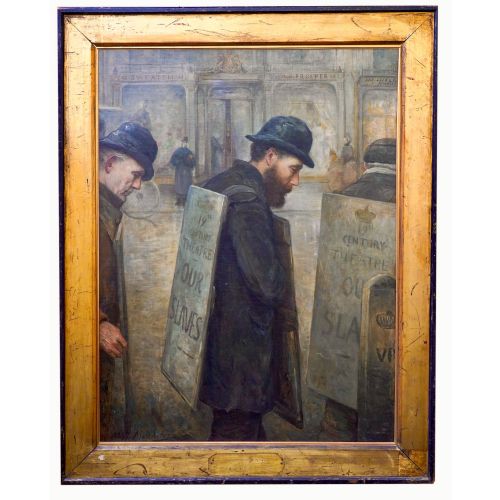
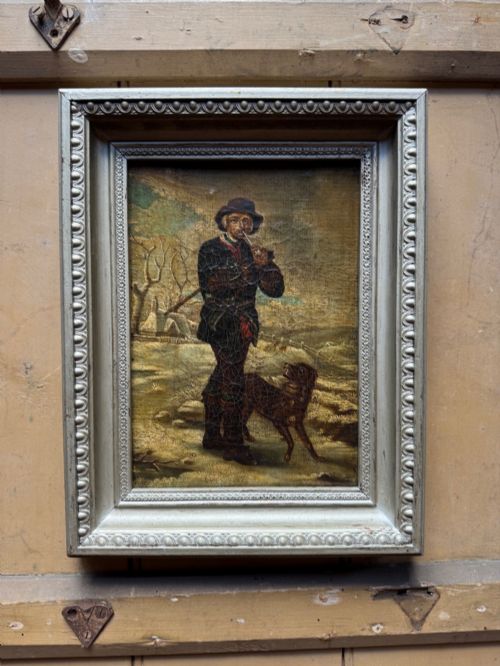
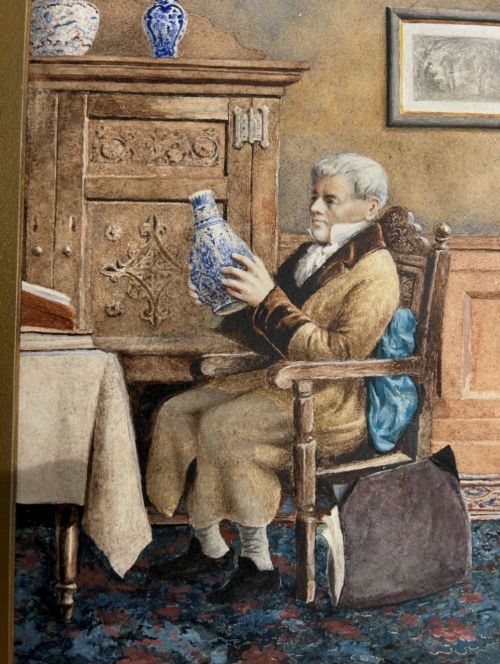
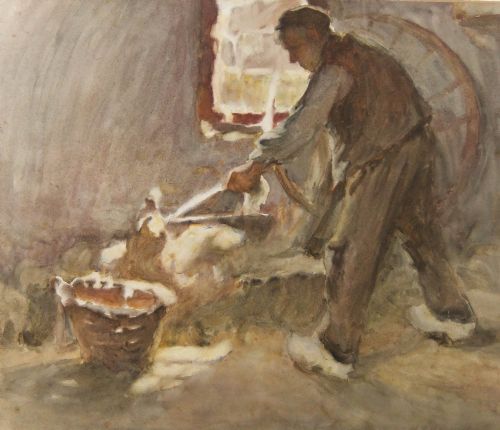
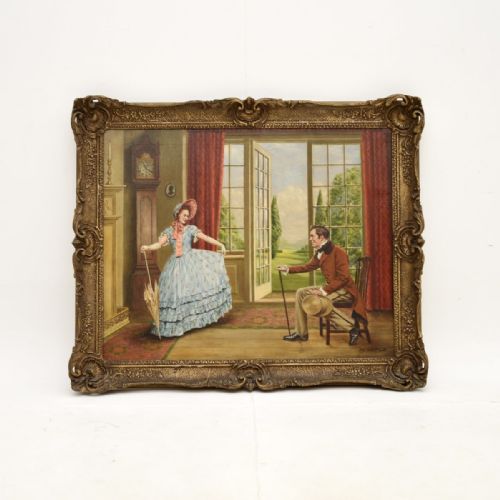
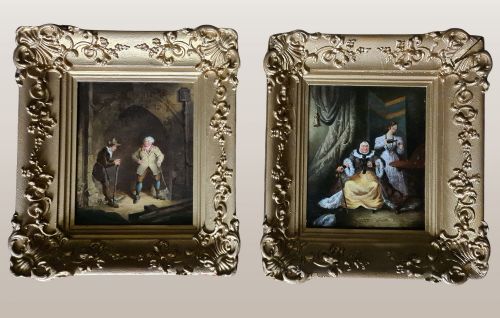
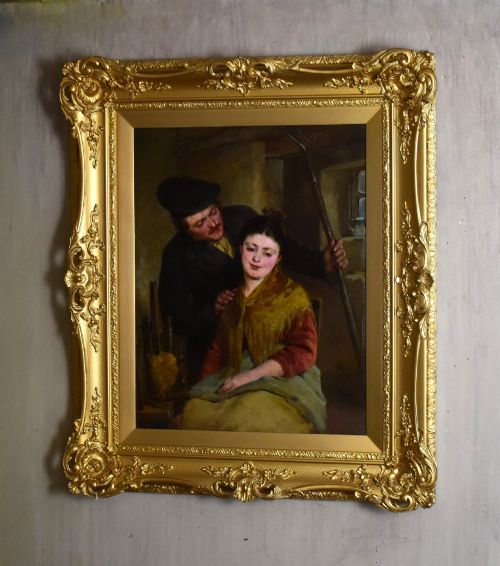
A framed genre scene painting depicts daily activities, domestic interiors, and social moments rather than formal portraits or grand historical narratives. These works frequently show figures engaged in ordinary tasks, from tea time to cottage life, rendered in oil or watercolour.
The pieces appearing on this page span the nineteenth century and the Victorian era, alongside related nineteenth century French and Dutch school interpretations. Buyers will encounter works ranging from intimate watercolours of children playing to monumental social history canvases.
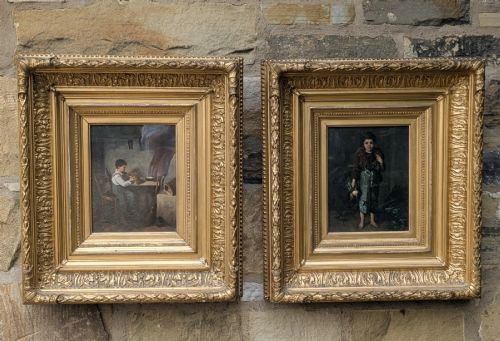
Subject matter concentrates heavily on human interactions within enclosed spaces or village landscapes, capturing domestic intimacy, tavern gatherings, and quiet domestic hours. The supporting frames, often fashioned from giltwood or wood with gold leaf and gesso, complete the presentation.
Materials and construction
Paintings of this period rely primarily on oil on canvas or watercolour applied to paper, supported by wooden stretchers and boards. Artists utilised oil paint and watercolour to build detailed compositions of figures and interior light.
Enclosing frames are constructed from wood, embellished with gesso and finished in gold leaf or giltwood to accentuate the artwork. These materials reflect nineteenth century framing practices where heavy ornamentation framed the domestic narrative.
Represented periods span the nineteenth century, encompassing Victorian social realism and academic painting styles.
Distinctions in quality
Quality rests upon the artist's ability to render facial expression, light dispersion within an interior, and the natural posture of figures at work or rest. Stronger examples demonstrate precise brushwork and balanced composition that animate the daily scene.
The physical preservation of the canvas, the clarity of the pigment, and the integrity of the original giltwood or gesso frame influence the overall standard of the piece. Works retaining their original signed attribution and untouched surfaces command greater artistic standing.
Felix Stone Moscheles·Henry Stacy Marks·Stephen Samuel Lewin·Mark William Langlois·Alfred Lyndon Grace·Howard Helmick·Adelaïde Salles-Wagner·Max Kaltenmoser·George Augustus Holmes·Joseph H Barnes·Frederick Walker·Louis Charles Verwee·Charles Hunt·Hendrik Valkenberg·Joseph Farquharson·Bernard De Hoog·Carlo Ferranti·Renato Moretti·Jacob Akkersdijk·Delapoer Downing·Godfried Schalcken·Albert Ludovici Jnr·J De Ninville·James Hayllar·Charles Edward Wilson
The Framed Genre Scene Painting Glossary
- Genre painting
- The pictorial representation of scenes or events from everyday life, typically depicting ordinary people in domestic or public settings. This style focuses on narrative and social realism rather than idealized subjects.
- Gesso
- A plaster-like mixture used as a base for moulding ornamental details on wooden frames before gilding. It provides a smooth surface for the application of gold leaf.
- Giltwood
- Wood that has been treated with gold leaf or gold paint to give a metallic golden finish. It is commonly found on nineteenth century picture frames.
- Chiaroscuro
- An artistic effect contrasting light and shadow to create volume in figures and dramatic depth within an interior scene. This technique is frequently employed in tavern and nocturnal compositions.
- Watercolour
- A painting method in which the paints are made of pigments suspended in a water-based solution. Works in this medium are typically executed on paper.
Framed Genre Scene Painting: Frequently Asked Questions
What is a genre scene painting?
A genre scene painting depicts everyday life, ordinary people, and common domestic or social activities rather than historical events. These works illustrate moments like tea time, village street life, or cottage interiors.
Such paintings provide a visual record of historical dress, domestic interiors, and social interactions during the nineteenth century.
How should I hang a framed oil painting?
Framed oil paintings require secure picture hooks fixed directly into wall studs or appropriate masonry fixings to support the weight of the wood and canvas. Hang the artwork away from direct sunlight and fluctuating heat sources to protect the canvas and giltwood frame.
Ensure the room maintains stable humidity levels to prevent the wooden stretcher and canvas from warping or cracking over time.
Are these paintings signed by the artist?
Many of the listed works bear original signatures, monograms, or inscriptions left by the nineteenth century artists. Signatures often appear in the lower corners of the canvas or watercolour paper.
Unsigned pieces or works attributed to followers of notable painters are also common, reflecting studio practices of the period.
What materials make up the frame?
The frames accompanying these artworks are typically constructed from carved wood coated with a layer of gesso. This gesso layer is then gilded with gold leaf or finished as giltwood to create an ornate border.
These frames were designed to complement the tonal qualities of the oil paint or watercolour within.