


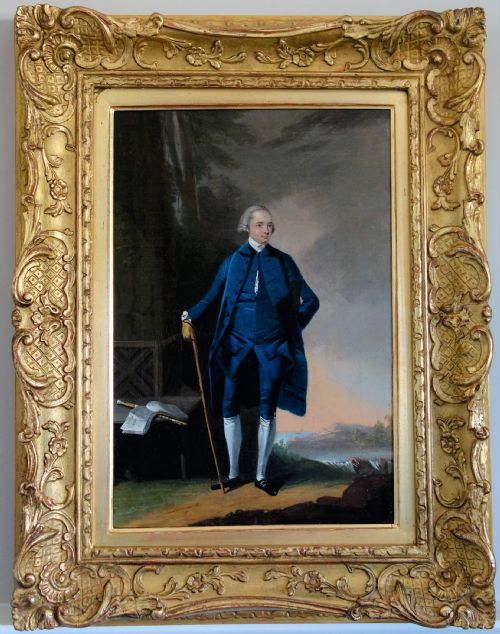

Antique Musician Portrait
An antique musician portrait captures the timeless figure of the player, bringing centuries of artistic heritage straight to your walls.

Antique Musician Portrait
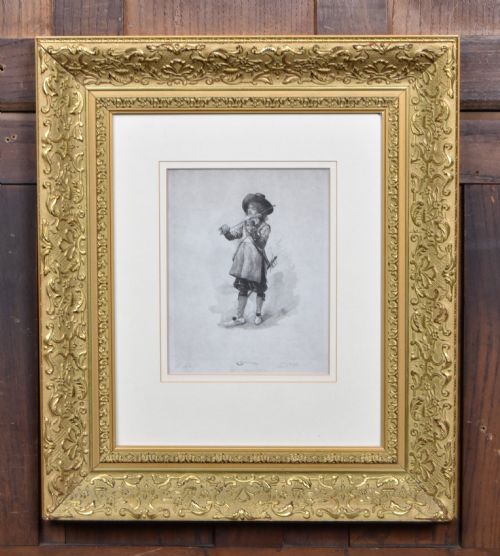
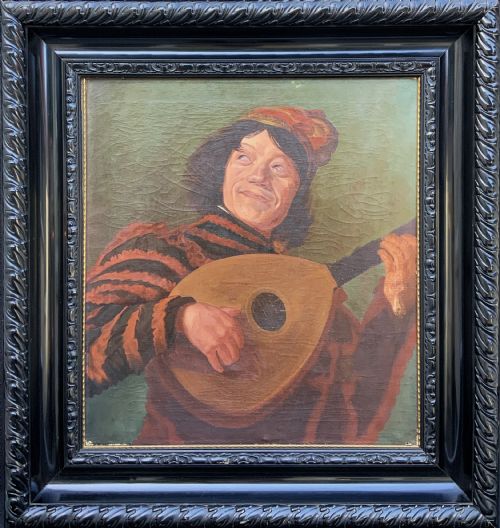
An antique musician portrait brings together historical subjects and artistic traditions, spanning from the seventeenth century through to the twentieth century. These works depict subjects engaged with instruments such as the violin, lute, cello, flute, and piano.
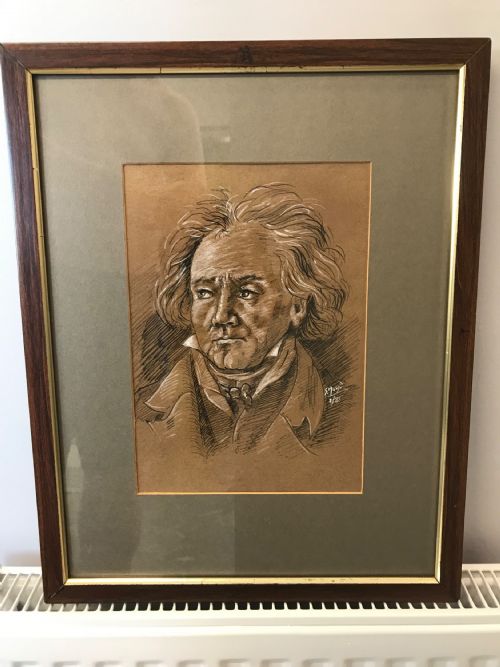
The pieces available here include oil paintings on canvas and panel, delicate watercolour and miniature paintings, framed prints, and plaster busts. Many reflect historical styles like the Dutch Golden Age, Baroque, and nineteenth-century realism.
Buyers will find both formal portraits of known composers and atmospheric character studies of travelling musicians, young players, and orchestra members. Origins stretch across British, Dutch, and broader European schools of art.
Materials and methods
Painters utilised oil on canvas or panel, layering pigment to achieve depth in clothing and instrument details, while watercolourists worked on paper with lighter washes. Some pieces incorporate pen, ink, wash, and gouache, alongside gilt framing and glass protection.
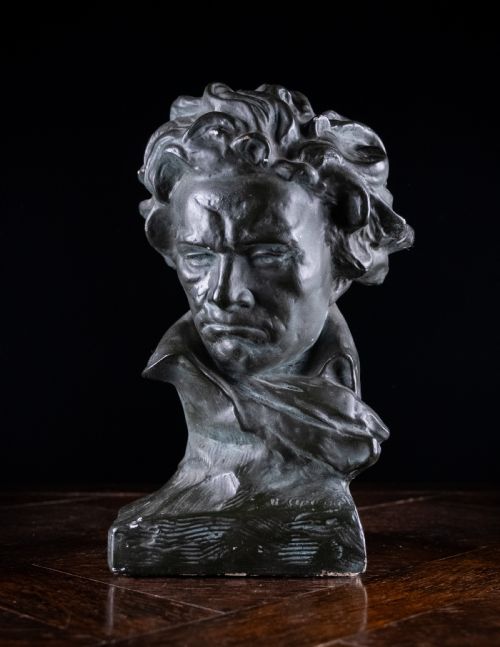
Three-dimensional representations utilise painted plaster for sculptural busts, capturing texture through moulded form. Print works and tiles employ period reproduction techniques on paper and ceramic surfaces.
Assessing quality in portraits
The success of a portrait rests upon the handling of the subject's expression and the precise rendering of the musical instrument. Superior works demonstrate confident brushwork and anatomical clarity in the hands and fingers.
Condition and medium stability dictate the longevity of the piece, with oil paintings on canvas holding different conservation histories compared to works on paper or panel. The quality of the original frame and the clarity of attribution also influence the character of the work.
Hermann Armin Kern·Alfred John Bouchette·William Joseph Carroll·Balthasar Denner·Edward Alcock·Neville Stephen Lytton
The Antique Musician Portrait Glossary
- Oil on canvas
- Pigment mixed with drying oil applied to stretched fabric. This traditional medium allowed artists to build rich colour and texture.
- Dutch Golden Age
- A period of Netherlandish art history noted for realistic genre scenes and portraiture. Later works often imitate this distinct lighting and composition.
- Watercolour
- A painting method where water-soluble pigments are used on paper. It creates transparent washes that suit delicate interior scenes.
- Gouache
- An opaque water-based paint often combined with watercolour and ink. It provides solid areas of flat colour and sharp detail.
- Miniature painting
- A small-scale portrait executed with fine precision. These works require immense skill to capture detail in a restricted format.
Antique Musician Portrait: Frequently Asked Questions
How do I identify the instrument in a portrait?
Look closely at the body shape, string arrangement, and how the subject holds the piece. Key indicators include the neck length and chin placement for violins, or finger positions for flutes and lutes.
Comparison with historical instruments depicted in other period artworks helps confirm the exact type being played.
What periods do these portraits come from?
The selection spans from the seventeenth century through the eighteenth and nineteenth centuries, extending into twentieth-century works and later pieces.
Earlier examples often reflect Baroque or Dutch Golden Age styles, while later items include Victorian watercolours and twentieth-century drawings.
Are these portraits of real musicians?
Some pieces depict specific historical figures and composers, such as Ludwig van Beethoven or the flautist Johann Quantz. Other works portray anonymous players, young students, or theatrical character studies.
Attributions often name specific schools, such as the Scottish School or English School, providing context for the sitter's identity.
How should I hang an oil portrait?
Select a wall with stable humidity and temperature away from direct sunlight to protect the canvas and paint layers. Ensure the hanging hardware securely supports the weight of the frame.
Pairing the piece with complementary period furnishings enhances the historical character of the display space.