

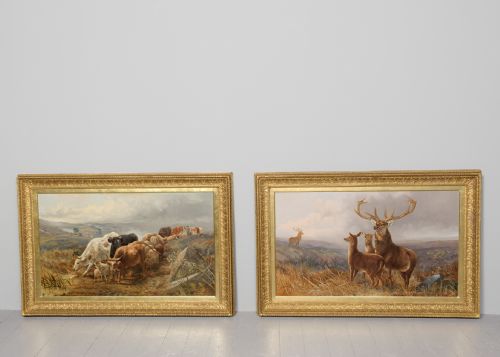
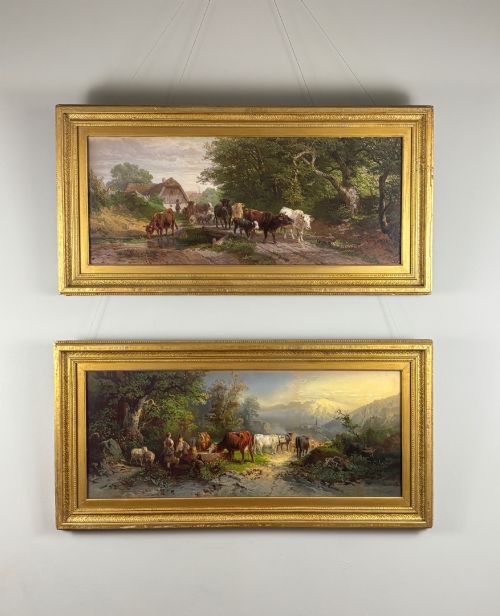
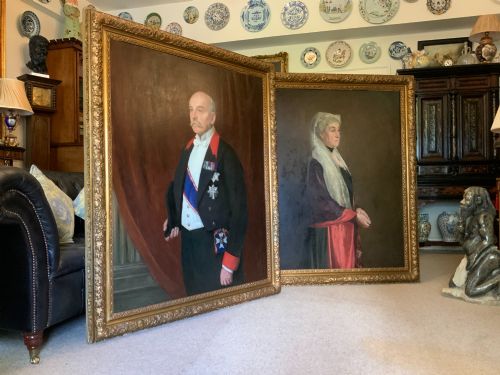
Oil Paint Canvas Pair
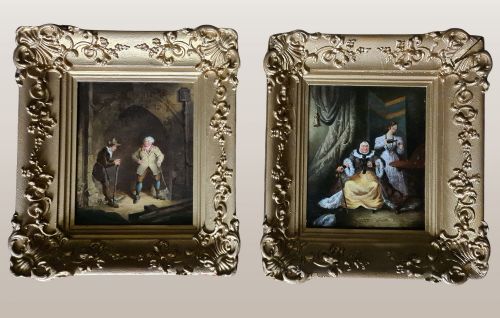
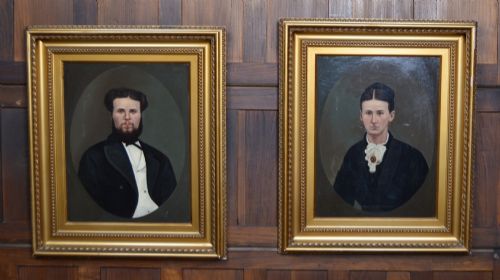
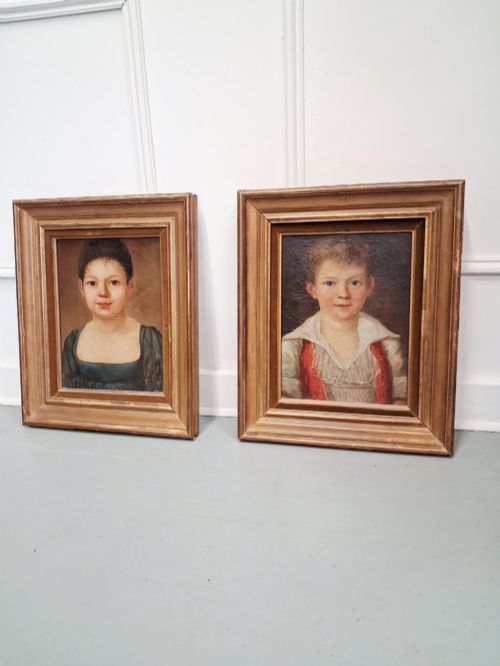
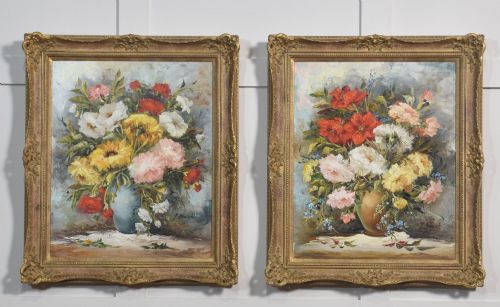
An oil paint canvas pair brings balanced symmetry to a room, offering two matching works designed to be hung together.

Oil Paint Canvas Pair
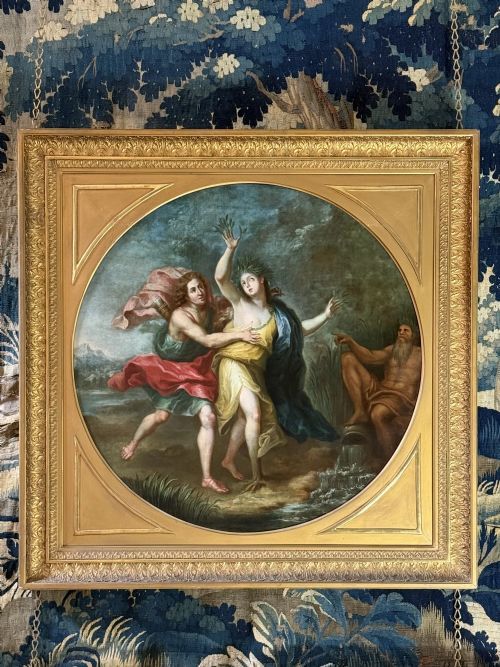
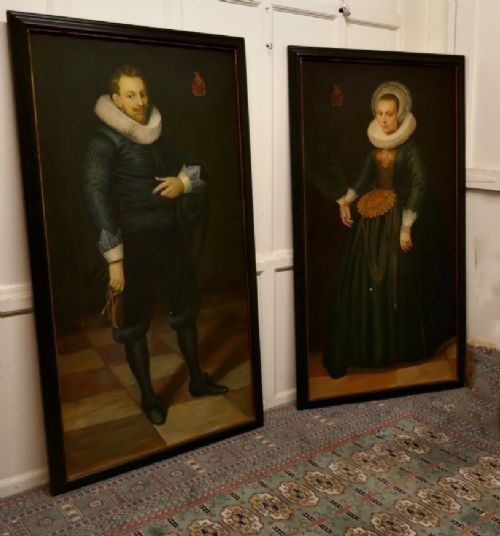
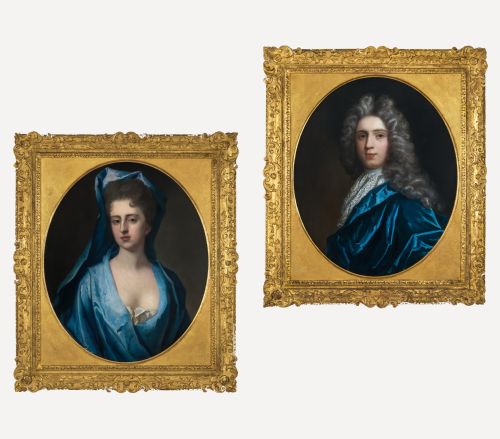
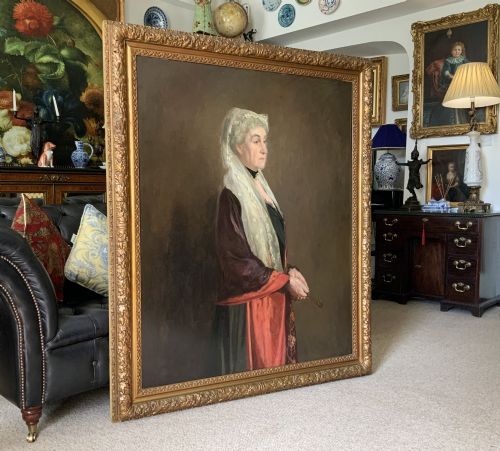
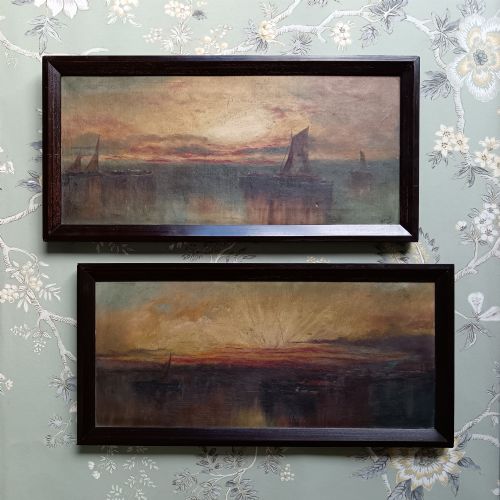
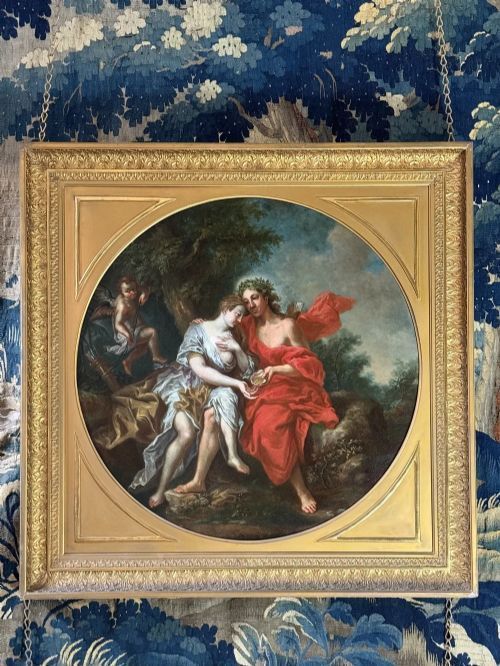
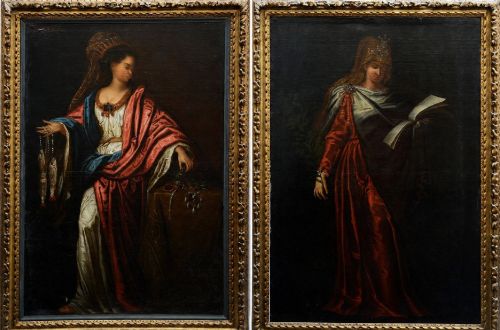
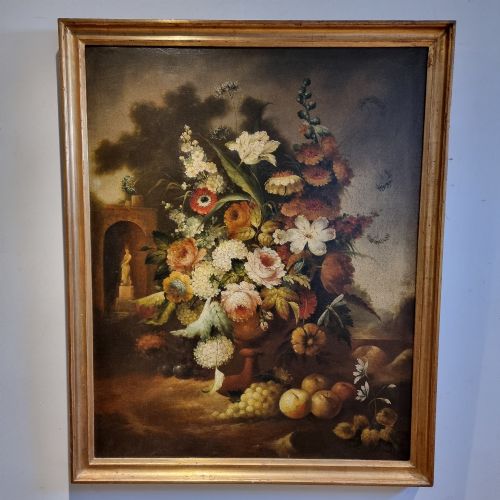
When searching for an oil paint canvas pair, buyers encounter matched compositions created to hang side by side or as mirror images. These coordinated works span from the seventeenth century through to the early decades of the twentieth century, encompassing portraits, landscapes, seascapes, and still lifes.
The most common examples on this page date from the nineteenth century, reflecting the Victorian appetite for balanced wall decoration. Subjects range from pastoral scenes and maritime views to paired likenesses of noblemen and ladies, all executed on woven textile supports.
Materials and construction
Artists painted these works using oil-based pigments applied to stretched fabric grounds, frequently supported by wooden stretchers and housed within decorative frames fashioned from giltwood or gesso. The interaction between oil medium and woven canvas allowed for rich layering, blending, and texture.
The underlying support consists of woven canvas prepared with a priming layer to receive the oil paint. Many surviving sets retain their original frames, which employ moulded wooden profiles and surface gilding to unify the dual panels.
Several sets depict farm animals and cheeky cherubs, proving that earlier generations enjoyed humorous paintings of chickens just as much as formal portraits.
Judging the range
The distinction between standard works and exceptional examples lies in the confidence of the brushwork and the precision of the composition. Master painters handle light, shadow, and anatomy with assured execution, whereas lesser works display stiff proportions or hesitant mark-making.
Preservation of the original paint surface and the matching harmony of the frames greatly influence the integrity of a set. Pairs that have suffered heavy restoration or mismatched framing lose the visual balance intended by the artist.
Charles Antoine Coypel·Michael Dahl·Thomas Murray·Abraham Hulk I·Johann Friedrich Voltz
The Oil Paint Canvas Pair Glossary
- Canvas
- A heavy woven fabric, typically linen or cotton, stretched tightly across a wooden frame to serve as a foundation for painting.
- Giltwood
- Timber carved and coated with a thin layer of gold leaf or metallic powder, frequently utilised for nineteenth-century picture frames.
- Stretcher
- The internal wooden framework that holds the canvas taut under tension.
- Gesso
- A plaster-like mixture applied to wood or canvas to prepare a smooth surface for oil painting or gilding.
- Trompe l'oeil
- An artistic technique designed to create an optical illusion of three-dimensional space on a flat surface.
Oil Paint Canvas Pair: Frequently Asked Questions
How do I hang a pair correctly?
Matched paintings should be spaced evenly at eye level, allowing enough room between them to be viewed as a cohesive unit. Maintaining identical height ensures the symmetry of the composition is preserved across the wall.
Lighting should fall equally on both canvases to prevent one half of the pair from appearing shadowed. Placing them above a central piece of furniture, such as a sideboard or console, helps anchor the display.
Were these always sold together?
Most matching works were conceived, painted, and framed as a pair from the outset, intended to balance a domestic interior. Artists frequently produced companion pieces depicting morning and evening, seasons, or paired portraits.
Over the centuries, some sets become separated through inheritance or damage, making reunited matching pairs particularly desirable for collectors. Verifying matching canvas dimensions and framing helps confirm their original pairing.
How do I identify the period?
Dating relies on the style of dress, hair, and framing materials, alongside any signatures or documentary evidence left by the artist. Nineteenth-century works often feature distinct framing profiles and canvas stamps from colourmen.
Earlier seventeenth and eighteenth-century examples display tighter weave patterns on older linen supports and heavier panel construction. Comparing the handling of paint to dated works by known schools narrows the window of creation.
Can I separate them in different rooms?
Dividing a matched set diminishes their visual impact, as they are designed to communicate with one another across a shared space. Keeping them together maintains the narrative or aesthetic balance intended by the maker.
If architectural constraints prevent hanging them side by side, placing them on opposing walls of the same room serves as an alternative. However, unified placement remains the traditional method for display.