






Framed Fish Oil Painting
When you search for a framed fish oil painting, you find works capturing coastal life, riverbanks, and maritime scenes across the nineteenth and twentieth centuries.
Framed Fish Oil Painting
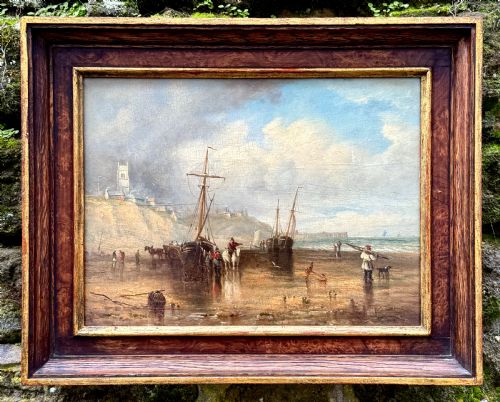
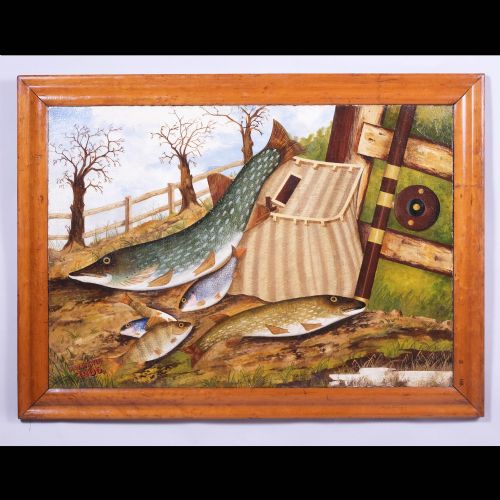
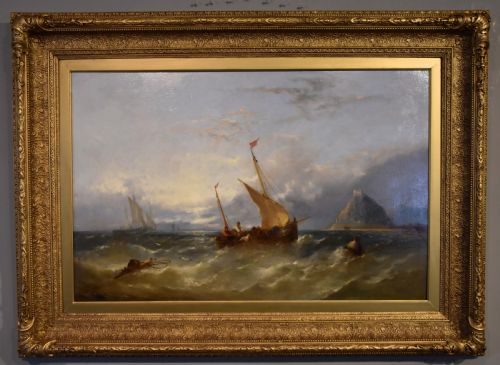
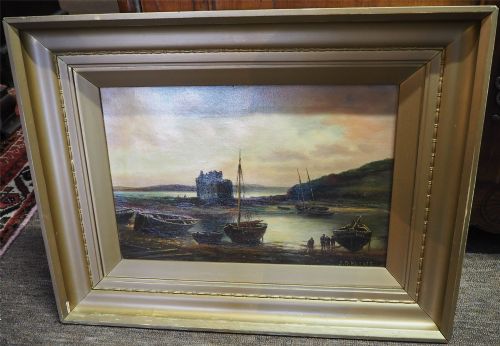
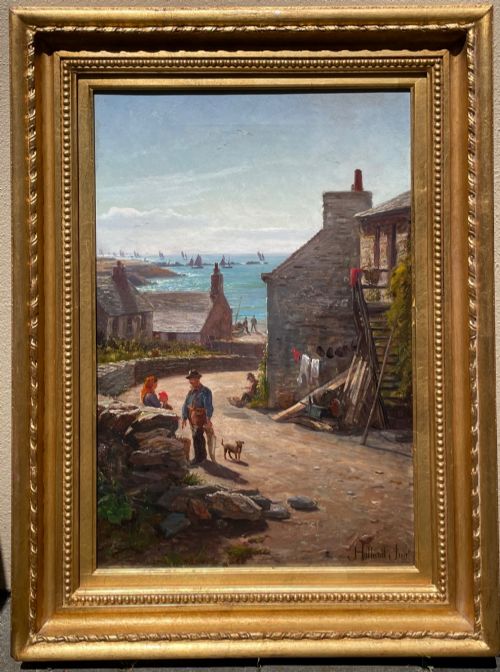
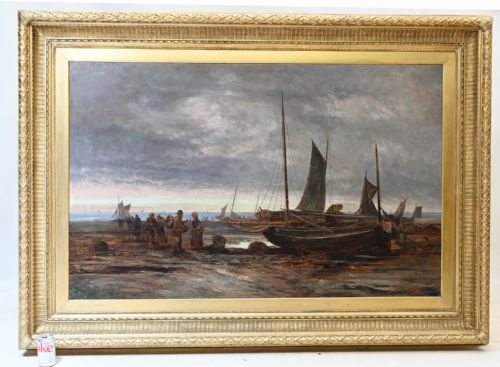
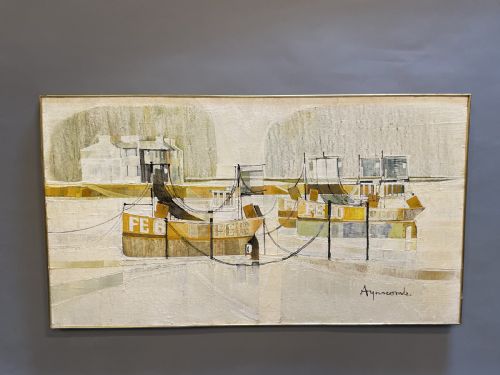
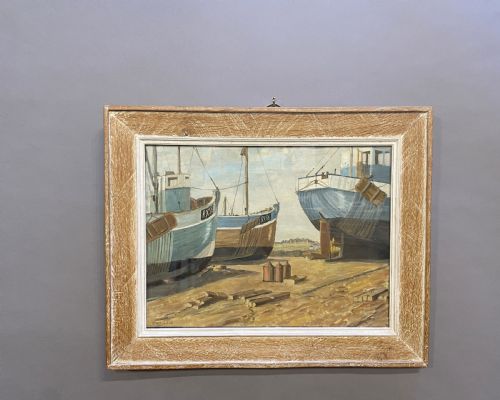
A framed fish oil painting encompasses depictions of coastal harbours, maritime scenes with fishing vessels, river landscapes with anglers, and still life compositions. The works span multiple periods, ranging from nineteenth-century Victorian marine art to mid-century modern interpretations.
Most pieces on this page lean towards British and Dutch traditions, featuring coastal communities like St Ives and Mevagissey, or quiet river scenes with fishermen. Painters recorded these subjects on canvas, wood panel, board, and card, housed within period frames.
Materials and methods
Artists worked primarily in oil paint applied to stretched canvas, wooden panels, or rigid boards, building up rich textures and layered tones. The handling of pigment allows for both the translucent wash of water and the dense impasto of stormy seas.
Among the maritime vessels and scenic riverbanks, a monk makes a quiet appearance admiring a fish.
Distinctions in execution
Quality rests on the surety of the brushwork, the balance of light and shadow across water or sky, and the fidelity of the composition. Stronger examples demonstrate a confident command of atmosphere, capturing the movement of waves or the specific light of a Cornish harbour.
The integration between the painting and its original frame also influences the piece, where period giltwood mouldings enhance the visual weight and historical context of the canvas.
Thomas Creswick·William Henry Williamson·Florence Adelina Hess·John Holland·Edward Matthew Elliott·Charles Napier Hemy·Gyrth Russell·Gustave De Bréanski·Pieter Cornelis Dommersen·James Kyd·Owen Bowen·George SHAW·T.S. Wallis·George Gregory·George Morland·Frank Hyde·George Henry Knight·William Lambert Bell·Paul H Ellis·Pieter Claesz·William Shayer·Franklin D. Briscoe
The Framed Fish Oil Painting Glossary
- Impasto
- Paint applied thickly to a canvas or board, standing out in relief from the surface. This technique brings a tangible texture to the froth of waves or the sails of boats.
- Seascape
- A painting depicting the sea, coastal views, or maritime activity. These works often focus on fishing vessels, harbours, and changing weather along the shore.
- Panel
- A rigid support for oil painting, typically made of wood rather than stretched fabric. Panels offer a smooth ground that painters favoured for detailed regional scenes.
- Giltwood
- Wood that has been coated with a thin layer of gold leaf or gold paint. Frames finished in this manner were standard for framing fine art in the nineteenth century.
- Genre painting
- Artwork that depicts aspects of everyday life, such as figures fishing, packing catches for market, or working in a boat yard.
Framed Fish Oil Painting: Frequently Asked Questions
What periods do these paintings date from?
The works originate largely from the nineteenth and twentieth centuries, encompassing Victorian, Edwardian, and mid-century modern eras. Earlier examples from the seventeenth and eighteenth centuries occasionally appear.
Datings are derived from artist signatures, stylistic conventions, and period framing techniques recorded by individual dealers.
How were these maritime scenes used?
These paintings served primarily as decorative art for domestic interiors, reflecting a widespread Victorian and Edwardian fascination with the sea, coastal trade, and rural pastimes.
They hung in country houses and town residences to bring views of harbours, rivers, and coastal communities indoors.
How do I care for an oil painting on canvas?
Keep the artwork away from direct sunlight, excessive moisture, and rapid temperature fluctuations to protect both the canvas and the oil pigments. Avoid using liquid cleaners on the painted surface.
Dust the frame gently with a dry, soft cloth, and leave conservation work such as cleaning or varnish removal to a professional restorer.
How do I identify a Victorian marine painting?
Look for specific subject matter such as sailing trawlers, choppy seas, coastal villages, and detailed rigging on fishing boats. The handling of light and atmospheric grey-blue tones often points to nineteenth-century British or Dutch schools.
Examine the reverse of the canvas or panel for signatures, artist inscriptions, and the style of the period wooden frame.