



Framed Equestrian Fine Art
Framed equestrian fine art brings together centuries of horse portraiture, racing scenes, and coaching paintings housed in period wood and gilt frames.
Framed Equestrian Fine Art
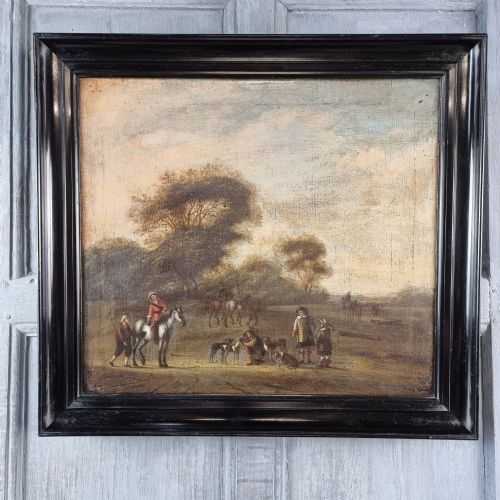
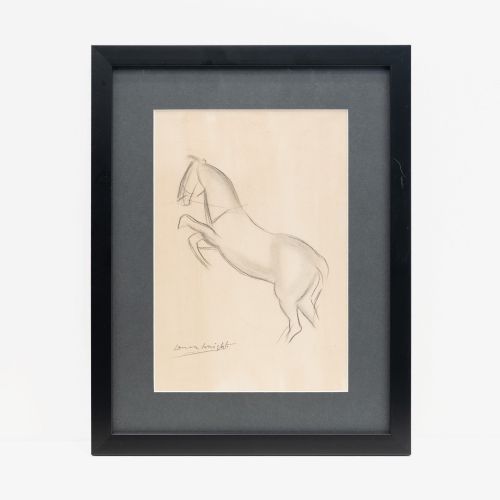
When you search for framed equestrian fine art, you encounter oil paintings, watercolours, and needlework pictures focusing on horses, riders, and sporting life. These pieces span from seventeenth-century Dutch master works to twentieth-century British and European depictions of stableyards, racecourses, and rural landscapes.
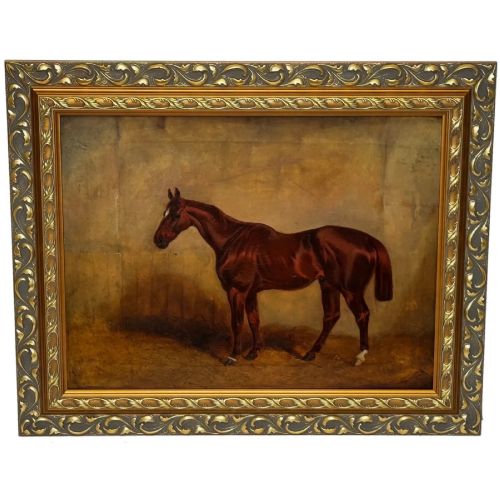
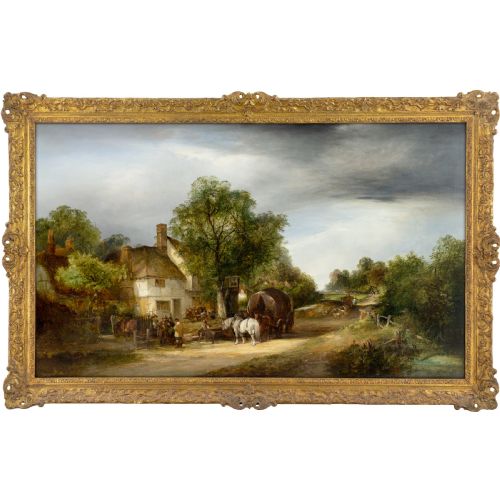
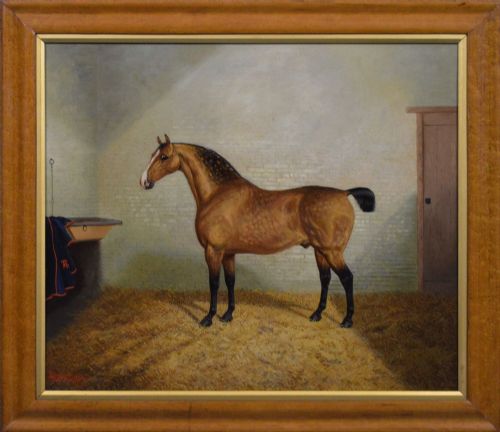
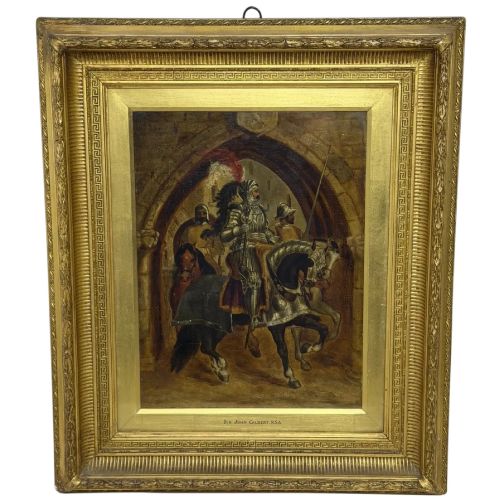
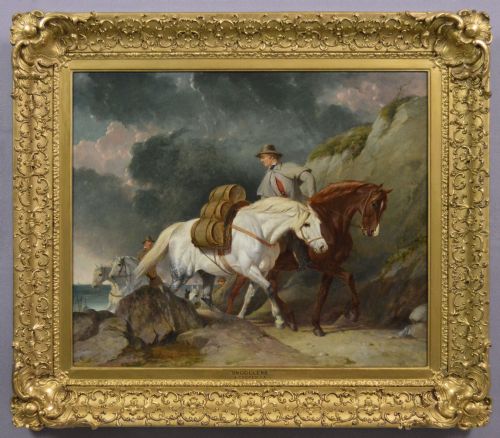
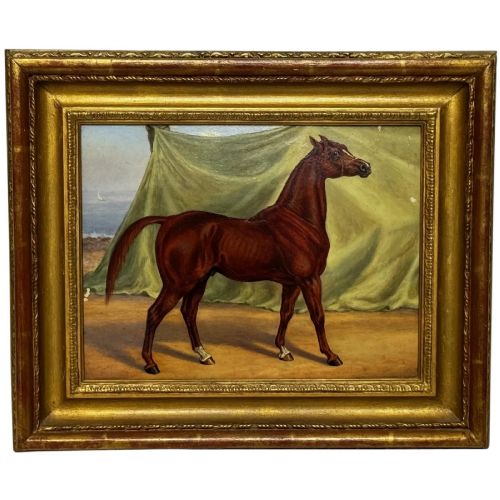
The selection on this page leans heavily towards nineteenth-century Victorian oil paintings on canvas, alongside watercolours and engravings. You will find specific horse portraits, coaching scenes, and depictions of historical and sporting subjects framed in wood and giltwood.
Subjects range from individual named horses and prize-winning racers to working farm horses, cavalry skirmishes, and hunt meetings. The scale varies from intimate studies to large canvas compositions.
Materials and construction
These works rely primarily on oil paint applied to canvas or wood panels, alongside watercolours and ink on paper or silk. Artists utilised traditional pigments to capture the musculature and coats of horses, often within detailed landscape or stable settings.
The supporting frames are constructed from wood, frequently finished with giltwood mouldings or carved details that complement the period of the artwork. Many pieces retain glass for protection, particularly works on paper and delicate needlework pictures.
Needlework examples incorporate silk threads worked on canvas or fabric grounds to create textured depictions of racing tracks and sporting events.
Framed Equestrian Fine Art Retail Price Guide 2026
Typical asking prices for framed equestrian fine art among the pieces listed under this phrase on Sellingantiques today, from the lower quarter to the upper quarter. They describe what is for sale here now, not the wider market.
Listings span multiple centuries, incorporating seventeenth-century Dutch masters, Victorian sporting art, and twentieth-century British paintings.
Distinctions in quality
Quality in these works rests upon the anatomical precision of the horses and the capability of the artist to convey movement and light. Superior pieces demonstrate a secure grasp of perspective in landscape elements and a deft handling of texture in animal coats.
The integrity of the original frame contributes significantly to the standing of a piece, with period giltwood mouldings enhancing the overall presentation. Works attributed to known Royal Academicians or documented regional painters command greater attention than anonymous studio productions.
Albert Clark·Sir John Gilbert·Abraham Cooper·Dame Laura Knight·John Frederick Herring·Philips Wouwerman
The Framed Equestrian Fine Art Glossary
- Giltwood
- Wood that has been coated with thin gold leaf or gilt powder. This finish is typical of traditional frames housing nineteenth-century oil paintings.
- Oil on Canvas
- Pigment mixed with drying oil applied to a woven fabric stretched across a wooden frame. This medium dominated nineteenth-century equestrian painting.
- Needlework Picture
- A decorative textile created using stitching techniques on a fabric ground. Examples in this category depict racecourses and sporting subjects using silk threads.
- Watercolour
- A painting method where fine pigment is suspended in a water-based solution on paper. These works require glass protection within their frames.
Framed Equestrian Fine Art: Frequently Asked Questions
What subjects appear in equestrian fine art?
These works depict individual horse portraits, racing tracks, hunting scenes, and working animals in agricultural settings. You also find historical narratives involving cavalry and stagecoaches.
Artists documented both prize-winning thoroughbreds and everyday farm horses within detailed landscapes or stableyards.
How do I identify the period of a frame?
Period frames often utilise carved wood with gilt finishes that match the prevailing decorative style of the artwork's creation date. Victorian and seventeenth-century examples display distinct moulding profiles and construction methods.
Checking the reverse of the stretcher or panel can reveal maker stamps or old collection labels.
Are these works painted on canvas?
Many pieces utilise oil paint on stretched canvas, while others employ wood panels, paper, or silk. Watercolours and prints are executed on paper grounds.
Canvas supports were standard for larger nineteenth-century oil paintings requiring durable foundations.
How should I care for a framed oil painting?
Keep works away from direct sunlight and dramatic fluctuations in temperature or humidity to protect the canvas and pigment. Dust giltwood frames gently with a dry, soft brush.
Avoid using liquid cleaners on the painted surface or the frame mouldings.