

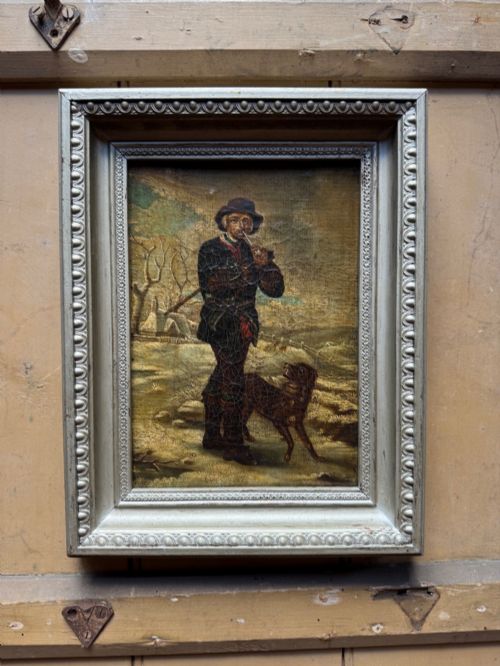
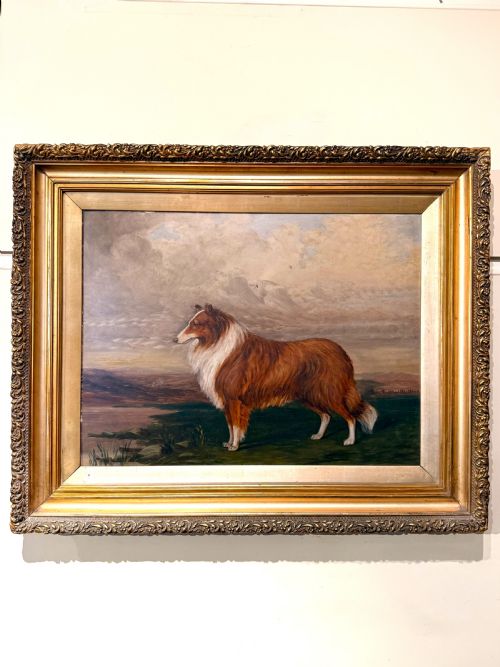
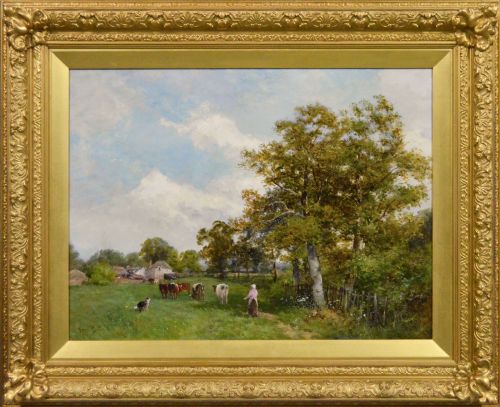
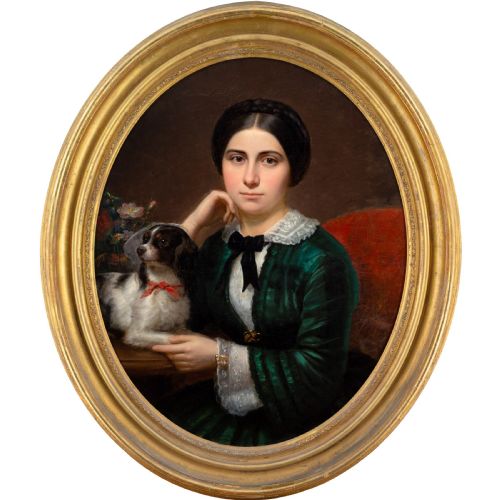




Framed Dog Oil Painting
A framed dog oil painting brings character to a room through canine portraiture rendered in oils and preserved behind wooden or gilded frames.
What framed dog oil paintings are
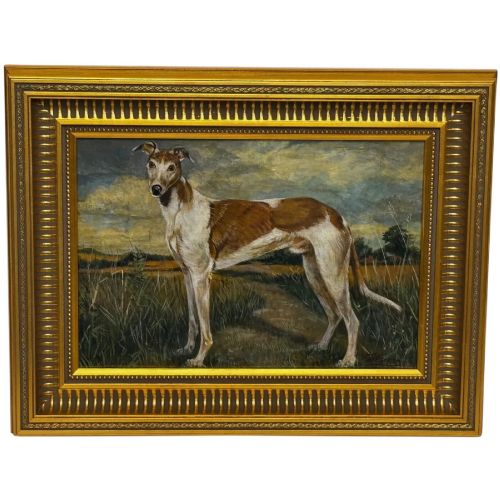
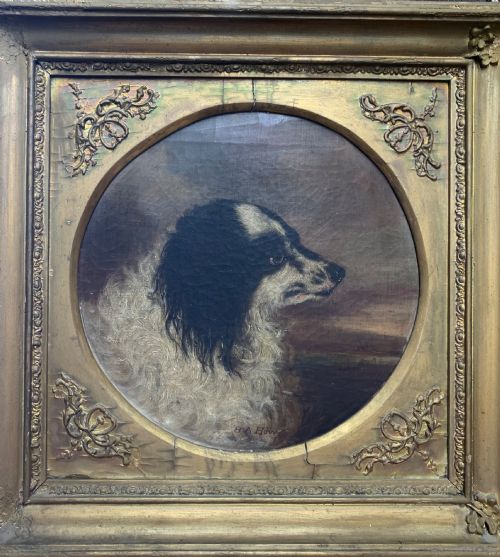
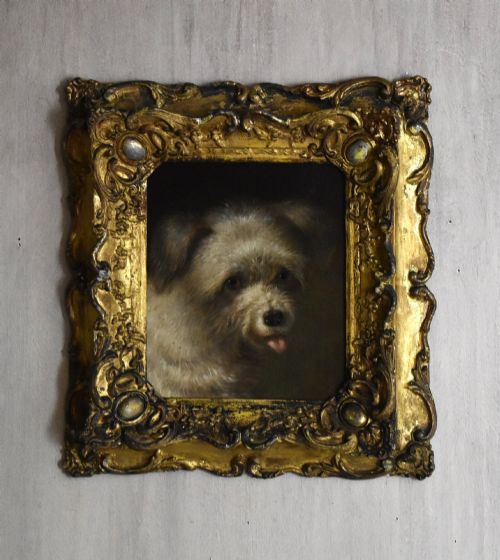
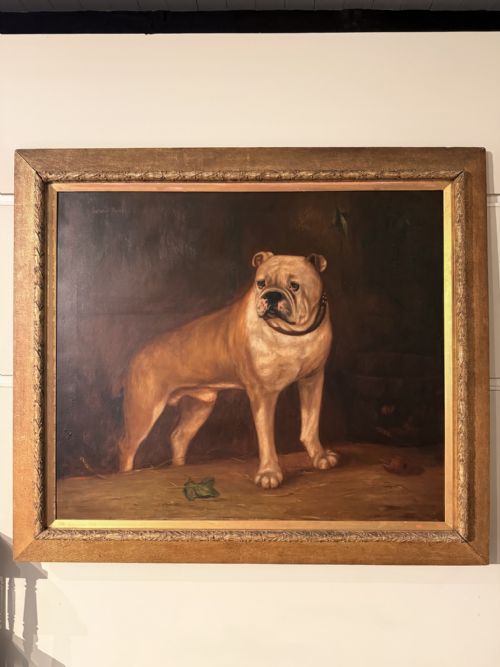
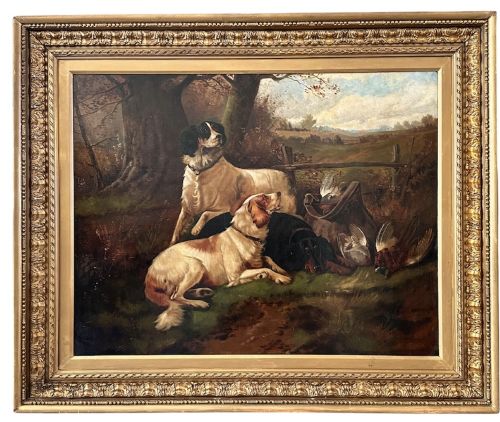
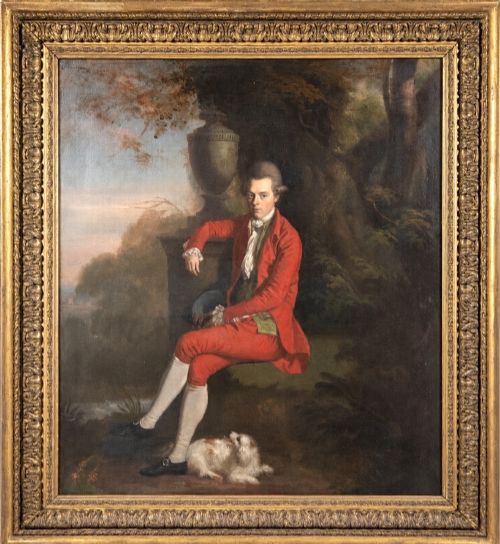
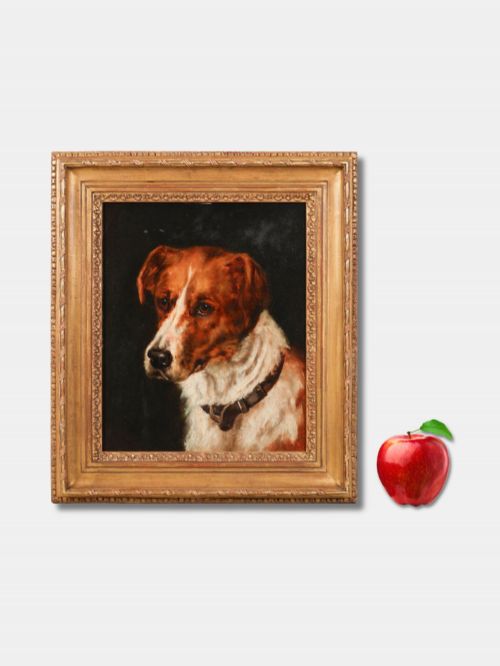
A framed dog oil painting represents a canine subject captured through traditional fine art painting, spanning works from the nineteenth century into the interwar period. These pieces frequently depict specific breeds such as spaniels, terriers, St Bernards, and bulldogs, often shown in interiors or straightforward portrait formats. The selection here reflects various historical periods including Victorian and Edwardian eras, capturing distinct pets and working dogs.
Buyers encountering this group will find works originating from British and American makers, executed on canvas, board, or panel supports. The framing ranges from plain wood to gilded surrounds that complement the canvas within. Such oil paintings serve as historical records of favoured pets and canine types from bygone decades.
How they were made
Makers apply oil paint to supports of canvas, board, or wood panel, utilising brushes to build up the subject's fur, expression, and background detail. The physical medium allows for subtle blending of tones and rich texture, particularly visible in the depiction of animal coats and light within interior settings.
The finished works are housed within frames constructed from wood, some finished with gilt or carved details. These enclosures protect the edges of the canvas or panel while providing a defined boundary for the artwork.
Retail Price Guide 2026
Typical UK retail prices for framed dog oil painting, calculated from the Sellingantiques database of over a million retail prices indexed since 2003. This retail price guide relies exclusively on Sellingantiques data; no external sources or auction records are used, so the figures do not describe the wider market.
Materials recorded across the inventory include oil paint, canvas, board, gilded wood, and gilt.
What varies in quality
Quality rests upon the artist's ability to render the anatomy, expression, and personality of the dog with conviction. Stronger pieces display confident brushwork and precise handling of light, whereas simpler works adopt a more formulaic approach.
The choice of support and the condition of the painted surface influence the overall character of the piece. Additionally, the harmony between the painting and its original or period frame contributes to the visual success of the artwork.
B A HOWE·LM Webb·Samuel John Carter
The Framed Dog Oil Painting Glossary
- Oil paint
- A slow-drying paint made by combining pigments with a drying oil, typically linseed oil. This medium permits rich colour saturation and detailed blending.
- Canvas
- A heavy woven fabric stretched across a wooden frame to serve as a support for oil paintings. It provides a slightly textured surface for the brush.
- Gilt
- A thin layer of gold leaf or gold paint applied to wood frames or surfaces. It adds a reflective border that enhances the artwork.
- Panel
- A flat piece of wood used as a rigid support for painting instead of fabric canvas. Panels offer a smooth and stable ground for fine brushwork.
Frequently Asked Questions
What periods do these paintings date from?
The available selection spans from the nineteenth century through the early twentieth century, including Victorian, Edwardian, and interwar periods.
Dates are determined by the stylistic traits, signatures, and framing methods typical of those specific eras.
Which dog breeds appear most often?
Spaniels, terriers, St Bernards, and bulldogs frequently feature as the primary subjects in these works.
Artists often captured specific pet portraits or working types popular during the nineteenth and early twentieth centuries.
What surfaces were used for these paintings?
Painters utilised canvas, wood board, and panel as the primary grounds for their oil compositions.
Each material offers a different texture and weight, influencing how the oil paint sits on the support.
Are the frames original to the artwork?
Frames consist of wood or gilded surrounds that match the period style of the paintings.
Some incorporate gilt finishes which complement the traditional aesthetic of nineteenth and twentieth-century fine art.