



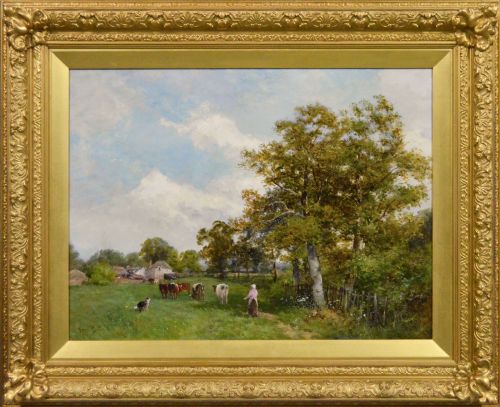
Framed Countryside Painting
A framed countryside painting brings pastoral scenes and natural light directly onto the wall.
Framed Countryside Painting
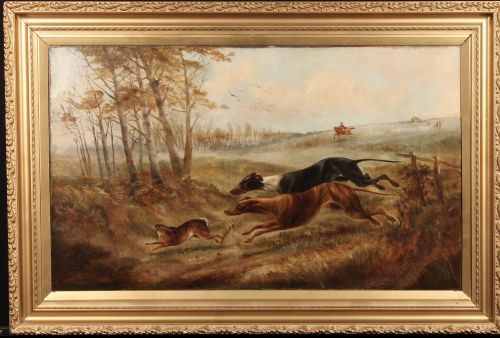
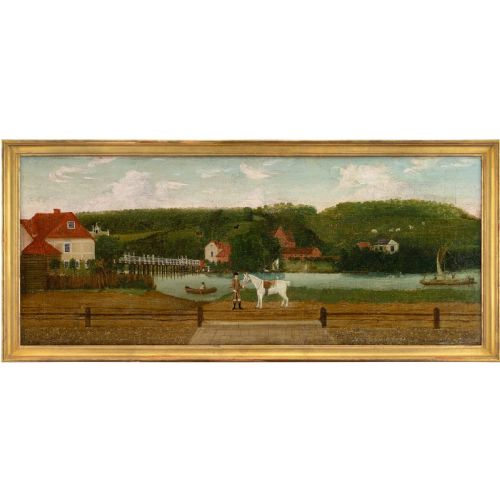
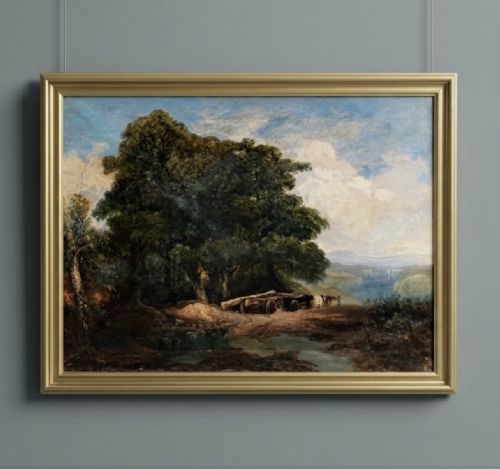
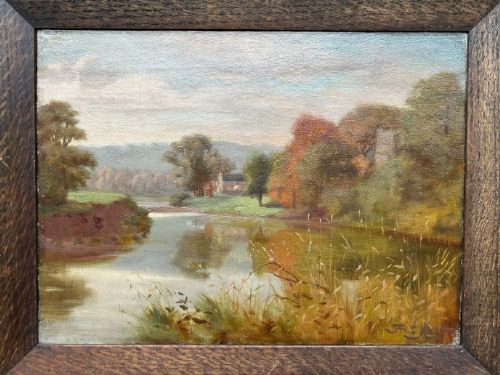
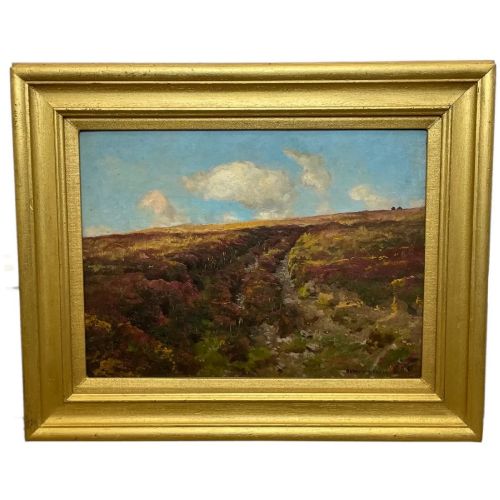
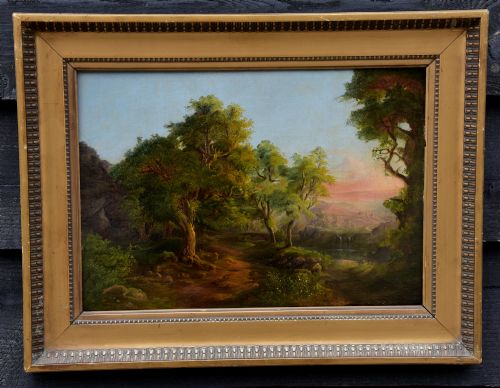
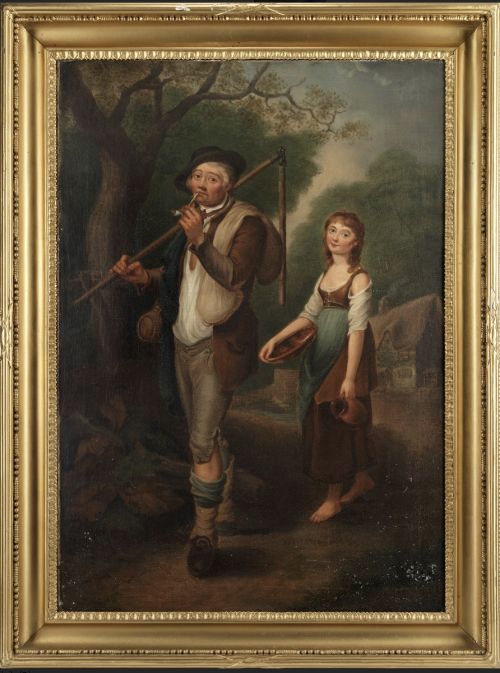
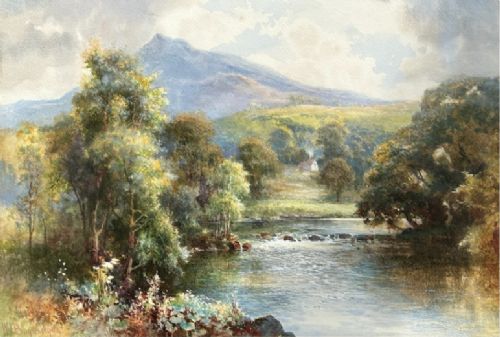
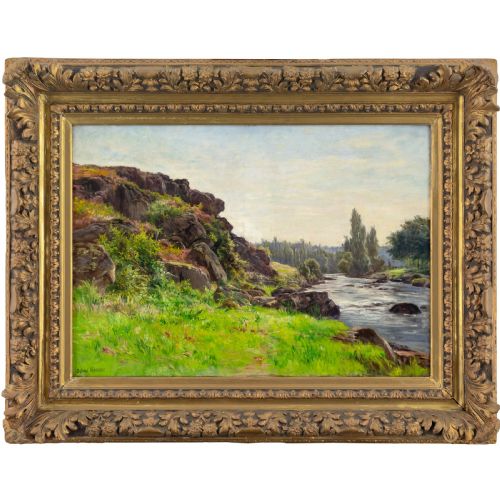
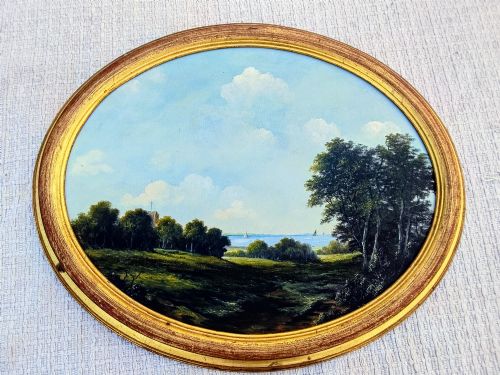
A framed countryside painting captures pastoral views, rivers, woodlands, and agricultural life across several centuries. These works range from intimate watercolours on paper to large oil on canvas compositions set in traditional wooden surrounds.
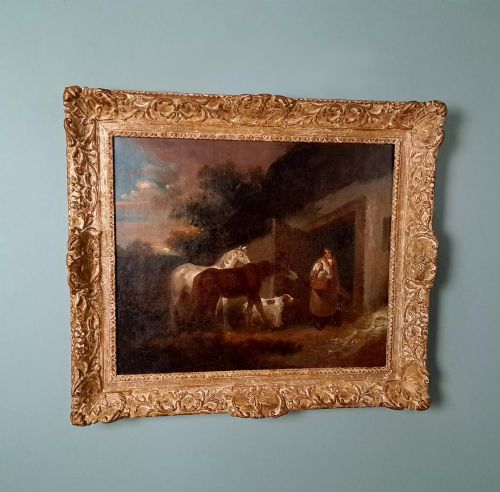
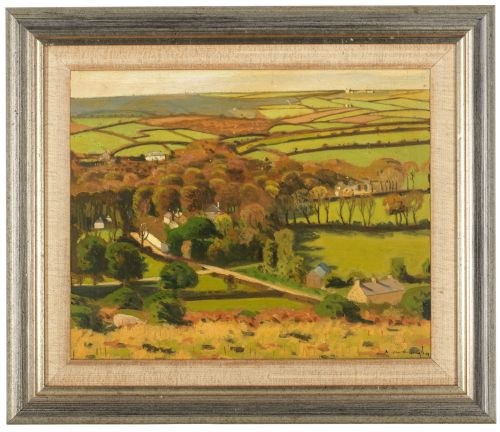
The selections available run through nineteenth-century British school oils, Edwardian watercolours, and early twentieth-century impressions. Buyers regularly encounter subjects depicting ploughing horses, riverbanks, and rolling hills.
Each piece records a specific topography and period, varying from detailed Victorian realism to looser twentieth-century interpretations. The accompanying frames protect the medium and complete the historical presentation of the artwork.
Materials and techniques
Painters applied oil paint or watercolour pigments onto prepared canvas, wooden panels, or heavy paper supports. Oil mediums allowed for rich blending and textured brushwork, while watercolours achieved translucent washes of natural light.
Wooden frames protect the edges of the canvas and paper, often finished with gilt or moulded details appropriate to the period of creation. Many works rely on glass fronts to shield delicate paper watercolours from atmospheric moisture.
Several sheep, cows, and a solitary grey shire horse occasionally wander into the scenery.
Judging quality in pastoral art
Quality rests upon the artist's handling of light, atmospheric depth, and spatial perspective within the landscape. Masterly brushwork defines foliage, water, and sky with convincing texture rather than rigid formulas.
The relationship between the painting and its protective frame contributes significantly to the integrity of the piece. Period-correct wooden surrounds maintain the aesthetic balance intended by the maker.
Richard Sebastian Bond·William H Myers·Frederick Marriott·Arthur Wardle·Robert Morson Hughes·William Joseph Boyes·Gabriel Mathieu·David Bates·Lucy Pratt·Raymond Booth·Harald Foss·Eric Brown·Henri Ottmann·Richard Redgrave·Ernest Higgins Rigg·George Oyston·Rene Levrel·Vernon DeBeauvoir Ward·Florence Adelina Hess
The Framed Countryside Painting Glossary
- Oil on Canvas
- Pigment mixed with drying oil applied to a woven fabric stretched across a wooden frame. This technique allows for heavy impasto and deep colour saturation.
- Watercolour
- Pigment suspended in a water-soluble binder applied to paper supports. It produces luminous, transparent washes ideal for capturing shifting atmospheric conditions.
- Impasto
- Paint applied thickly to a canvas or panel, leaving visible brush or palette knife marks. It adds physical texture and catches direct light.
- Gilt Frame
- A wooden surround coated with a thin layer of gold leaf or metallic paint. This finish enhances the visual weight and period character of the artwork.
- British School
- A designation for artists trained or working within Britain whose styles reflect regional traditions. These works often focus on local rural scenery and coastal views.
Framed Countryside Painting: Frequently Asked Questions
How do I date an antique landscape painting?
Examine the materials of the canvas, stretcher frames, and the style of the wooden surround. Pigment analysis and artist signatures also help establish the decade of creation.
Clothing styles of figures within the landscape and architectural details in rural cottages offer further clues to the period.
What is the difference between oil and watercolour landscapes?
Oil paintings use pigment suspended in drying oil on canvas or panel, yielding thick textures and rich colour depths. Watercolours use water-soluble pigments on paper, creating delicate and transparent effects.
Oils generally require sturdy wooden frames without glass, while watercolours need glazing to protect the paper surface.
How should I hang and light these artworks?
Position the painting away from direct sunlight and damp walls to preserve the integrity of the canvas or paper. Stable indoor temperatures prevent warping in both the wooden frames and the supports.
Use dedicated picture lights with low heat emission to illuminate the surface without damaging the historic pigments.
Are original frames important for antique paintings?
Original or period-appropriate frames complement the aesthetic and historical context of the artwork. They show how the piece was presented and protected in its era.
Matching a nineteenth-century canvas with a contemporary frame alters the overall visual balance of the composition.