




Framed Cornish Coastal Art
These framed cornish coastal art pieces capture harbours, luggers and rugged shores across the nineteenth and twentieth centuries.
Framed Cornish Coastal Art
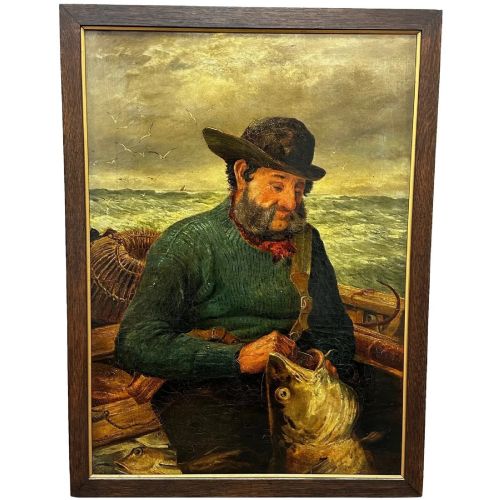
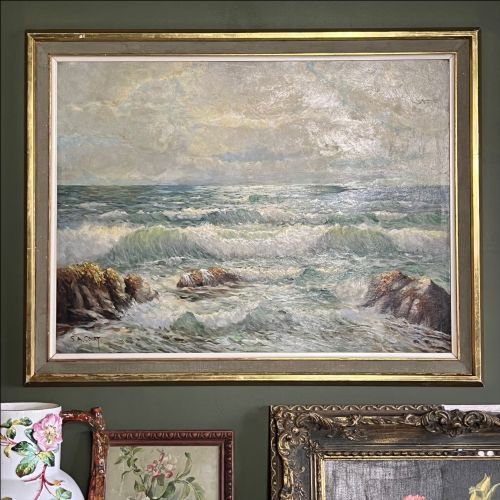
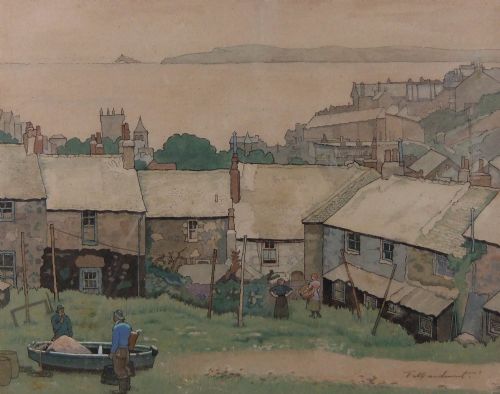
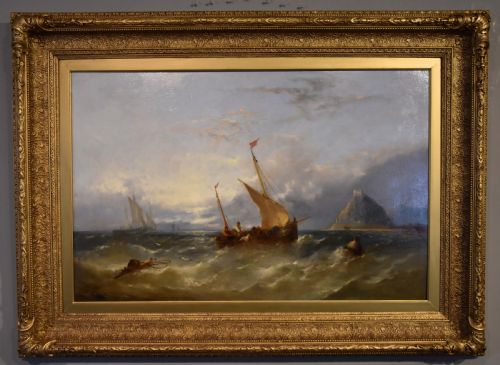
Framed cornish coastal art encompasses paintings of harbours, fishing boats, and marine scenes set along the coastline of Cornwall. You meet watercolours and oil paintings spanning from the Victorian period through to the mid twentieth century.
The works record notable coastal locations such as St Ives, Polperro, Mousehole, and Mevagissey. Painters working in these areas engaged with local maritime life and the distinct quality of western light.
Most examples arrive in period frames, often made of wood or gilt wood, which complement the maritime subject matter. The selection ranges from en plein air sketches to larger gallery canvases.
Materials and construction
Artists painted primarily in oil paint or watercolour, working on stretched canvas, paper, or board. These materials hold their colour and respond directly to the shifting sea air and coastal illumination.
Paintings are typically secured inside wooden frames, occasionally highlighted with gilt finishes, providing both physical protection and a distinct visual border for the maritime scene.
Framed Cornish Coastal Art Retail Price Guide 2026
Typical asking prices for framed cornish coastal art among the pieces listed under this phrase on Sellingantiques today, from the lower quarter to the upper quarter. They describe what is for sale here now, not the wider market.
Represented artistic movements include the Newlyn School, St Ives School, and British Impressionism.
Factors that separate examples
Quality rests upon the handling of light, atmosphere, and maritime detail by the artist. Works executed en plein air or bearing strong attribution to recognised regional schools command greater interest.
The integrity of the original frame and the preservation of the painted surface further influence the standing of each piece.
Sidney A Court·William Banks Fortescue·Thomas Maidment·William Henry Williamson·Frank Kelsey·Edward Matthew Elliott·Charles Napier Hemy·Richard Harry Carter·Gyrth Russell·George Turland Goosey·Charles Sim Mottram·William Pitt·Ernest F Hill·Frederick Stuart Richardson·William Lambert Bell·Jack R Mould·Walter Sweet·Herbert James·Cuthbert Crossley·William Edward Webb
The Framed Cornish Coastal Art Glossary
- Newlyn School
- An art colony based in West Cornwall that focused on realistic depictions of local fishermen and coastal communities. Members worked extensively out of doors.
- St Ives School
- A group of artists associated with the Cornish port town who developed both traditional marine painting and later modernist styles. It represents a significant hub for British coastal art.
- En plein air
- A French term for painting outdoors to capture direct natural light and immediate weather conditions. It is a defining method for many Cornish coastal scenes.
- Lugger
- A traditional type of sailing boat with lug sails, commonly seen in historical fishing fleets along the Devon and Cornwall coasts. Painters recorded these vessels working in local harbours.
- Gilt wood
- Wood coated with a thin layer of gold leaf or metallic gilt paint, frequently used for traditional picture frames. It adds warmth and definition to nineteenth century marine works.
Framed Cornish Coastal Art: Frequently Asked Questions
What periods do these paintings cover?
The works span from the nineteenth century through the Edwardian era and into the mid twentieth century.
They record stylistic shifts from Victorian fine art to British Impressionism and the Newlyn and St Ives schools.
Where were these coastal scenes painted?
Locations focus heavily on Cornish harbours and coastal landmarks such as St Ives, Polperro, Mousehole, and St Michael's Mount.
Artists set up their easels directly in these working fishing villages to capture daily maritime life.
Are the frames original to the art?
Many pieces retain their period wooden or gilt wood frames, which match the era of the painting.
These surrounds are chosen to complement the maritime subjects and protect the paper or canvas.
How do watercolours differ from oils here?
Watercolours on paper offer a lighter, translucent record of coastal light and harbour atmospheres.
Oil paintings on canvas provide heavier texture, deeper colour saturation, and a robust surface for large seascapes.