

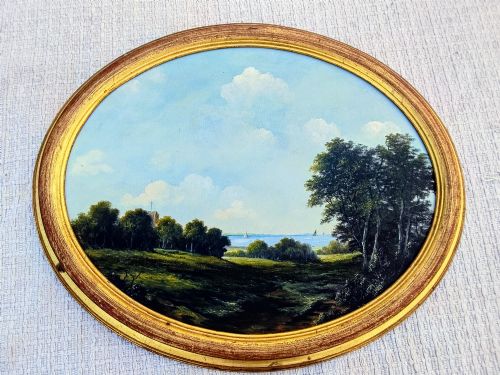

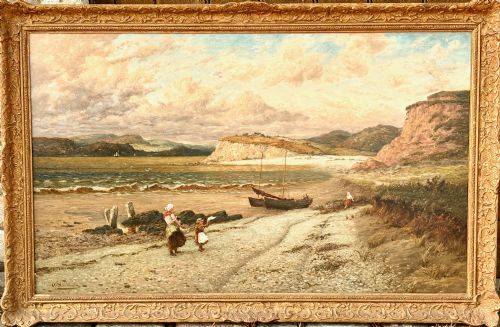
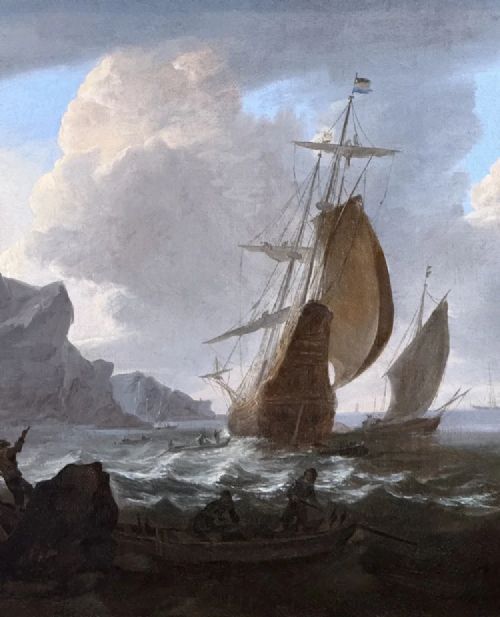

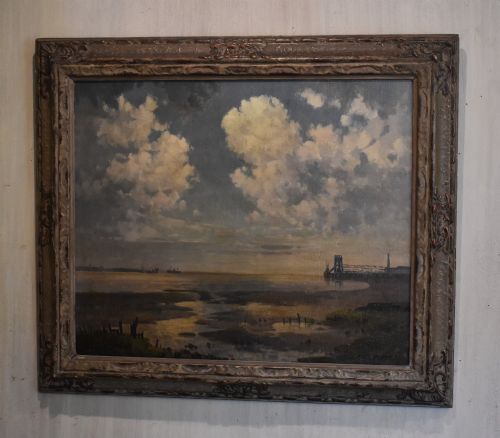
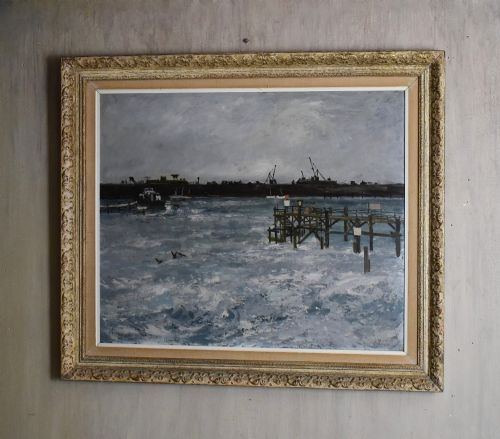
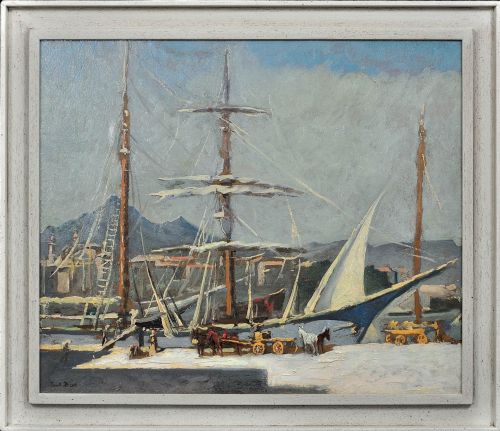

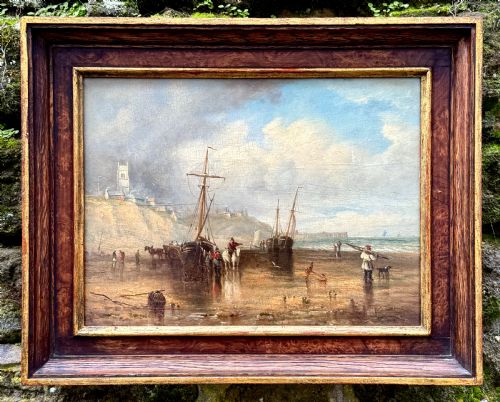
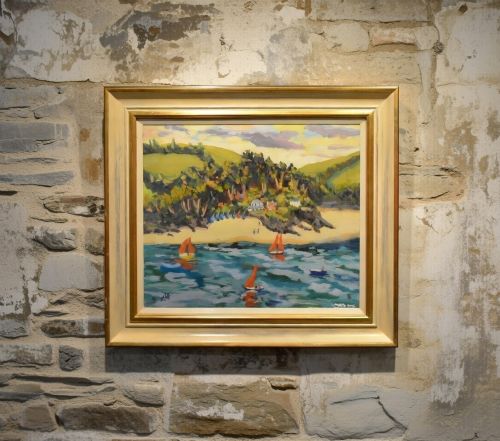
Framed Coastal Canvas Artwork
Framed coastal canvas artwork brings the open sea and shoreline into a room through oil paint stretched across wood.
Framed Coastal Canvas Artwork
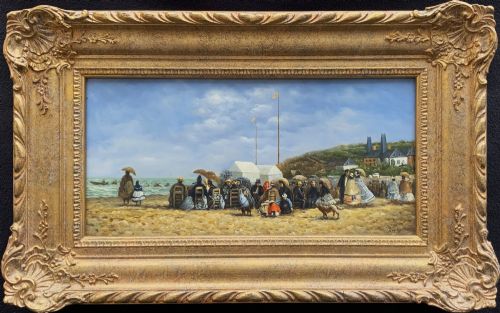
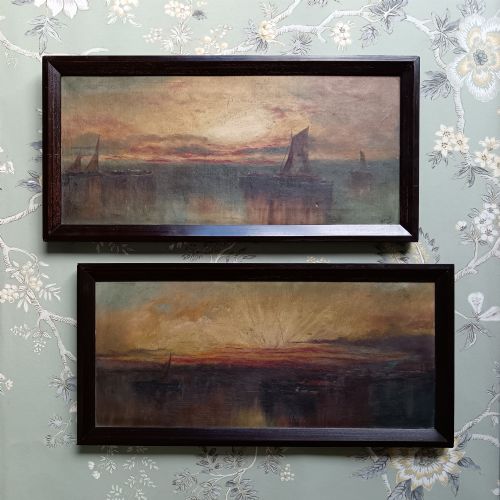
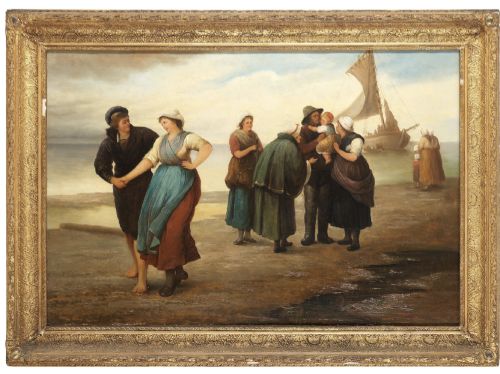
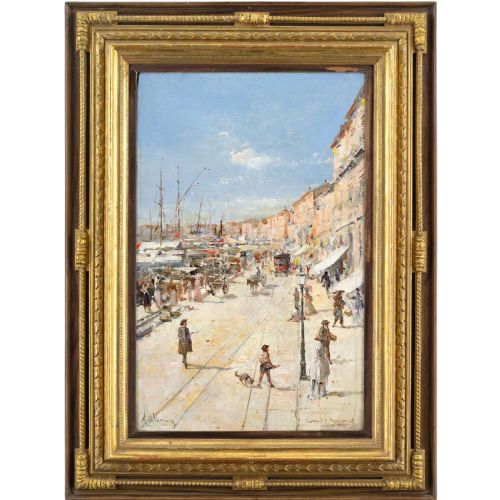
Framed coastal canvas artwork covers oil paintings on canvas depicting shores, harbours, and maritime scenes set within wooden or gilt frames. Buyers searching for framed coastal canvas artwork encounter depictions ranging from nineteenth-century British marine views to mid-century impressionist beach scenes.
The selections span Victorian marine art, Edwardian coastal landscapes, and post-impressionist seaside gatherings. Most examples originate from British and French schools, capturing harbours, cliffs, and shipping lanes.
These works function as focal points for interiors, combining landscape subjects with traditional framing materials like wood and giltwood.
Materials and methods
These pieces utilise oil paint applied to woven canvas supports, which are stretched over wooden frames and secured within outer decorative mouldings. The primary mediums recorded are oil paint and canvas, complemented by wooden structures often finished in gilt or giltwood.
Artists built up pigment through brushwork to capture light on water and texture on cliffs, sometimes employing textured techniques or mixed mediums. Frames were constructed from timber, carved or moulded, and gilded to complement the visual weight of the canvas.
Even horses occasionally join the coastal commute, appearing alongside smugglers on nineteenth-century seaside paths.
Distinctions in standard
Quality rests upon the handling of light, atmospheric depth, and the cohesion between the canvas and its housing. Superior examples demonstrate confident brushwork that conveys movement in water and weather conditions rather than rigid transcription.
The integrity of the canvas stretcher and the preservation of the original paint layer influence the standing of a piece. Original giltwood frames that match the period of the painting elevate the overall integrity of the object.
Clifford Hanney·B. Nash·Augusto Alberici·Bonaventura Peeters·Lucy Pratt·Clive Browne·Peter Brannan·Paul Bret·Bernard Benedict Hemy·Thomas Creswick·Ethel Sands·Donald McIntyre·Cecil Allan Mould RI·Charles Euphraisie Kuasseg·John Wilson Carmichael·Abraham Cooper RA·William Henry Williamson·John Holland·Walter Goodin·Abraham Hulk I·Raymond Moritz·Joseph Edward Hennah·William Edward Webb·Edward Matthew Elliott·Charles Napier Hemy
The Framed Coastal Canvas Artwork Glossary
- Canvas
- A heavy woven fabric utilised as a support for oil paintings. It is typically stretched tightly over a wooden frame before painting.
- Giltwood
- Wood that has been treated with a thin layer of gold leaf or gilt. This finish is common in period frames designed to enhance the artwork.
- Seascape
- A work of art depicting the sea, ocean, or coastal views. These subjects form a primary category within marine art.
- Post-Impressionism
- An art movement following impressionism that extends its parameters while rejecting its limitations. Artists concentrated on symbolic motifs and distinct colour use.
Framed Coastal Canvas Artwork: Frequently Asked Questions
What periods do these paintings date from?
The inventory spans the nineteenth century through to the mid-twentieth century, with specific examples originating from the seventeen-hundreds onward.
Victorian and Edwardian maritime pieces sit alongside nineteen-twenties and nineteen-fifties modernist interpretations.
How are maritime scenes distinguished from general landscapes?
Maritime scenes focus specifically on the sea, ships, harbours, and coastal activities rather than inland terrain.
Elements such as tidal mudflats, fishing boats, and open water define the core subject matter of these marine works.
Are original frames common?
Many examples retain their period frames, constructed from wood or giltwood, which match the era of the canvas.
These enclosures range from simple wooden moulding to ornate nineteenth-century gilt designs.
How should oil on canvas be maintained?
Oil paintings require stable indoor environments away from direct sunlight and extreme fluctuations in humidity.
Dusting should be performed gently with a soft, dry brush, avoiding liquid cleaners on the canvas surface.