


Coastal Cliff Seascape Artwork
Coastal cliff seascape artwork brings the dramatic power of the shore into a room.
Coastal Cliff Seascape Artwork
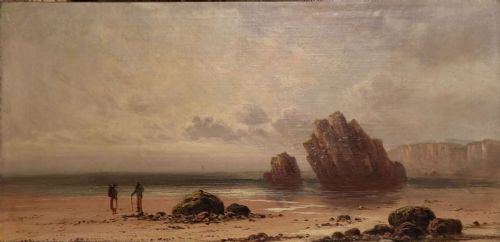
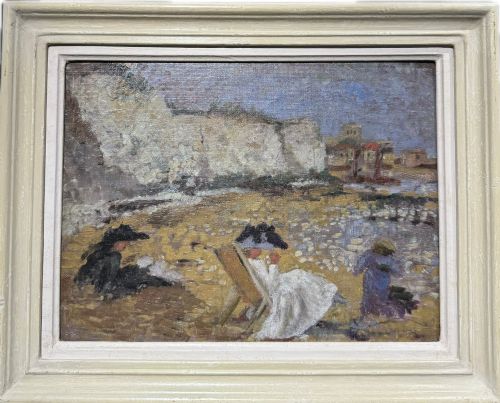
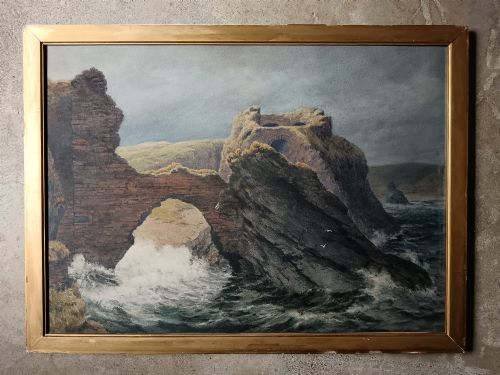
When you search for coastal cliff seascape artwork, you are looking at paintings that capture shores, rocks, and the sea from the nineteenth century onwards. These works range from large Victorian oil paintings of specific British beaches to intimate twentieth-century watercolours.
The most common pieces on this page are nineteenth-century and Victorian oil paintings on canvas or board, alongside watercolours on paper. They often feature named locations such as Scarborough, Dunbar Castle, or the Isle of Man, showing cliffs, piers, and beaches with figures.
Materials and methods
Artists relied primarily on oil paint on canvas or board, or watercolour on paper, applying pigment to capture the light and atmosphere of the coast. Gesso often served as a foundation layer for the wooden supports or frames associated with these works.
Makers built these pieces using traditional painting techniques, working in oils for rich textures and layered depths, or watercolours for translucent washes that suit coastal skies and chalk cliffs.
Artists often braved pebble beaches and chilly winds to paint the Victorian pleasure pier at Boscombe directly from life.
Judging quality in coastal scenes
Quality rests on the precision of the brushwork and the artist's ability to handle light, water, and dramatic cliff topography. Stronger pieces demonstrate confident handling of perspective in marine settings, whether depicting crashing waves or quiet sandy bays.
The finish of the support and the framing, such as gesso mouldings, also contribute to the overall presence of the piece. Works by established named painters command greater interest through their detailed topographical recording and composition.
John Moxon·Sir Thomas Newenham Dean·Thomas Rose Miles·Joseph Newington Carter·William Edward Webb·Edward T Jones·George Marks·Alfred Egerton Cooper
The Coastal Cliff Seascape Artwork Glossary
- Oil on canvas
- Pigment mixed with drying oil applied to stretched fabric. This medium allows for rich texture and deep colour blending.
- Watercolour
- Paint made of water-soluble pigments applied to paper. It provides translucent washes ideal for light and sky.
- Gesso
- A plaster mix used to prepare surfaces for painting or to form decorative mouldings on frames. It creates a smooth base for detail.
- Seascape
- A work of art depicting the sea, coast, and marine views. These compositions focus on water, cliffs, and beach activity.
Coastal Cliff Seascape Artwork: Frequently Asked Questions
What periods do these paintings come from?
The works span from the nineteenth century through the Victorian era into the mid-twentieth century.
Most examples date from the Victorian period, reflecting a strong British tradition of coastal painting.
Are these paintings of real places?
Many pieces depict specific named locations, such as Dunbar Castle, Scarborough, or the cliffs at Beer in Devon.
Artists frequently recorded actual topography, piers, and coastal landmarks from direct observation.
What surfaces were used for these artworks?
Painters worked primarily on canvas, oil on board, or paper for watercolours.
Wooden panels and prepared board also served as supports for smaller coastal views.
How do watercolours differ from oils here?
Watercolours utilise paper supports and offer transparent washes that capture light skies and open water.
Oils on canvas allow for heavier texture, darker tones, and robust depictions of dramatic seas.