
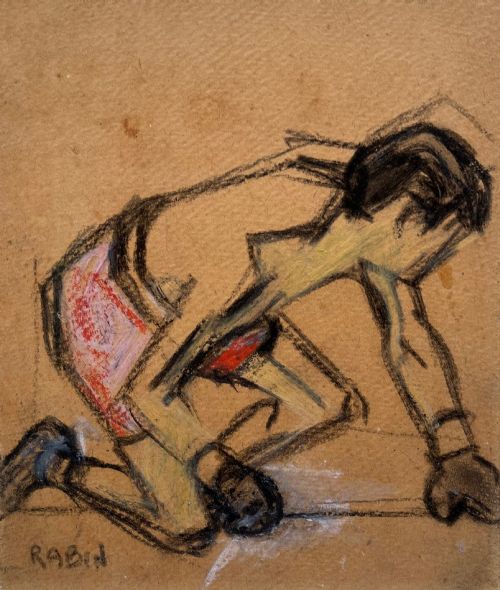
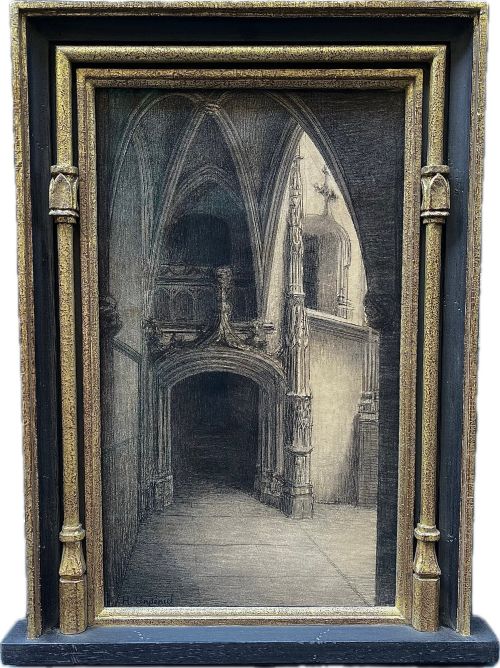
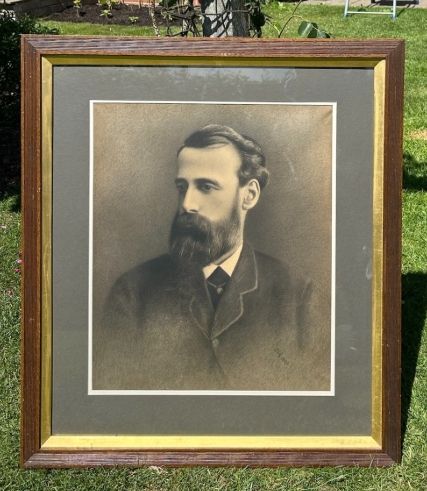
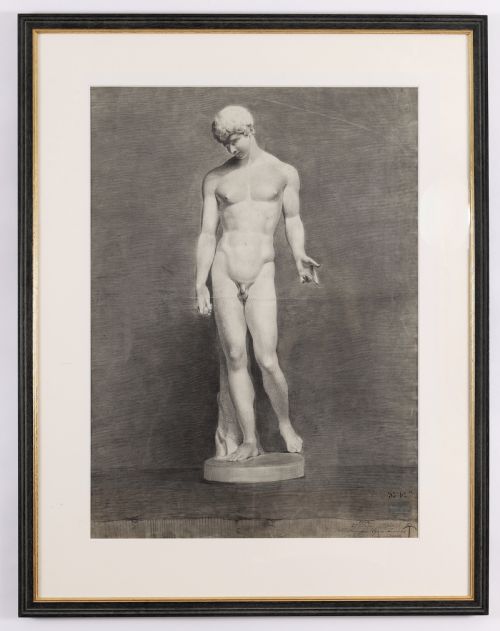




Framed Charcoal Sketch
A framed charcoal sketch offers direct entry into historical draughtsmanship, capturing the immediacy of an artist's hand on paper.
Framed Charcoal Sketch
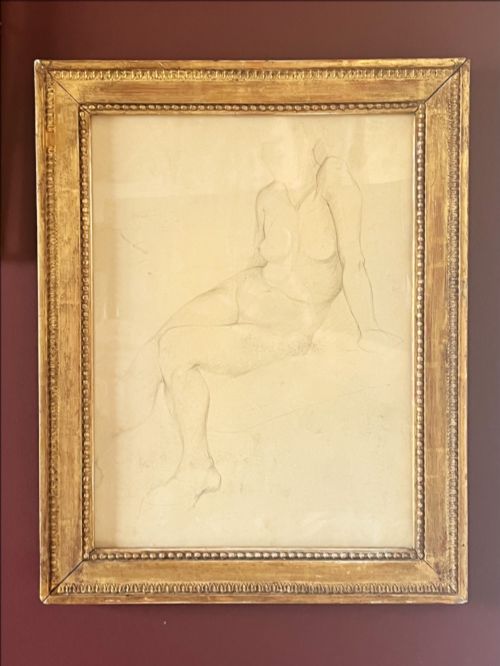
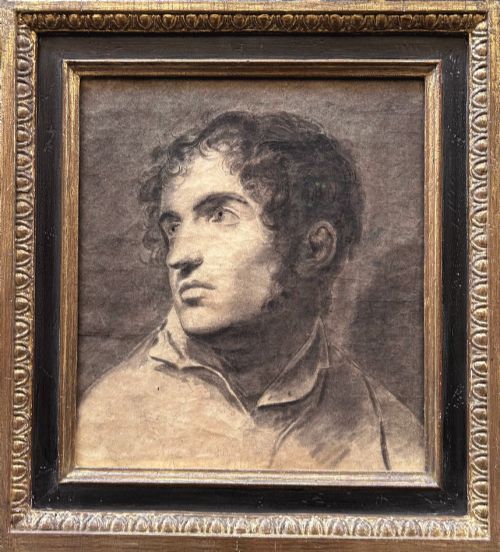
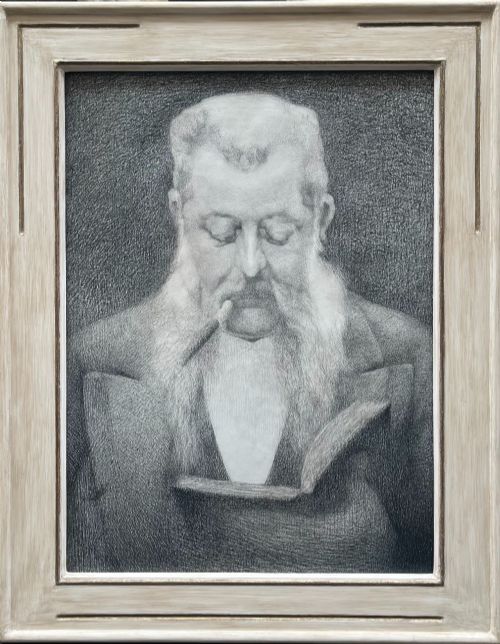
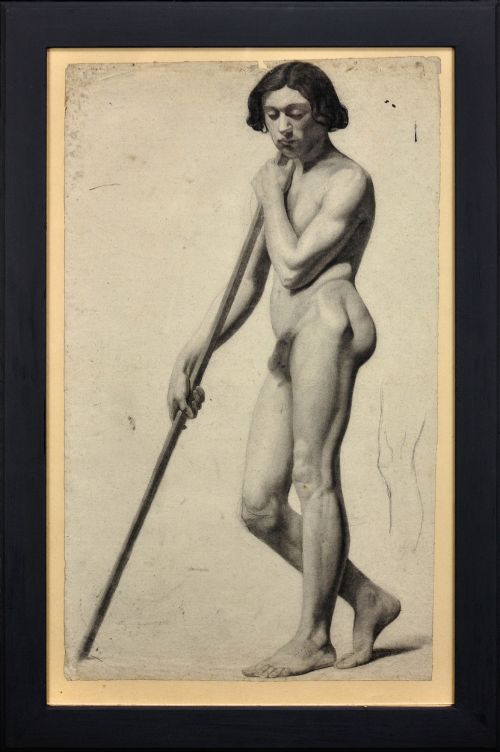
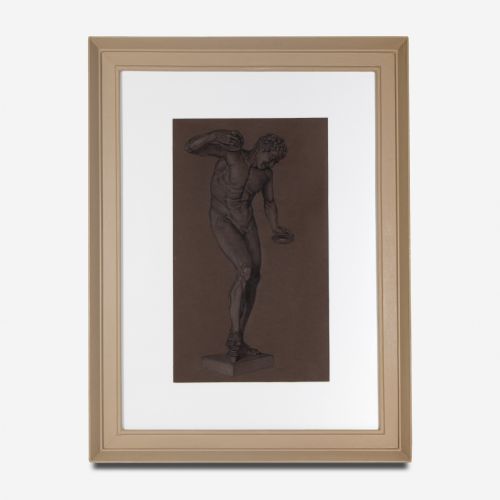
A framed charcoal sketch represents an original work on paper, executed primarily in carbon-based drawing media and secured behind protective glass within timber or gilt surrounds. The selection spans academic life studies, portraiture, landscapes, and architectural subjects originating from the eighteenth century through to the mid-twentieth century.
Buyers encounter numerous pieces originating from the nineteenth century, including Victorian academic studies and French school portraits, alongside early twentieth-century modernist and avant-garde compositions. These works range from rapid, preparatory studio notations to highly finished exhibition pieces signed by listed artists.
Subject matter varies widely, encompassing male and female nude life studies, topographical landscapes, and characterful portraits of gentlemen and historical figures. Each drawing retains the distinct textures of paper and dry medium, preserved in period frames that often match the stylistic era of the artwork.
Materials and Techniques
Artists utilised sticks of compressed vine or willow charcoal applied directly to various grades of paper, frequently combining graphite, chalk, or pastel to achieve tonal depth and highlights. This technique, known historically as deux crayon or heightened drawing, allowed draughtsmen to build rich shadows alongside crisp luminous details.
Protection of the fragile carbon particles necessitated mounting beneath glass within handcrafted wooden frames, occasionally finished in giltwood or carved ornamentation. The paper support itself often bears watermarks, chain lines, or age-related toning that aids in dating the physical object.
Listings feature works spanning the nineteenth and twentieth centuries, incorporating materials such as laid paper, charcoal, pastel, and giltwood frames.
Assessing Quality and Execution
Quality rests heavily upon the anatomical accuracy, compositional confidence, and expressive handling of light and shadow by the draughtsman. Superior pieces demonstrate a mastery of line and tone that conveys volume and mood swiftly, whereas lesser examples often reveal stiff proportions or hesitant shading.
The integrity of the preservation plays a significant role, distinguishing works with minimal foxing and stable media from those suffering excessive pigment loss or paper degradation. Furthermore, the originality and condition of the accompanying period frame contribute substantially to the overall integrity of the piece.
Samuel Rabin·Henri Charles Angeniol·Henry Arthur Roberts·Demetrios Galanis·J D Fergusson·Arthur Todd·Winifred Eugene Ballard·LS Lowry·John Macallan Swan·Frank Dobson·Theobald Chartran
The Framed Charcoal Sketch Glossary
- Charcoal
- A dry drawing medium made from slowly burned organic material, producing deep black marks that smudge easily.
- Life Study
- A drawing executed directly from a live model, commonly practised in academic art training to master human anatomy.
- Giltwood
- Timber carved and coated with a thin layer of gold leaf or metallic gilt paint, frequently used for traditional picture frames.
- Deux Crayon
- A drawing technique utilising two distinct coloured chalks or drawing media, typically black and white on toned paper, to create highlights and shadows.
- Academic Realism
- A style of painting and drawing influenced by the standards of European art academies, prioritising meticulous finish and classical proportions.
Framed Charcoal Sketch: Frequently Asked Questions
How should I clean the glass on a framed drawing?
Wipe the exterior glass gently using a soft cloth dampened with a mild glass cleaner, taking care to spray the cloth rather than the frame itself.
Ensure no liquid seeps beneath the rebate into the drawing, as moisture can permanently damage fragile charcoal and paper.
Can I hang these sketches in direct sunlight?
Direct sunlight causes significant fading and degradation to charcoal, pastel, and paper supports over time, leading to irreversible loss of contrast.
Select a wall position away from intense natural light and consider ultraviolet-filtering glass if complete avoidance is impractical.
What indicates an academic life study?
Academic life studies typically feature detailed renderings of nude figures posed against neutral backgrounds, often created within formal art school settings.
These works emphasise anatomical precision, musculature, and chiaroscuro lighting, sometimes bearing collector stamps or institutional inscriptions.
How do I identify a period frame?
Period frames display construction methods appropriate to their era, such as hand-carved gesso, pegged wooden corners, or historic patination on gilt surfaces.
Examining the reverse often reveals old fixings, maker labels, or framer stamps that correspond to the estimated date of the artwork.