

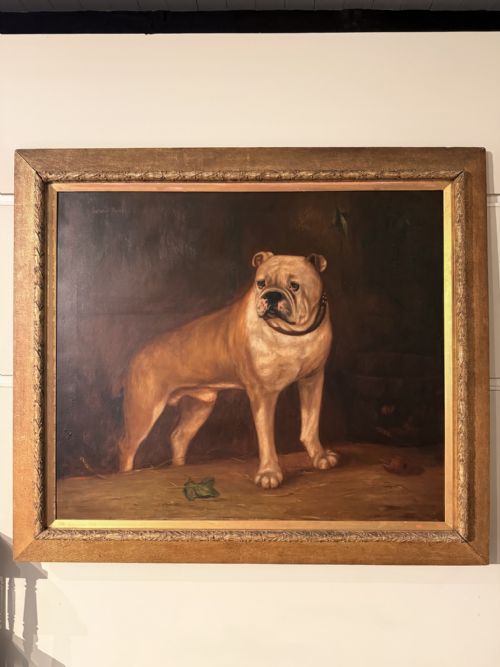
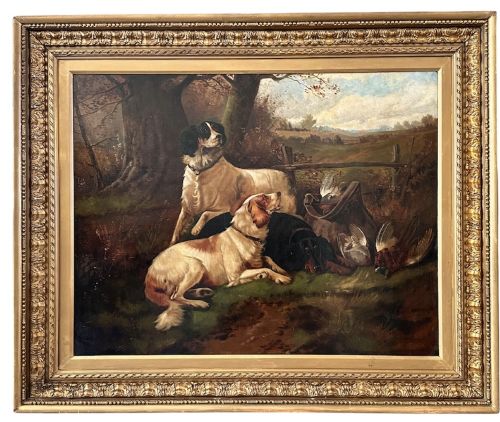
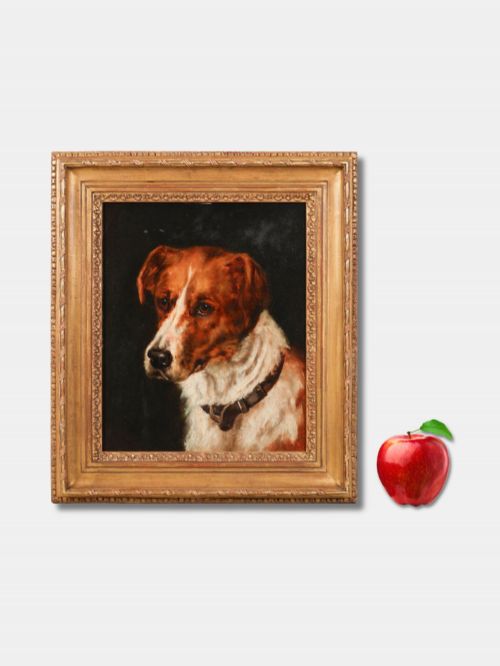
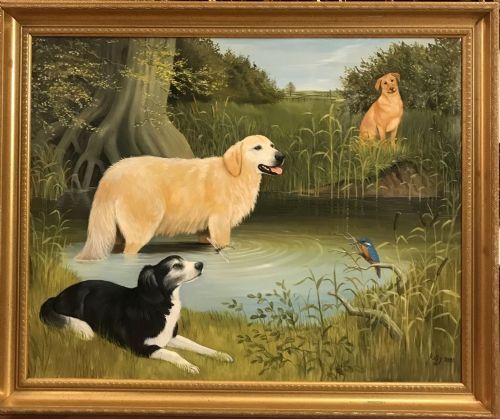


Framed Canine Oil Painting
A framed canine oil painting captures the enduring bond between humans and hounds across centuries of artistic tradition.
Framed Canine Oil Painting
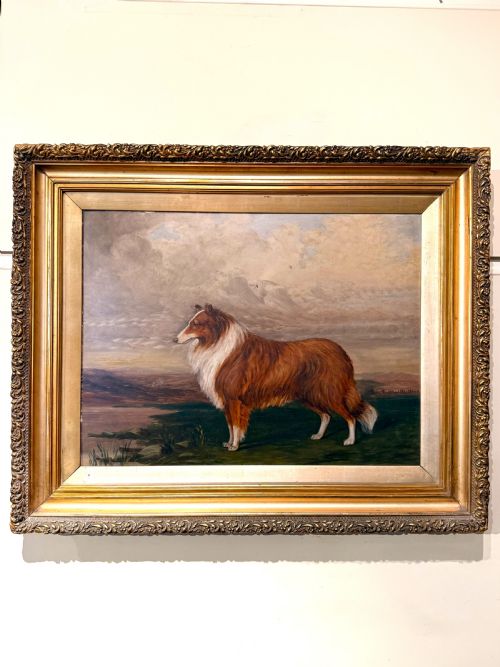
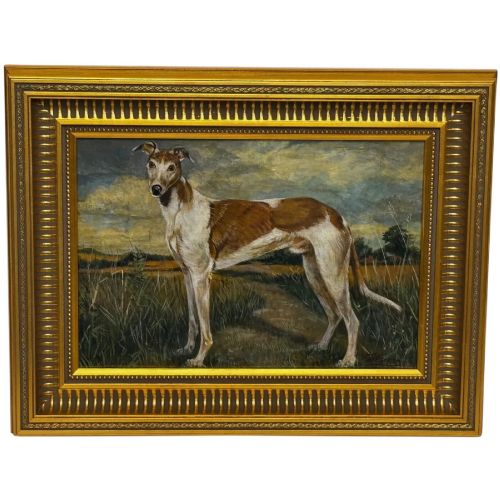
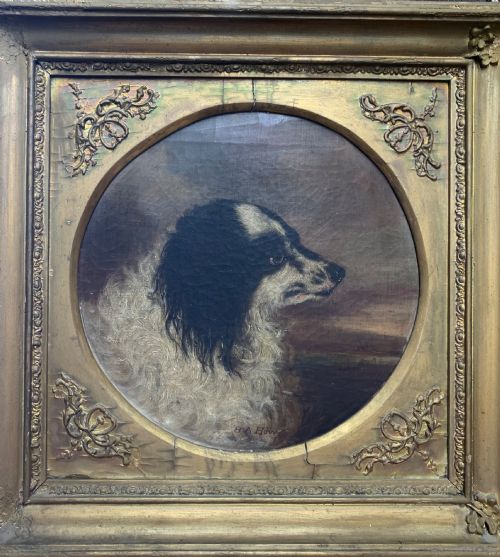
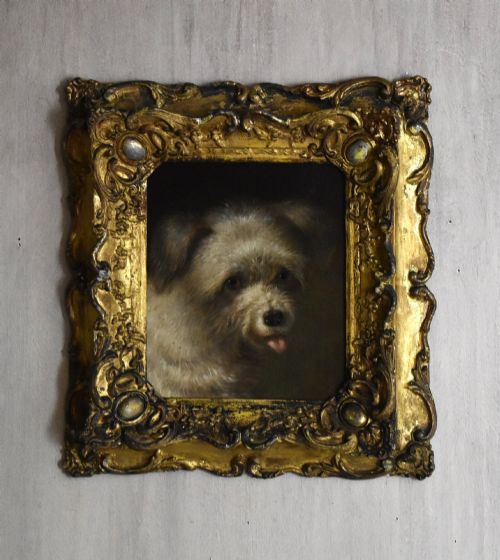
A framed canine oil painting is a portrait or sporting scene featuring dogs, rendered in oils and housed within a protective or decorative border. These works range from intimate head studies of individual pets to grand canvases depicting working gun dogs, terriers, and hounds in natural landscapes. Buyers seeking a framed canine oil painting explore varied historical expressions of animal portraiture.
The pieces on this page span the nineteenth century through the mid twentieth century, encompassing Victorian realism, British sporting art, and mid century works. Most examples originate from British schools, alongside French and American representations. Common subjects include spaniels, collies, setters, and terriers portrayed either singly or within detailed countryside settings.
Victorian examples dominate the selection, reflecting a cultural enthusiasm for animal subjects that celebrated both working capability and household companionship. Artists applied oil paint to canvas or board, framing the resulting images in wood, gilt, or gilded wood structures. These framed works preserve specific historical dogs, documented through named subjects or recognised breeds.
Materials and Technique
Painters applied oil paint directly onto stretched canvas or rigid wood panels, building up layers of pigment to render animal coats, eyes, and landscapes with textural depth. The medium allowed artists to achieve subtle tonal gradations and lifelike sheen in the fur of spaniels, terriers, and hounds. Canvases were typically secured within wooden stretchers before insertion into the outer frame.
Frames constructed from wood frequently incorporated applied plaster or composition ornaments finished with gold leaf or metallic gilt. These ornate or simple moulded surrounds defined the visual boundary of the painting while protecting the delicate edges of the canvas or board. The combination of oil on canvas with gilded wood represents the standard method of construction for these historical artworks.
Listed works feature diverse canine subjects ranging from working gun dogs and terriers to prized racing greyhounds.
Quality Variations
Quality rests primarily upon the anatomical accuracy and expressive capability of the brushwork, where skilled painters capture the distinct musculature, bone structure, and intelligent gaze of specific breeds. Weaker examples rely on rigid outlines and generalized forms, whereas accomplished pieces convey movement, texture in the coat, and convincing spatial depth in the landscape background. The treatment of light across the animal's fur distinguishes master handlers of the medium from routine jobbing portraitists.
The integrity of the physical components also differentiates the pieces, involving the preservation of the original oil surface against historical cleaning or overpainting, alongside the condition of the wooden frame. Works that retain their untouched pigment and period-appropriate gilded wood enclosures present greater visual coherence. Furthermore, paintings attributed to documented academic painters or established sporting artists carry distinct art historical significance compared to anonymous school works.
Valentine T. Garland·Martin Theodore Ward·John Emms·John Frederick Herring Senior·William Barraud·Edwin Landseer·Colin Graeme Roe·John Trivett Nettleship
The Framed Canine Oil Painting Glossary
- Oil on Canvas
- Pigments suspended in a drying oil applied to a woven fabric support stretched across a wooden frame. This surface texture often remains visible beneath transparent glazes.
- Gilt
- A thin layer of gold leaf or metallic powder applied to the surface of a wooden frame. This finish provides a reflective border that complements the warm tones of an oil painting.
- Sporting Art
- A genre of painting dedicated to pursuits such as hunting, shooting, and racing, frequently featuring prized hounds, gun dogs, and horses. These works record the specialised animals valued by landowners and sportsmen.
- Canvas
- A heavy woven fabric, typically flax or linen, used as a sturdy support surface for oil painting. It provides flexibility and a uniform tooth for the application of paint layers.
- Board
- A rigid flat sheet of wood or pressed material used as a painting support instead of stretched fabric. Boards are frequently found in smaller historical dog portraits.
Framed Canine Oil Painting: Frequently Asked Questions
How do I identify the breed of dog in an antique painting?
Artists often recorded specific anatomical traits, coat textures, and working proportions characteristic of Victorian and Edwardian breeds. Examining the ear shape, muzzle length, and stature helps align the depicted animal with historical canine standards.
Studying the context of the painting, such as sporting equipment or landscape type, can also clarify whether the dog functioned as a terrier, spaniel, hound, or gun dog.
Are these paintings original works or later copies?
Many listings feature original one-off compositions painted directly from life or observed studies, while others represent period copies of famous works by masters like Landseer. Close inspection of brushwork and pigment shrinkage under magnification reveals the direct hand of the artist.
Provenance notes and signatures on the canvas or board further establish whether a piece is an original primary work or a secondary tribute.
What is the best way to display an oil painting on wood or canvas?
Oil paintings require placement away from direct sunlight, heating vents, and damp environments to prevent the canvas from sagging or the wood board from warping. Stable indoor humidity and temperature protect both the paint layer and the structural integrity of the frame.
Hanging the artwork securely from wall studs ensures the weight of the gilded wood frame is properly supported without straining the hanging wire.
How can I tell the approximate age of the frame?
Period frames exhibit specific construction techniques, such as hand-carved wooden mouldings, pegged corner joints, and layered gesso preparations beneath the gold leaf. Examining the reverse of the frame reveals tool marks, oxidized screws, and aged backing boards consistent with nineteenth or early twentieth-century workshop practices.
Original frames frequently show matching wear patterns and patination that align chronologically with the oil painting they enclose.