



Framed Canine Artwork
Framed canine artwork brings together centuries of painted, drawn and etched dog portraits, capturing the character of everything from working gundogs to family pets.
Framed Canine Artwork
Framed canine artwork encompasses centuries of dog imagery, ranging from intimate pastel studies to grand oil paintings and detailed etchings. When searching for framed canine artwork, buyers encounter a rich variety of subjects, including individual pet portraits, hunting packs and sporting scenes.
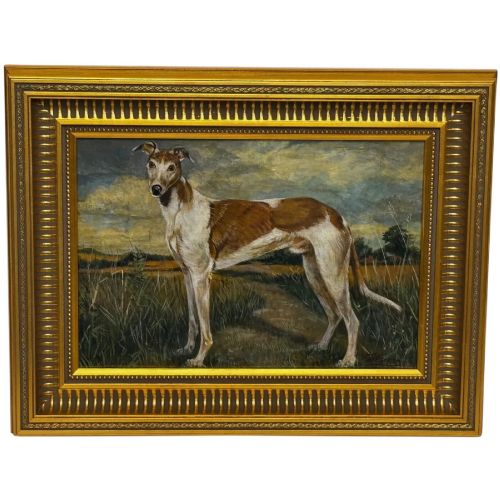
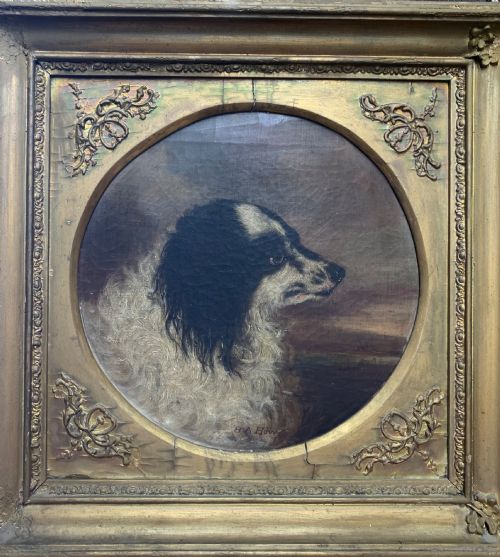
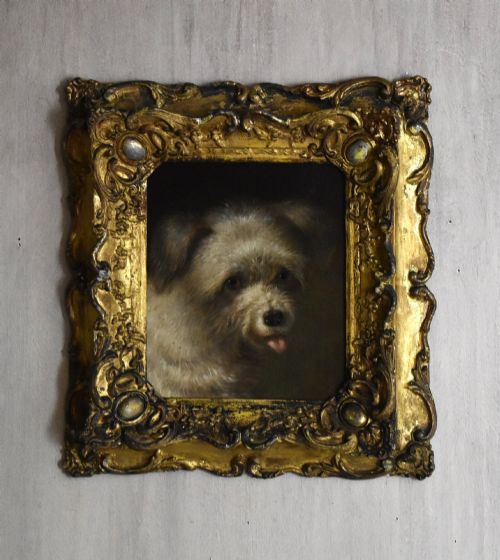
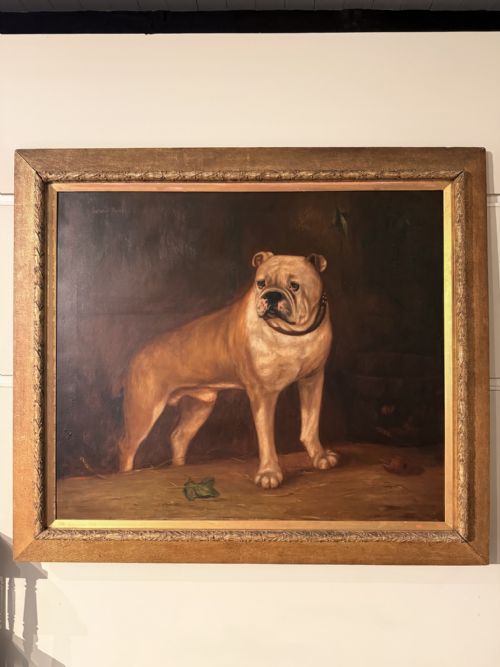
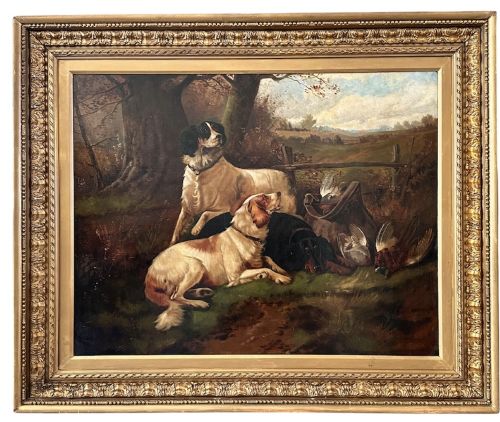
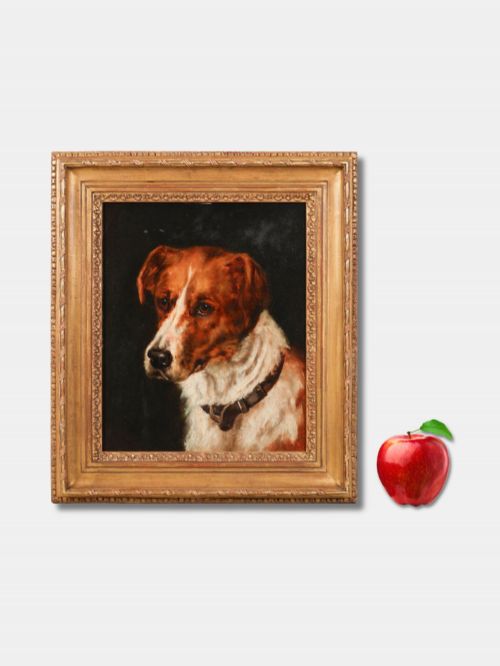
The pieces on this page span the Victorian and Edwardian eras through to the mid-twentieth century, reflecting changing tastes in animal portraiture. Victorian and Edwardian works frequently present formal oil portraits of spaniels, terriers and hounds, often set within giltwood frames.
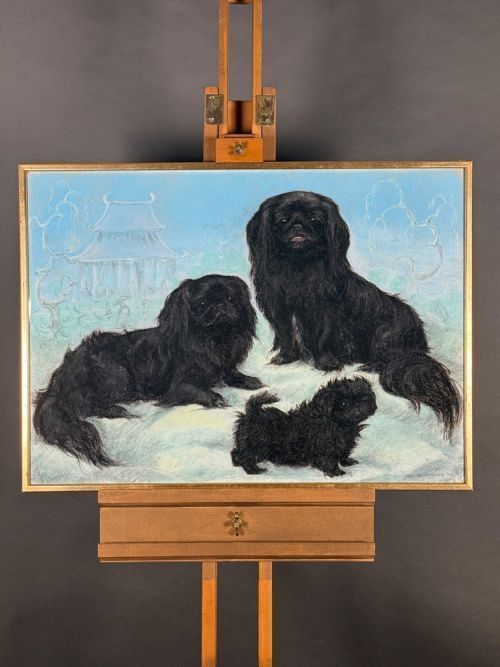
Later pieces from the mid-twentieth century introduce gouache, charcoal and watercolour mediums alongside oil on board. These works show breeds such as boxers, Pekingese and labradors, maintaining a tradition of capturing individual canine personality.
Materials and technique
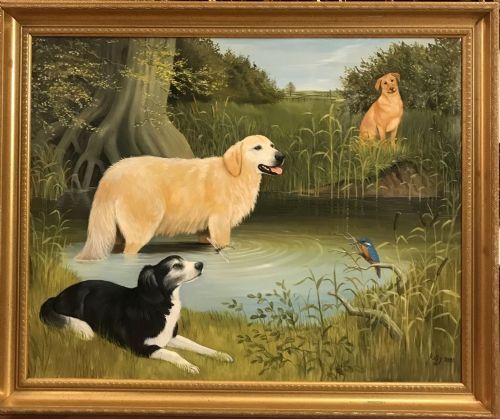
Artists working in oil paint utilised canvas and wood panels to build up rich textures, capturing the sheen of a retriever coat or the rough hair of a terrier. Giltwood and wood frames provide the traditional boundary for these paintings, frequently complemented by glass where works are executed on paper.
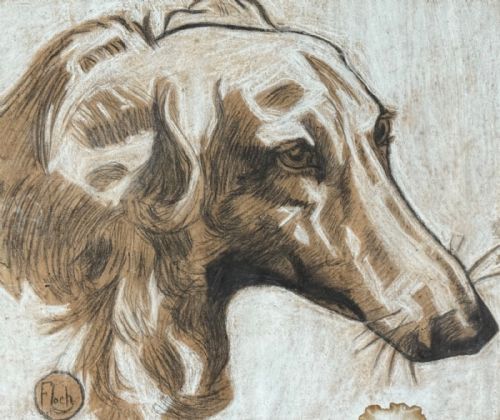
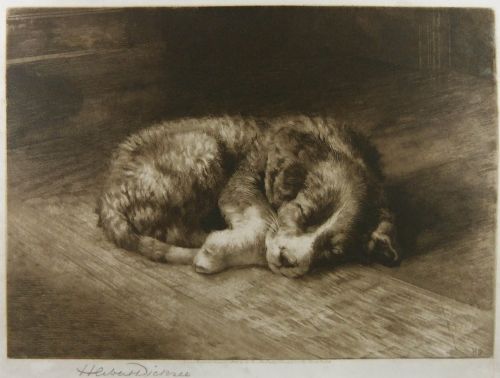
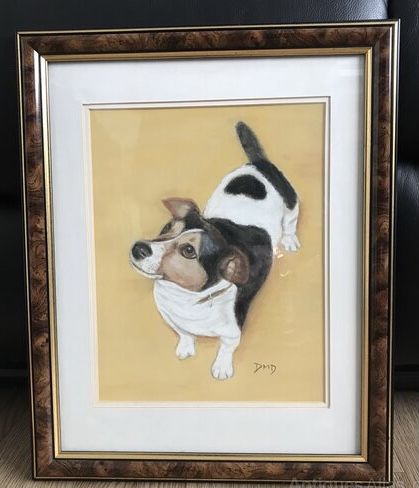
Works on paper employ pastel, gouache, pencil and charcoal, relying on the tone of the support to bring out highlights in the subject. Etchings utilise inked plates pressed onto paper, creating fine, controlled lines that render dog hair and expression with sharp precision.
Periods represented stretch from the Regency era through Victorian realism to mid-twentieth-century modern styles.
Assessing quality
Quality rests primarily on the artist's ability to render canine anatomy and individual expression convincingly rather than treating the animal as a generic type. Stronger pieces display careful observation of posture, eye detail and coat texture, whereas weaker examples rely on stiff or formulaic rendering.
The handling of the background landscape or interior setting also separates works, with superior paintings integrating the animal naturally into its surroundings. Additionally, the presence of original period frames, such as carved giltwood, enhances the integrity of the piece.
Valentine T. Garland·Marcellin Auzolle·Herbert Dicksee·Martin Theodore Ward·John Sargent Noble·John Emms·Arthur Wardle·William Barraud·Sir Edwin Landseer·Samuel Raven·Colin Graeme Roe·John Trivett Nettleship·Jules Chardigny
The Framed Canine Artwork Glossary
- Etching
- A printmaking technique where an artist uses acid to cut lines into a metal plate, which is then inked and pressed onto paper to create fine, detailed images.
- Giltwood
- Wood that has been coated with a thin layer of gold leaf or gilt paint, commonly found on traditional antique picture frames.
- Gouache
- An opaque water-based paint that dries to a matte finish, often used on paper for detailed animal studies.
- Sporting art
- Artwork depicting field sports, hunting, hounds and gundogs in landscapes, which became highly popular during the nineteenth century.
Framed Canine Artwork: Frequently Asked Questions
What periods do these dog artworks cover?
The pieces span from the early nineteenth century through the Victorian and Edwardian eras up to the mid-twentieth century.
Most items originate from the Victorian and early twentieth-century periods, showcasing traditional oil painting and etching techniques.
How do I identify a sporting dog painting?
Sporting dog paintings typically depict breeds like setters, pointers, spaniels or hounds in outdoor landscapes, working environments or hunt packs.
These works often highlight the dog's working role alongside guns, game or rural scenery rather than acting purely as domestic pet portraits.
Are these works original or reproductions?
The selection includes original hand-painted oils, pastels and watercolours alongside period artist-signed etchings.
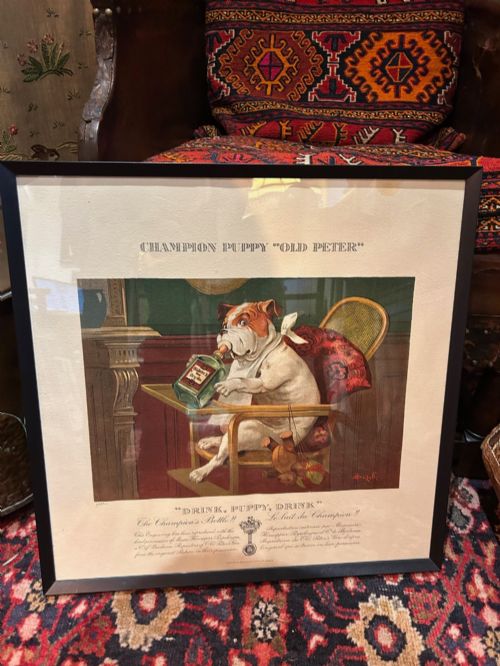
Some later pieces record historical copies or prints after well-known animal painters, which are clearly noted in their descriptions.
What framing styles accompany these artworks?
Many works retain their period frames, particularly moulded wood and giltwood frames appropriate to the nineteenth or early twentieth century.
Works on paper are typically protected under glass within traditional wood or gilt mounts.