


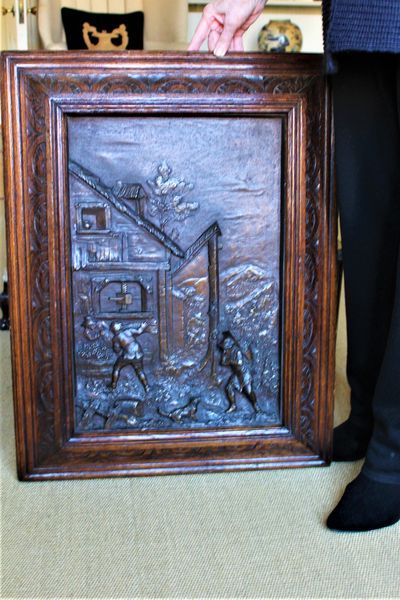

Framed Bronze Relief
A framed bronze relief brings classical weight and sculptural presence to a wall, combining cast metalwork with period framing.
Framed Bronze Relief
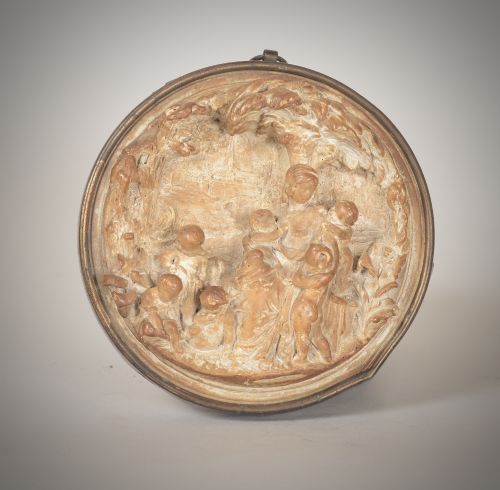
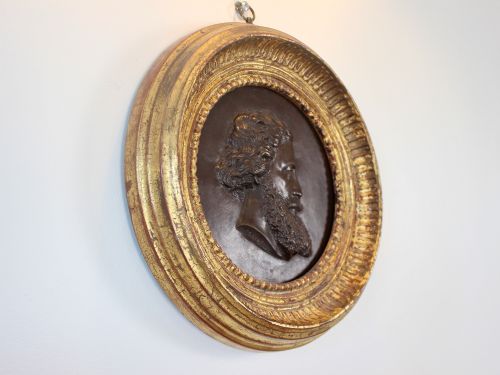
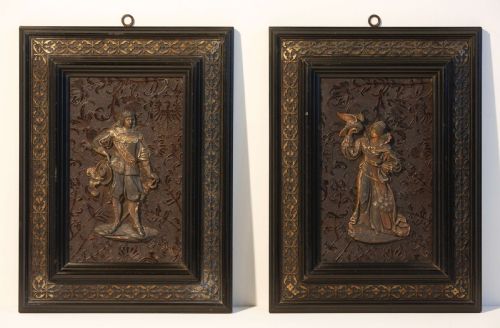
A framed bronze relief presents cast figural scenes, portraits, and architectural subjects set securely within wood, brass, or giltwood surrounds. These wall plaques and roundels draw heavily on Neoclassical, Baroque Revival, and Victorian styles.
The pieces appearing on this page span from the eighteenth century through the early twentieth century, originating from British, French, Continental, and Japanese makers. Portrait plaques of historical figures and classical mythological scenes dominate the selection.
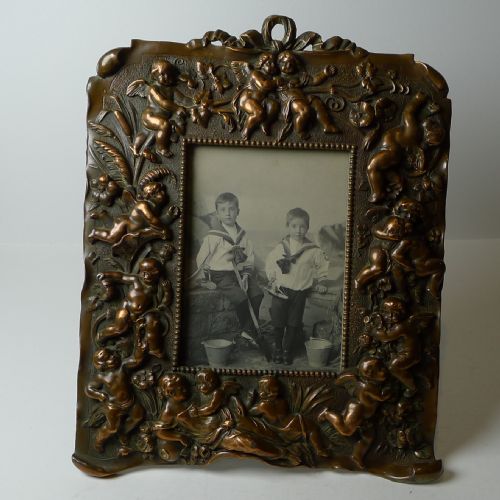
Buyers encounter both solid cast metal and bronzed variations, alongside related plaster and white metal compositions. Picture frames and wall sculptures in this category range from intimate cabinet pieces to large wall art.
Materials and construction
Makers cast these reliefs using bronze, brass, copper, and white metal, often mounting the metalwork onto timber backings or enclosing them within turned mahogany and giltwood frames. Some pieces utilise bronzed plaster or cast lead given a metallic finish.
Casting techniques capture fine facial details and textured backgrounds, which are then finished by hand-chasing or patination. Frames are frequently constructed from oak or moulded timber, tailored specifically to house the heavy metal plaques.
Listings feature works spanning the 18th, 19th, and early 20th centuries, executed in bronze, brass, copper, and plaster.
Factors determining quality
The integrity and originality of the frame matter immensely, as period-matching wood or giltwood surrounds enhance the historical context of the bronze plaque within. Signed works and legible maker inscriptions further elevate an individual piece.
Gian Federigo Bonzagna·Akira Tanaka
The Framed Bronze Relief Glossary
- Relief
- A sculptural technique where the figures project from a flat background. High relief stands out boldly, while low relief remains flatter.
- Roundel
- A circular panel or plaque used for decorative artwork. These are frequently found housed in turned wooden frames.
- Patina
- The surface sheen and colour developed on bronze over decades through age and handling. It adds depth to the metallic surface.
- Neoclassical
- An artistic style inspired by the classical art and culture of ancient Greece and Rome. It heavily influences nineteenth-century plaque designs.
- Giltwood
- Wood that has been coated with gold leaf or gold paint. It appears often on the ornate frames enclosing these metal plaques.
Framed Bronze Relief: Frequently Asked Questions
How do I hang a heavy bronze relief safely?
Heavy bronze and brass plaques require robust wall fixings such as steel screws anchored directly into masonry or wall studs. Ensure the hanging wire and frame structure can support the substantial weight of the cast metal.
Distribute the load evenly using two mounting points rather than a single central hook to prevent the frame from tilting or pulling loose over time.
Are these reliefs solid bronze throughout?
Many pieces are cast entirely in solid bronze, while others consist of bronze-plated metals, white metal, or bronzed copper over a base composition. Plaster and cast lead alternatives finished with a metallic wash also appear in period work.
Examining the edge or the reverse of the plaque usually reveals the true nature of the material beneath the surface patina.
How should I clean a bronze wall plaque?
Dust the surface gently with a soft, dry brush or microfibre cloth to remove accumulated particles. Avoid chemical polishes or water, which can strip away the historic patina and damage the surrounding wood or gilt frame.
Professional conservation is recommended only if active corrosion or heavy grime obscures the details of the cast.
How can I tell the period of a frame?
Frame construction techniques, such as hand-turned mahogany profiles or period joinery methods, offer strong clues to the date of manufacture. The materials used for the backing boards and fixings also align with nineteenth and early twentieth-century workshop practices.
Original frames generally show consistent age-related wear that matches the surface condition of the bronze plaque inside.