


Gilt Framed Relief
These gilt framed relief pieces bring classical moulding, portraiture and rich gilding directly to the wall.
Gilt Framed Relief
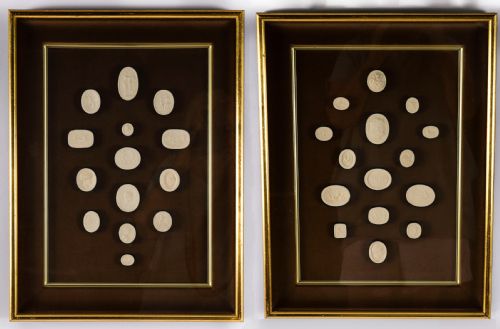
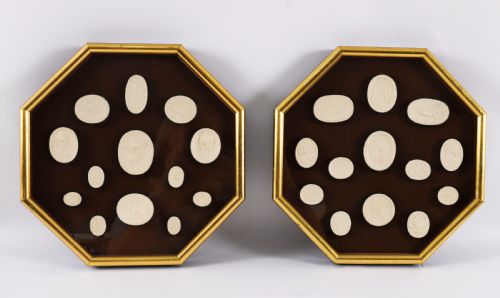
A gilt framed relief brings together moulded imagery and gilded woodwork, forming pieces that range from small Grand Tour intaglios to large overmantle mirrors. Buyers searching for gilt framed relief encounter wall art, plaques, and mirrors dating from the eighteenth century through to the twentieth century.
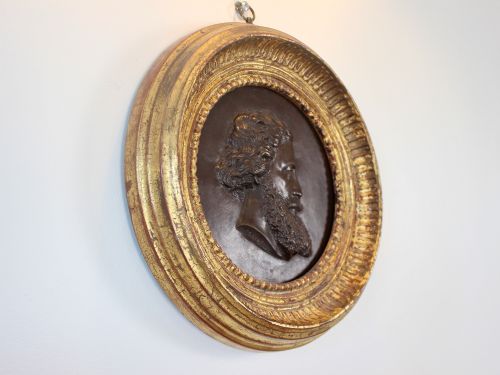
The selection here draws heavily upon nineteenth-century pieces, including Victorian interpretations and Regency designs, alongside specific groups like framed plaster casts and bronze plaques. These objects function primarily as wall art and ornamental displays, anchoring a room with reflective surfaces and low-relief sculpture.
Materials and technique
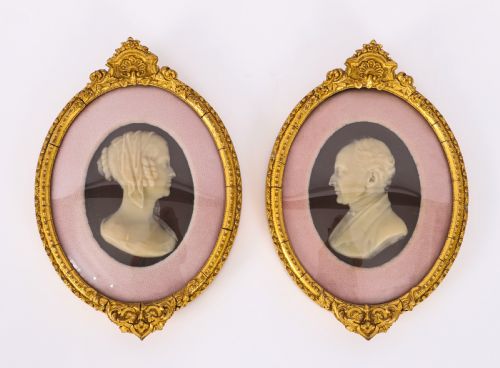
Plaster, gesso and wood form the structural core of many reliefs, finished with gold leaf or metallic gilt to catch the light. Artisans shaped portraits and scenes using wax, plaster, bronze or carved stone, housing them behind glass within custom frames.
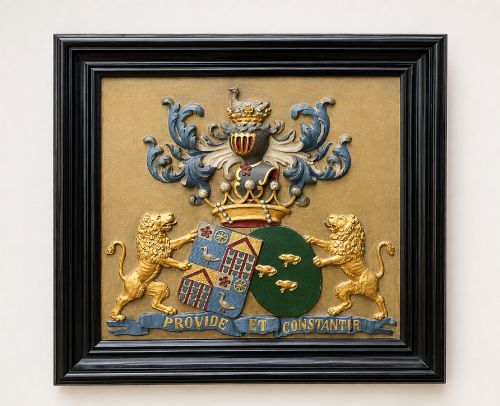
Moulding and casting techniques allowed makers to produce intricate classical motifs, heraldic plaques and miniature profiles. Gilding was applied over prepared gesso bases on wooden frames, creating the metallic sheen characteristic of these wall pieces.
Even fighting men and stern nineteenth-century actresses manage to look remarkably composed when immortalised in gilt frames.
Quality variations
Quality rests in the crispness of the modelled relief, whether working in plaster, wax or cast bronze, and the depth of the original sculptural detail. Finer pieces retain sharp contours on figures and heraldry, whereas simpler examples show softened edges from worn moulds.
The execution of the surrounding frame also dictates standard, separating standard commercial mouldings from hand-finished giltwood with well-preserved gilding. Cohesion between the framed subject and its mounting enclosure marks the distinction between ordinary manufacture and finer workshop output.
Van Rijckevorsel and Verheijen·Giovanni Liberotti·Mainfroy·Pietro Bracci
The Gilt Framed Relief Glossary
- Intaglio
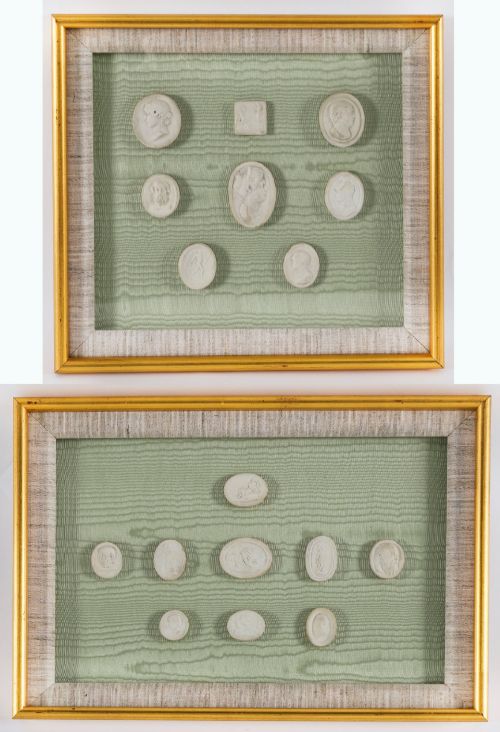
- A design carved into the material so that the impression rises as a negative, frequently collected in sets on the Grand Tour. These were commonly cast in plaster and arranged behind glass in dedicated frames.
- Gesso
- A plaster mixture applied to wood frames to provide a smooth surface for gilding. It allows for intricate, moulded decoration before the application of gold leaf.
- Overmantle mirror
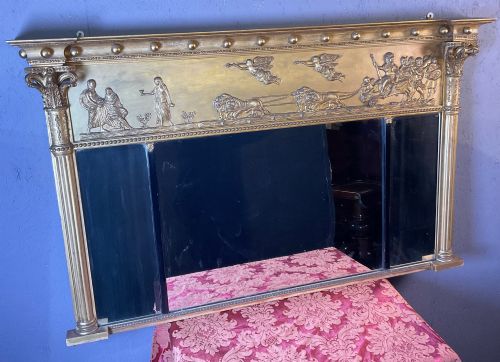
- A large mirror designed to hang above a fireplace mantel, often incorporating decorative relief panels or classical columns. They serve as major focal points in nineteenth-century interiors.
- Grand Tour
- A traditional trip through Europe undertaken by upper-class young men in the eighteenth and nineteenth centuries to collect art and antiquities. The souvenirs gathered included boxed sets of plaster intaglios and portrait reliefs.
- Empire
- A neoclassical design style spanning the late eighteenth and early nineteenth centuries, characterised by Egyptian and Roman revival motifs. Pieces from this period utilise bold gilt frames and classical figural reliefs.
Gilt Framed Relief: Frequently Asked Questions
What is a Grand Tour intaglio?
Grand Tour intaglios are small plaster or wax casts modelled after classical antiquities, collected as souvenirs by travellers in Europe during the eighteenth and nineteenth centuries. Artisans often arranged sets of these miniature reliefs inside dedicated wooden frames.
Collectors prize intact sets for their historical connection to European travel and classical education. They function as wall art when glazed and framed.
How do I hang a heavy overmantle mirror?
Overmantle mirrors require secure anchoring to wall studs or masonry due to their substantial weight and giltwood construction. Professional mirror fixings distribute the load safely across the frame structure.
Positioning them above a fireplace mantel follows traditional domestic placement, reflecting light and room proportions.
What materials make up these wall plaques?
These wall plaques utilise plaster, wax, bronze and carved stone for the central relief subject. Makers mounted them inside wooden frames finished with gesso and gold leaf or giltwood.
Certain pieces incorporate velvet backings and glass fronts to protect delicate plaster and wax profiles from dust.
How do I date a gilt framed relief?
Dating relies on stylistic clues within the frame moulding, the subject matter, and construction techniques. Neoclassical and Egyptian Revival motifs point toward the early nineteenth century, while Victorian examples often feature bolder plasterwork.
Signatures, stamps or maker inscriptions on the reverse or within the bronze cast provide precise historical attribution.