




Framed Beach Oil Painting
A framed beach oil painting captures the shifting moods of the coast, bringing the open air and maritime light directly into a room.
Framed Beach Oil Painting
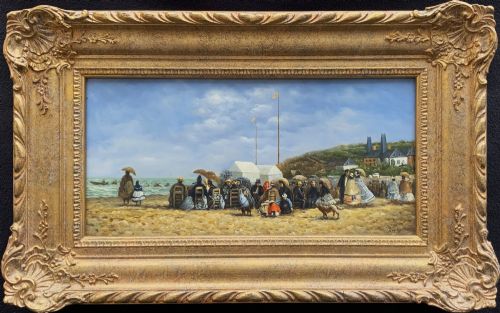
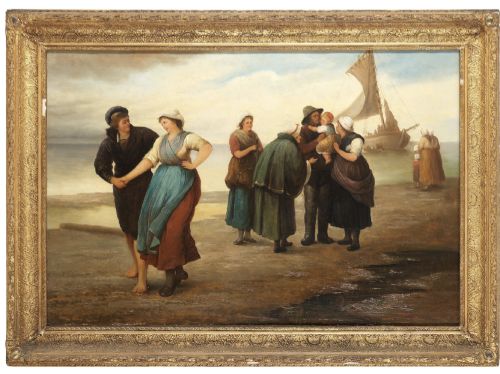
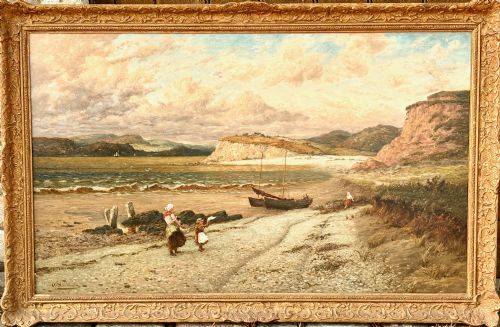
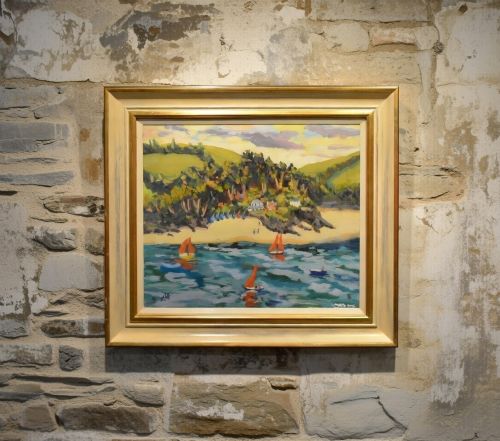
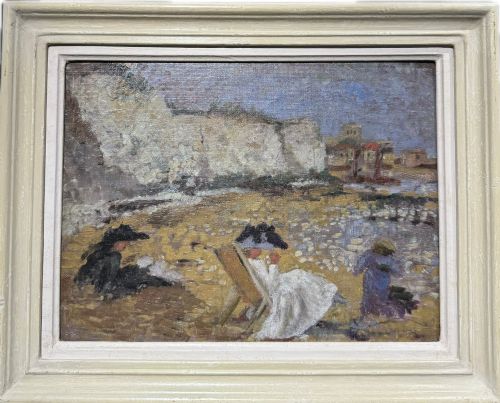
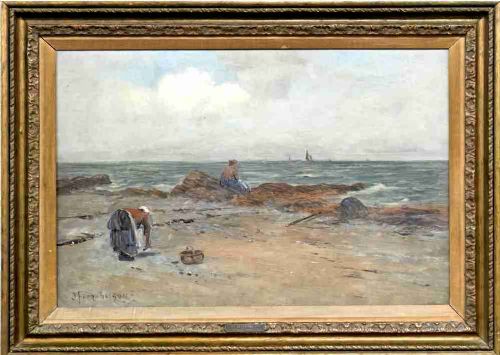
A framed beach oil painting brings together centuries of coastal observation, ranging from 18th-century country house canvases to mid-century modernist interpretations. These works record shorelines, marine landscapes, fisher folk, and seaside gatherings through oil paint applied to canvas or board.
The versions most commonly met on this page date from the 19th century through to the 1960s, encompassing British Impressionism, Victorian marine scenes, and French School landscapes. Artists often depicted specific locations such as Morecombe Bay, Hastings, and St Ives, rendering the sand, sea, and sky with distinct regional character.
Buyers select these works to introduce historical depth and atmospheric coastal views into interior spaces. Each piece offers a tangible link to past artistic movements, from traditional Victorian compositions to later impressionist studies of light and water.
Materials and technique
Painters relied primarily on oil paint applied to stretched canvas or wooden board, utilising the slow-drying medium to build rich layers of colour and texture. This technique allowed artists to capture the luminosity of coastal skies and the reflective surfaces of wet sand and sea.
Frames form an integral part of these works, frequently constructed from wood and finished with gesso, gold leaf, or giltwood. Elaborate gilt frames elevated formal portraits and grand landscapes, while simpler wooden surrounds suited mid-century modernist compositions.
Artists frequently braved unpredictable British weather on windy shores, occasionally mixing stray grains of beach sand directly into their wet oil paint.
Understanding quality
Quality rests upon the artist's ability to handle light, perspective, and atmospheric depth within the coastal setting. Superior examples display confident brushwork and a coherent composition that draws the viewer into the scene, whereas lesser works remain stiff and formulaic.
The relationship between the painting and its frame also influences overall merit, particularly when period giltwood surrounds match the era of the canvas. Original signatures, documented provenances, and works attributed to recognised schools or named artists elevate the standing of a piece.
Thomas Beach·Joseph Farquharson·Joseph Edward Hennah·George Morland·James Webb·Sir David Murray·Jeffrey Pratt·William Shayer·Owen Bowen·Robert Macaulay Stevenson·Daniel Sherrin·Donald McIntyre
The Framed Beach Oil Painting Glossary
- Oil on Canvas
- A traditional painting medium where oil-based pigments are applied to a woven fabric support stretched across a wooden frame. This combination allows for subtle blending and rich surface textures.
- Giltwood
- Wood carved and coated with gold leaf or a gold-coloured finish to create an ornamental frame. This material was widely utilised during the 18th and 19th centuries to enhance formal artworks.
- Impressionism
- An art movement focused on capturing the visual impression of a moment, particularly through shifting light and unblended brushstrokes. Coastal scenes offered ideal subjects for studying natural illumination.
- Gesso
- A plaster-like mixture applied to wooden frames as a smooth base before gilding or painting. It provides a durable foundation for intricate decorative moulding.
- Marine Landscape
- A genre of art dedicated to depicting the sea, ships, coastal views, and beach activities. These works range from calm shorelines to dramatic shipwreck scenes.
Framed Beach Oil Painting: Frequently Asked Questions
How do I date a beach painting?
Dating relies on stylistic clues, framing techniques, and signatures linked to known active periods of specific artists. Victorian works often feature detailed realism, whereas 20th-century pieces lean towards impressionist or modernist abstraction.
The materials used for the canvas and the construction of the wooden stretcher frame also provide chronological markers. Consulting the documented working dates of named painters helps narrow down the timeframe further.
Where should I hang a coastal oil painting?
These works suit rooms with good natural light that complements the marine subject matter. Placing them away from direct sunlight and damp environments preserves the integrity of the oil paint and the giltwood frame.
Matching the scale of the painting to the wall space ensures the artwork commands the room properly. Traditional gilt frames pair well with classic interiors, while mid-century canvases fit contemporary spaces.
What is the difference between canvas and board?
Canvas provides a flexible woven textile support that is stretched over a wooden frame, offering slight give under the brush. Board presents a rigid wooden or composite surface that resists flexing and requires less structural maintenance over time.
Both materials were used extensively across different periods for framed beach oil paintings. The choice often depended on the artist's preference for portability and surface texture.
Are framed beach paintings historically significant?
Many of these works document historical shorelines, long-gone maritime architecture, and traditional coastal industries like kelp gathering. They serve as visual records of how artists interpreted British and European coastlines across centuries.
Works associated with specific regional schools, such as the Newlyn school, reflect important developments in plein-air painting. This historical context adds depth to the aesthetic appeal of each piece.