




Framed Seaside Wall Art
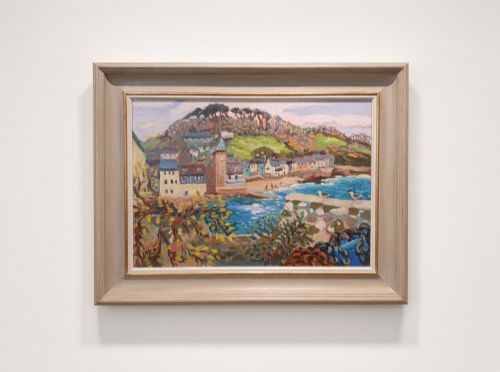
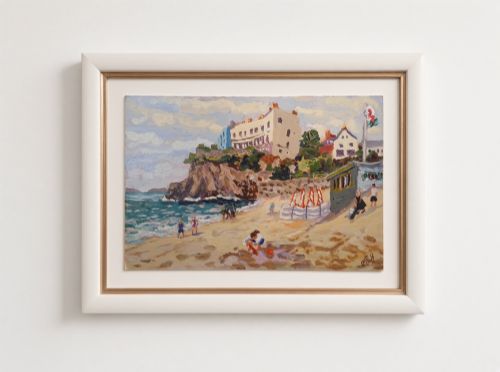
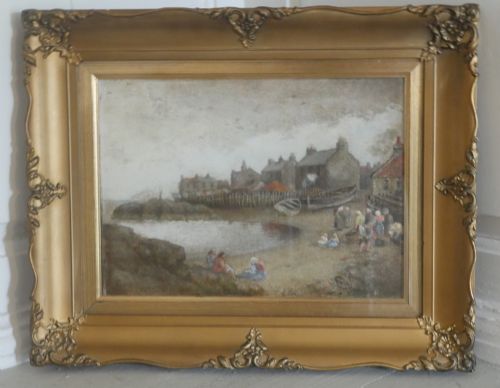
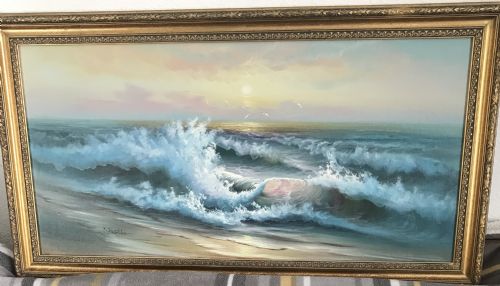
Framed seaside wall art brings coastal harbours, sandy shores and crashing waves into the room through paintings in oil and watercolour.
Framed Seaside Wall Art
Framed seaside wall art comprises paintings depicting coastal views, harbour scenes and beach life across several periods including the nineteenth century and the mid-twentieth century.
The pieces on this page span styles such as Victorian fine art, impressionism and British impressionism, capturing specific locations from Cornwall to Scotland.
Buyers will find traditional watercolours and oil paintings on canvas or paper, enclosed in wooden and gilt frames.
How these coastal works were produced
Artists painted these coastal subjects using oil paint or watercolour applied to canvas and paper supports.
Finished works are housed within wooden frames, frequently enhanced with gilt finishes to complement the maritime scenes.
Framed Seaside Wall Art Retail Price Guide 2026
Typical asking prices for framed seaside wall art among the pieces listed under this phrase on Sellingantiques today, from the lower quarter to the upper quarter. They describe what is for sale here now, not the wider market.
The selection spans Victorian fine art, British impressionism and mid-century styles.
What distinguishes finer examples
Quality rests in the handling of light on water and the atmosphere captured along the coastline by the painter.
The skill evident in the brushwork of impressionist marine scenes or the precision of nineteenth-century watercolours dictates the standing of each piece.
Edward Mills·William Banks Fortescue·Lucy Pratt·Lionel Horsnell·Norman Lloyd·William Raymond Dommersen·Frank Wood·Jeffrey Pratt·Alfred Robert Quinton·Jack R Mould·James George Bingley·John Sanderson Wells·William Greaves·James Watson·James Kinnear·Yves Brayer·William Shayer·John Duvall
The Framed Seaside Wall Art Glossary
- Watercolour
- A painting method where paint is made with water-soluble pigments. These works appear on paper within protective glass framing.
- Impressionism
- A style focusing on accurate depiction of light and its shifting qualities. Coastal scenes in this manner capture transient atmospheric effects.
- Gilt
- A thin layer of gold applied to frame surfaces. This finish adds a reflective border to the painting.
- Canvas
- A heavy woven fabric used as a surface for oil painting. It provides texture beneath the layered pigments.
Framed Seaside Wall Art: Frequently Asked Questions
What periods do these paintings cover?
The selection includes works from the nineteenth century alongside pieces from the 1920s, 1930s, 1940s, 1950s and 1960s.
Various twentieth-century decades are represented alongside earlier Victorian examples.
Where do these coastal scenes originate?
Locations span British and European coastlines, featuring specific spots in Cornwall, Yorkshire, Wales and Scotland.
Named destinations include St Ives, Scarborough, Polperro and Whitby.
What materials frame the artwork?
Pieces are typically set in wooden frames, with several incorporating gilt finishes.
Works on paper additionally utilise glass protection over the watercolour surface.
How do oil and watercolour differ here?
Oil paintings utilise pigment bound in oil on canvas or panel surfaces.
Watercolours employ water-soluble pigments on paper support, usually displayed behind glass.