

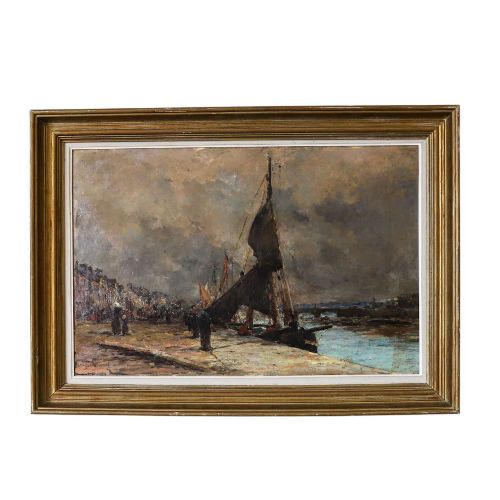


Impasto Seascape Painting
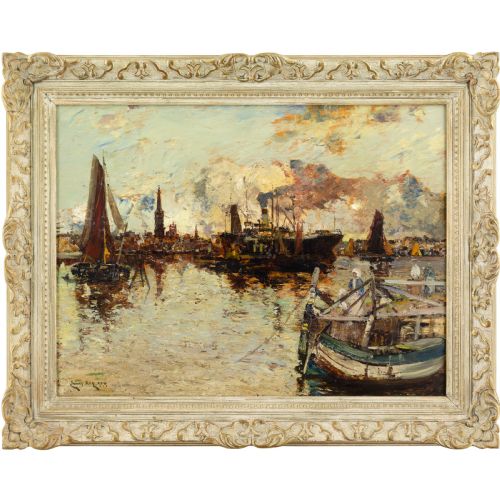
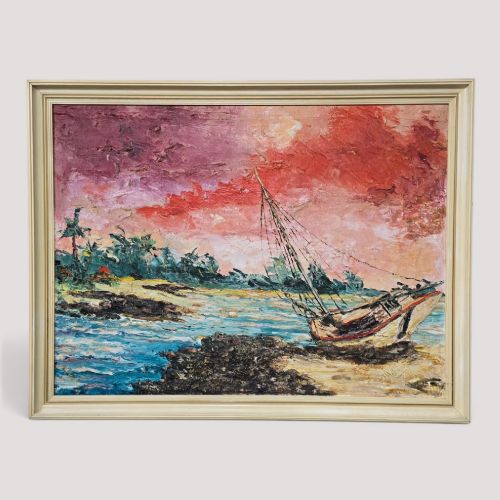
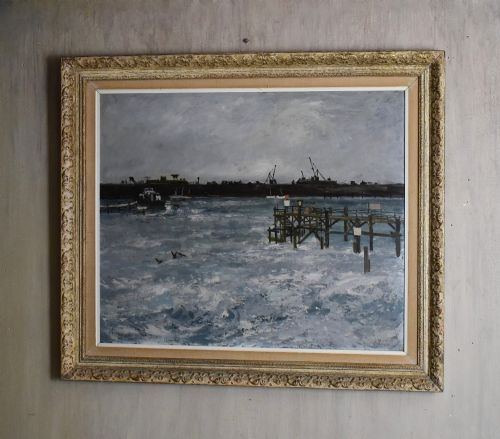
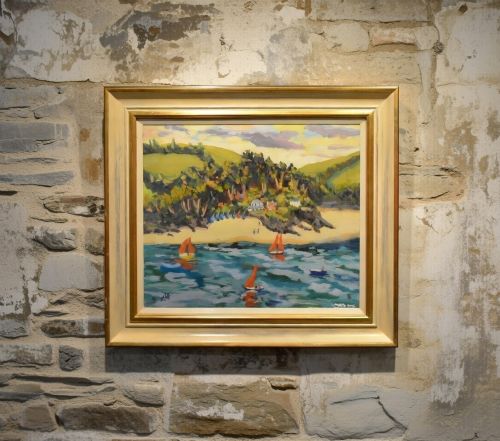
An impasto seascape painting uses thick, textured oil layers to capture the movement, weight and light of water.
Impasto Seascape Painting
An impasto seascape painting captures coastal views, harbours and marine life through thick applications of oil paint. These works range from nineteenth century maritime scenes to mid century modern and contemporary British and French compositions.
The pieces appearing here span several decades, featuring subjects from Welsh bays and northern estuaries to Mediterranean ports and French coastal towns. Buyers often encounter works executed on canvas or board, framed in wood or gilt wood.
Many examples lean into impressionism, post impressionism and modern British styles. The application of heavy pigment gives each maritime or coastal subject a tangible, physical presence on the wall.
Materials and construction
These works rely on oil paint applied thickly to surfaces such as canvas, wood or board. The dense medium allows artists to build ridges and peaks that catch ambient room light.
Supports often include traditional stretched canvas or rigid boards housed within period frames, sometimes finished in gilt wood. The physical buildup of pigment remains the defining technical characteristic across the selection.
Styles represented include impressionism, post impressionism, modern British and mid century modern maritime painting.
Evaluating quality and execution
Quality rests in how purposefully the thick pigment describes light, water and atmosphere rather than the sheer weight of paint on the support. Stronger pieces use texture to direct the viewer eye across the maritime scene with conviction.
The relationship between the palette, the handling of the brush or knife and the stability of the canvas or board determines the enduring success of the composition. Finer examples maintain structural integrity in the thickest passages while conveying convincing depth.
Kenneth Cozens·James Kay RSW·Peter Brannan·Lucy Pratt·Elisabeth Bardon·Helen Layfield Bradley·Jean-Baptiste Olive·Raymond Picque·Donald McIntyre·Jeffrey Pratt·Edward M. Elliott
The Impasto Seascape Painting Glossary
- Impasto
- A technique where paint is laid onto a surface in very thick layers, usually thick enough that the brush or palette knife strokes are visible. This method adds a tactile, three dimensional quality to the painted surface.
- Estuary
- A tidal mouth of a large river, where the tide meets the stream. These settings frequently appear in maritime art for their dramatic shifts in light and water level.
- Gilt wood
- Wood that has been covered with a thin layer of gold leaf or gold paint. Many traditional frames utilise this finish to complement the oil paintings within.
- Post-Impressionism
- A predominantly French art movement that developed from about eighteen eighty to nineteen fourteen, extending impressionism while rejecting its limitations. Artists prioritised symbolic content and heavy brushwork.
- Maritime
- Connected with the sea, shipping or marine navigation. Such subjects form the core of coastal and harbour artwork.
Impasto Seascape Painting: Frequently Asked Questions
What is an impasto seascape painting?
An impasto seascape painting is a work of art executed in thick oil paint that depicts coastal views, boats, harbours or the open sea. The heavy texture of the medium gives the water and sky a tangible depth.
These pieces use raised pigment to catch light dynamically, setting them apart from flatter, smoother painting styles.
How should I care for these oil paintings?
Keep oil paintings out of direct sunlight and away from rapid changes in temperature and humidity to protect both the canvas and the thick paint layers. Dust the surface very gently with a soft, dry brush when needed.
Avoid using any liquids or chemical cleaners on the textured paint surface.
How do I identify the period of a piece?
The period is often indicated by the framing materials, the stretcher construction behind the canvas, and the stylistic tendencies of the brushwork. Mid twentieth century works often reflect post war British or modern continental movements.
Signatures, dates inscribed on the reverse and artist biographies also help anchor the painting in time.
Where were these coastal scenes painted?
The locations span British estuaries, Welsh bays, and French coastal towns along the Mediterranean and Atlantic. Artists often travelled to active fishing ports and seaside promenades to capture maritime life.
Locations are frequently recorded by the artist on the back of the board or canvas.