


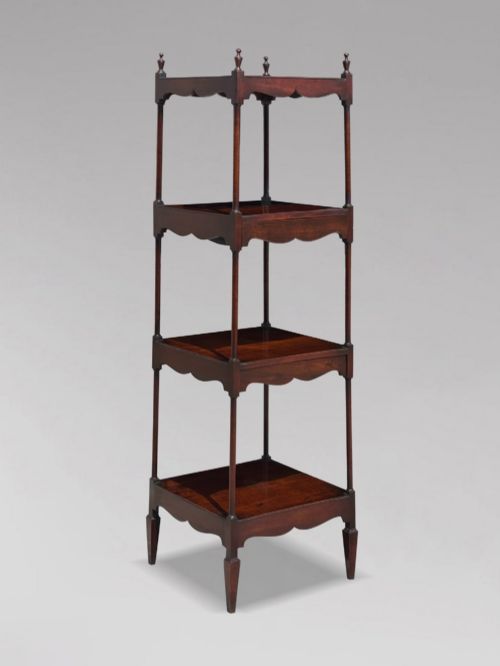
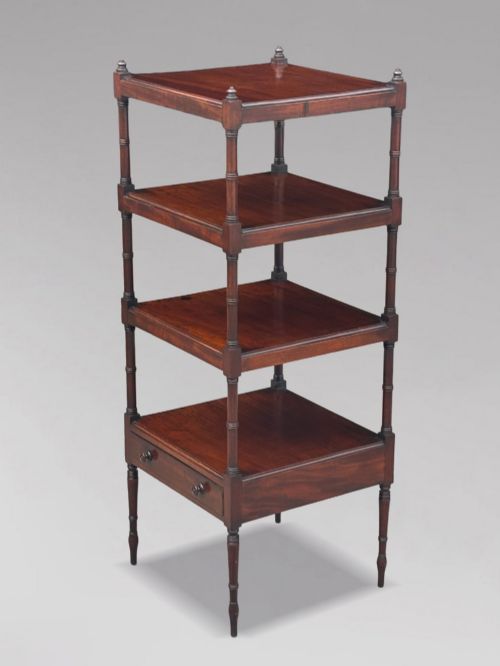



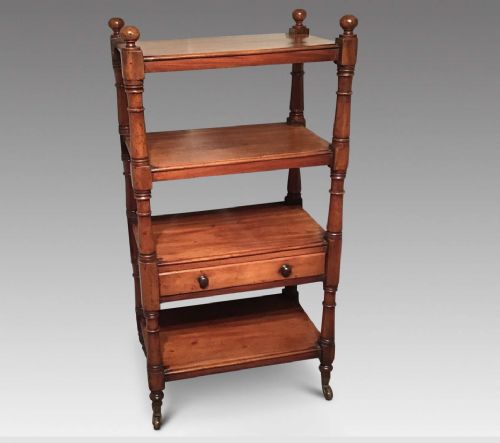


Four Tier Mahogany Etagere
A four tier mahogany etagere is a tiered open shelf unit designed for display and storage, bringing compact elegance to a room.
Four Tier Mahogany Etagere
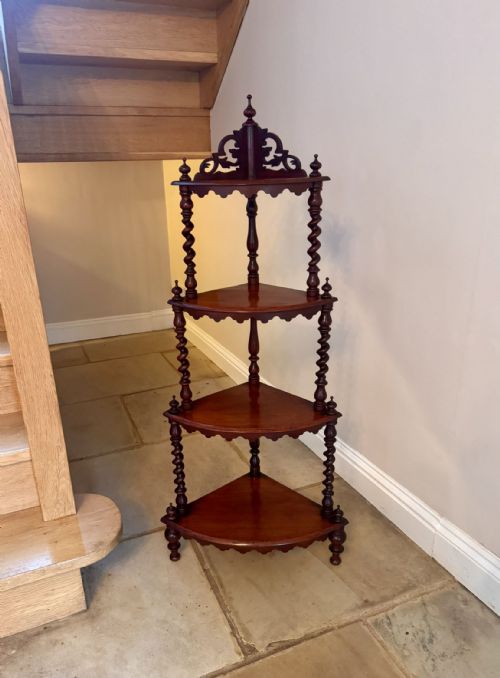
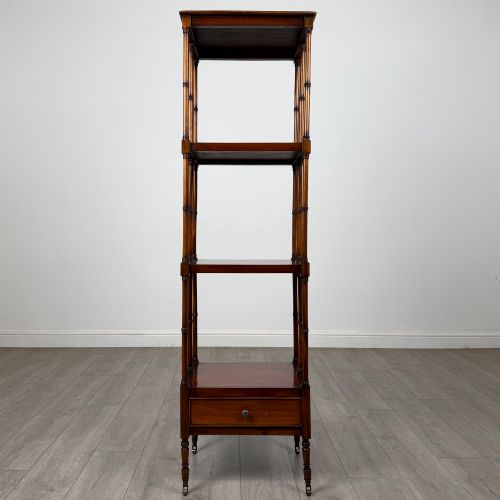
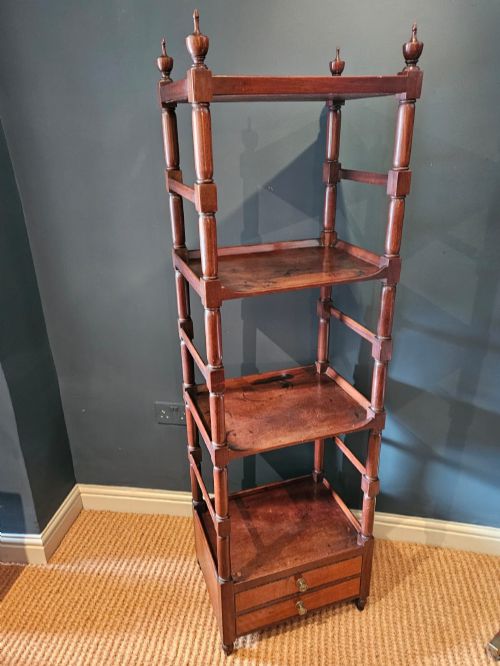
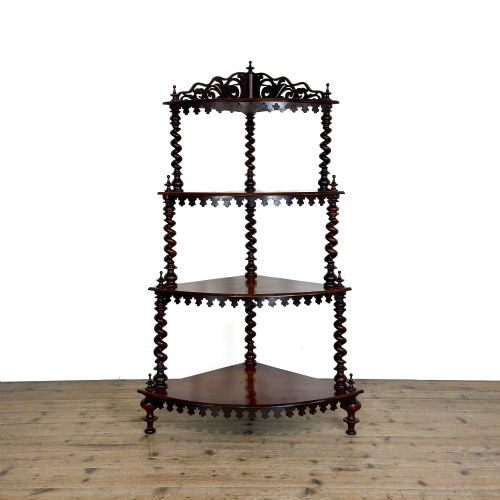
When you search for a four tier mahogany etagere, you encounter open shelving pieces that also appear under the designation of whatnot, bookcase, or tier stand. These items serve to hold books, music, and decorative objects across stacked levels supported by upright posts or columns.
The pieces on this page span several eras, including the Georgian, Regency, and Victorian periods, along with later revivals. You will find standard rectangular formats alongside corner configurations and tapering forms.
Makers historically produced these sturdy tiered stands for drawing rooms and libraries where accessible display space was required. The four tier format provides graduated or uniform shelving while maintaining a modest footprint on the floor.
How they were made
Cabinet makers utilised solid mahogany and figured veneers, occasionally selecting distinct timbers such as plum pudding mahogany for prominent surfaces. Structural elements rely on turned supports and corner posts to hold each tier securely.
Additional materials appear in specific components, including brass castors on the feet and cane panels on select tiers. Joinery methods connect the horizontal shelves firmly to the vertical uprights to bear the weight of books and objects.
Four Tier Mahogany Etagere Retail Price Guide 2026
Typical asking prices for four tier mahogany etagere among the pieces listed under this phrase on Sellingantiques today, from the lower quarter to the upper quarter. They describe what is for sale here now, not the wider market.
Some nineteenth century tiered stands doubled as music stands, keeping sheet scores close to hand for the parlour pianist.
What varies in quality
The distinction between standard examples and finer pieces rests upon the selection of timber and the crispness of the turning on the uprights. Grain patterns with rich figuring and depth indicate superior material selection by the cabinet maker.
Proportion and architectural balance set the better items apart from utilitarian shelving. Refined details in the corner joints and the integration of brass fittings contribute to a more resolved overall construction.
Gillows
The Four Tier Mahogany Etagere Glossary
- Etagere
- A piece of furniture consisting of a set of open shelves for displaying small objects. These tiered stands date predominantly from the Georgian through to the Victorian eras.
- Whatnot
- An open set of shelves used for displaying ornaments or holding books. This term is frequently used interchangeably with etagere in historical and trade descriptions.
- A-frame
- A structural profile where the sides taper inward towards the top, creating a stable triangular silhouette. This construction appears on specific nineteenth century tiered stands.
Four Tier Mahogany Etagere: Frequently Asked Questions
What is an etagere used for?
An etagere serves primarily as an open shelving unit for displaying decorative objects, ceramics, and books within domestic rooms. The multiple tiers allow items to be arranged visibly without enclosing them behind doors.
Historically, these pieces stood in drawing rooms, parlours, and libraries to hold everyday items or music collections. Their open design keeps objects accessible from all sides.
How do I date a mahogany whatnot?
Dating relies on examining the timber species, turning styles on the upright posts, and construction methods. Earlier Georgian and Regency examples exhibit finer joinery and distinct timber figuring compared to later Victorian pieces.
Secondary woods and hardware, such as brass castors, also offer clues to the period of manufacture. Stylistic shifts from George III designs towards heavier Victorian proportions help narrow down the decade.
Where should I place an etagere?
These tiered stands suit corners, alcoves, or flat wall spaces where vertical storage is needed without blocking light. Their open frames maintain an airy feel in smaller rooms.
Placing them away from direct heat sources protects the mahogany timber and polished surfaces from drying out. Corner variants make efficient use of otherwise unused angles in a room.