


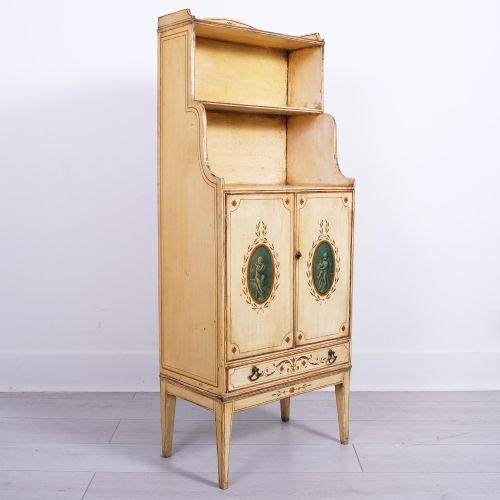
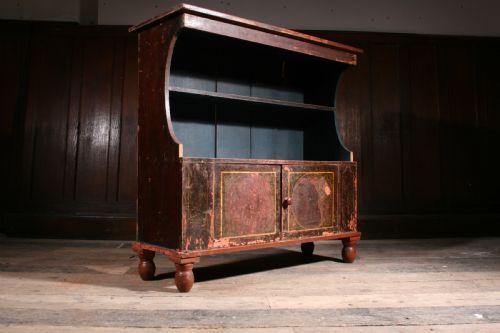


18th Century Open Bookcase
An 18th century open bookcase brings immediate architectural character and warmth to a room, holding centuries of paper and bindings within sturdy timber.
18th Century Open Bookcase
An 18th century open bookcase is a functional timber shelving unit designed to display volumes without glazed or solid doors, originating in domestic libraries and parlours during the Georgian period. Buyers seeking this phrase will encounter a variety of forms ranging from tall waterfall bookcases to compact wall shelves, etageres, and pieces incorporating cupboards below.
The selection on this page draws heavily from Georgian and George III designs alongside continental examples in Italian walnut, French bleached oak, and painted wood. Mahogany remains the most frequent primary timber, complemented by brass fittings, iron elements, and secondary pine timbers within the construction.
While traditional bookcases form the core of the selection, related tiered display furniture such as whatnotes and etageres frequently appear under this classification. Pieces range from small proportions suited to modest rooms to large painted and gilded corner cupboards and cabinets.
Materials and Construction
Cabinet makers of the period relied primarily on dense, richly grained mahogany and native oak, often utilising pine as a secondary wood for internal shelving and backboards. Surfaces received various finishes, from clear polish that highlighted the natural figure of the timber to original paint schemes and gilded accents.
Metal components were chosen for both utility and decoration, with brass hinges, handles, and brackets appearing on pieces that incorporate lower cupboards or adjustable shelving mechanisms. Iron hardware is occasionally found on structural or regional variants.
18th Century Open Bookcase Retail Price Guide 2026
Typical asking prices for 18th century open bookcase among the pieces listed under this phrase on Sellingantiques today, from the lower quarter to the upper quarter. They describe what is for sale here now, not the wider market.
Object forms catalogued here include traditional bookcases alongside etageres, whatnotes, wall shelves, chiffoniers, and corner cupboards.
Assessing Quality and Proportion
Quality in an 18th century open bookcase rests on the balance of proportions and the integrity of the timber selection rather than mere ornamentation. Superior examples display thoughtful joinery that accommodates the natural movement of wood over centuries without compromising structural stability.
The survival of original surface treatments, whether aged mahogany patina or authentic period paint, distinguishes better-preserved pieces from those stripped or heavily refinished in later centuries. Subtle details in moulding profiles and the refinement of subsidiary tiers separate standard utility furniture from exceptional cabinet work.
The 18th Century Open Bookcase Glossary
- Waterfall bookcase
- A tiered shelving unit where each successive shelf steps back from the one below it, creating a profile resembling descending water.
- Etagere
- A French freestanding piece of furniture consisting of a set of open shelves for displaying small objects or books.
- Whatnot
- A multi-shelved open stand developed in the period to hold books, ornaments, or writing materials.
- Chiffonier
- A low cabinet or tall slender bookcase, often featuring a set of shelves or a cupboard section enclosed by doors at the base.
- Corner cupboard
- A specialised storage piece built with an angled footprint designed to fit snugly into the corner of a room.
18th Century Open Bookcase: Frequently Asked Questions
How do I care for antique timber?
Keep wooden furniture away from direct heat sources and sudden changes in humidity to prevent the timber from splitting or warping over time. Dust regularly with a soft, dry cloth and avoid modern silicone polishes that can build up and harm the finish.
Apply a microcrystalline wax sparingly once or twice a year if the surface appears dry, buffing gently to maintain the natural sheen of the wood.
Can these shelves hold heavy books?
Most period shelves are built from solid timbers like mahogany or oak and are structurally robust enough for standard volumes. However, inspect the shelf supports and thickness before loading large collections of heavy folios.
Distribute weight evenly across each tier and avoid placing excessive strain on delicate stepped or tiered formats like etageres.
What is the difference between an etagere and a bookcase?
An etagere is typically lighter in construction, designed primarily as a decorative display stand with multiple open tiers for ornaments or select books. A bookcase is generally heavier and built with the primary purpose of housing large quantities of reading material in an upright position.
Both forms overlap frequently in 18th century design, particularly within smaller or more versatile domestic settings.
How do I identify a George III piece?
George III furniture dates from the reign of George III, spanning the second half of the 18th century into the early 19th century. Look for characteristic design restraint, classical proportions, and the prevalent use of figured mahogany or painted finishes. Nail down the period by examining construction methods, such as hand-cut dovetails and timber characteristics typical of eighteenth-century workshop practices.